







Delhi’s High-Rise Development Push: What It Could Mean for Urban Infrastructure
Delhi’s High-Rise Development Push: What It Could Mean for Urban InfrastructureDelhi is looking at new ways to accommodate urban growth, improve land utilisation and create housing closer to...

Delhi’s High-Rise Development Push: What It Could Mean for Urban Infrastructure
Delhi is looking at new ways to accommodate urban growth, improve land utilisation and create housing closer to public transport. Its evolving approach to high-density development could reshape how residential and commercial neighbourhoods are planned, but the benefits will depend on infrastructure capacity, implementation and affordability.
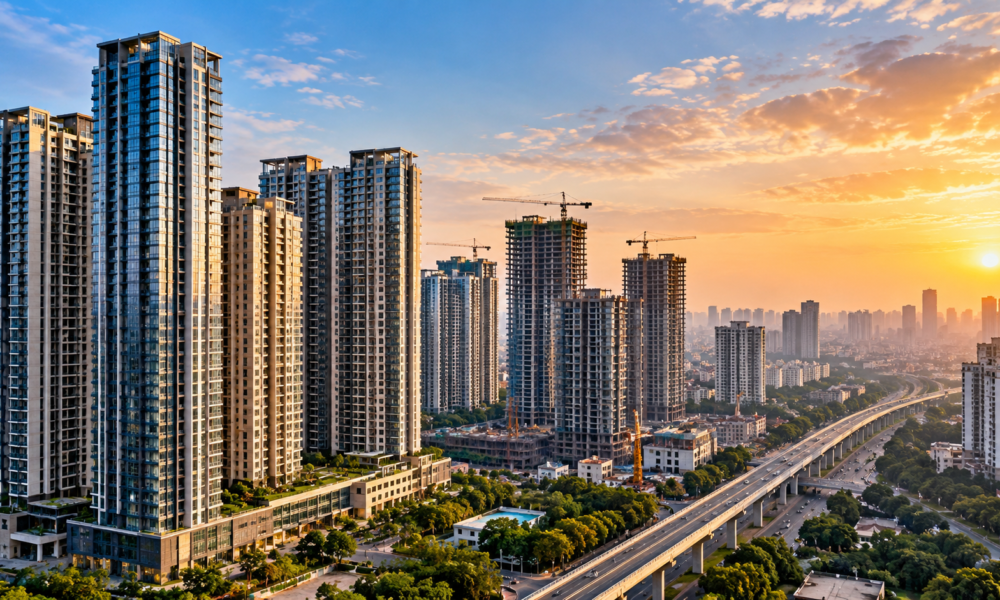
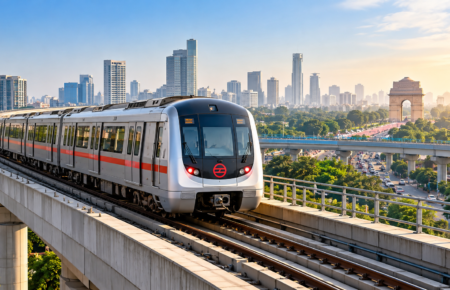
A significant development is Delhi’s Transit-Oriented Development (TOD) Policy and Regulations, notified on 6 April 2026. The framework promotes planned, higher-density and mixed-use development around Metro and Regional Rapid Transit System (RRTS) corridors. According to the Ministry of Housing and Urban Affairs, the policy covers an area of approximately 207 square kilometres, including areas within 500 metres of designated Metro and RRTS corridors and railway stations.
The policy is important because urban development is not simply about constructing taller buildings. It is about accommodating more people while ensuring that roads, public transport, water supply, sewage systems, electricity networks and public spaces can support the additional population.
Why is Delhi exploring high-density development?
Delhi faces competing demands for housing, commercial space and transport infrastructure. Land is limited in many established areas, while the need to accommodate residents and businesses continues to influence urban planning.
Higher-density development can allow more homes and workplaces within a smaller geographical area. When planned around public transport, it can also reduce dependence on private vehicles and make daily journeys more convenient.
The key is coordinated planning. Increasing the number of apartments without improving local roads, drainage and public services could intensify existing problems rather than solve them.
What is transit-oriented development?
Transit-oriented development places residential, commercial and community facilities close to public transport. Instead of treating housing, offices and transport as separate planning exercises, it attempts to integrate them into connected neighbourhoods.
Delhi’s 2026 framework promotes this approach around Metro and RRTS corridors. The stated objectives include better land utilisation, planned urban growth, sustainable mobility and affordable housing. The Delhi Development Authority has also published the notified policy and regulations and provides an online process for developers seeking approval for projects under the framework.
If implemented effectively, residents could have better access to workplaces, educational institutions, shops and public facilities without having to rely on a car for every journey.
What could it mean for roads and public transport?
Higher-density housing can increase passenger demand around Metro stations and bus corridors. This can support public transport by bringing more potential users within convenient reach of stations.
However, the same development can create pressure on approach roads, intersections, parking facilities and pedestrian infrastructure. Roads designed for existing neighbourhood populations may not be sufficient for substantially denser development.
Planning authorities and developers will therefore need to coordinate building approvals with road upgrades, last-mile transport, footpaths, cycling routes and traffic management.
The quality of station access matters as much as the distance. A home located 500 metres from a Metro station may still be inconvenient if the walking route is unsafe, obstructed or poorly connected.
Can high-rise development improve housing affordability?
Greater housing supply can potentially improve choice for buyers and renters, especially when new homes are located close to transport and employment centres.
Delhi’s TOD framework explicitly includes affordable housing among its objectives. However, higher density alone does not guarantee lower property prices. Land costs, construction expenses, approval charges, financing costs and the type of homes developers choose to build all influence final prices.
If most new supply targets premium buyers, the benefits may be concentrated in higher-priced segments. Affordable housing outcomes will depend on how policy requirements are implemented and whether homes match the needs and budgets of local households.
What does this mean for property developers?
The policy could create opportunities for developers whose land qualifies under the applicable regulations. Projects with convenient access to public transport may appeal to homebuyers who prioritise commuting time and access to everyday services.
But developers must evaluate the actual rules, eligibility conditions, approval process and infrastructure requirements before making investment decisions. A broad policy announcement should not be treated as automatic permission to construct a particular building or as a guarantee of project profitability.
The challenges Delhi must address
High-density development requires reliable utilities, adequate emergency access, effective waste management, sufficient open space and resilient drainage systems. Building safety and compliance with applicable fire and structural regulations are equally important.
Environmental considerations also matter. More compact neighbourhoods can reduce some transport-related impacts, but poorly designed development can increase local congestion, heat exposure and pressure on public services.
Delhi must also ensure that redevelopment does not leave existing residents without adequate rehabilitation, access to services or meaningful participation in planning decisions.
What happens next?
The success of Delhi’s high-density development approach will depend on project approvals, infrastructure investment and the quality of implementation. The notified TOD policy provides a framework, but the actual effect on housing supply, commuting patterns and neighbourhood conditions will become clearer as eligible projects progress.
For residents and property buyers, the most useful indicators will be completed infrastructure, reliable public transport, accessible public spaces and transparent information about individual developments.
The bottom line: Delhi’s development strategy could create more connected, compact neighbourhoods. But taller buildings will deliver lasting benefits only when transport, utilities, housing affordability and public services grow alongside them.








No Comment! Be the first one.