








How Airport and Expressway Development Changes Property Prices Around Cities
A new airport or expressway can change how people travel, where businesses establish operations and which locations become easier to access. These changes can influence property demand, but the...

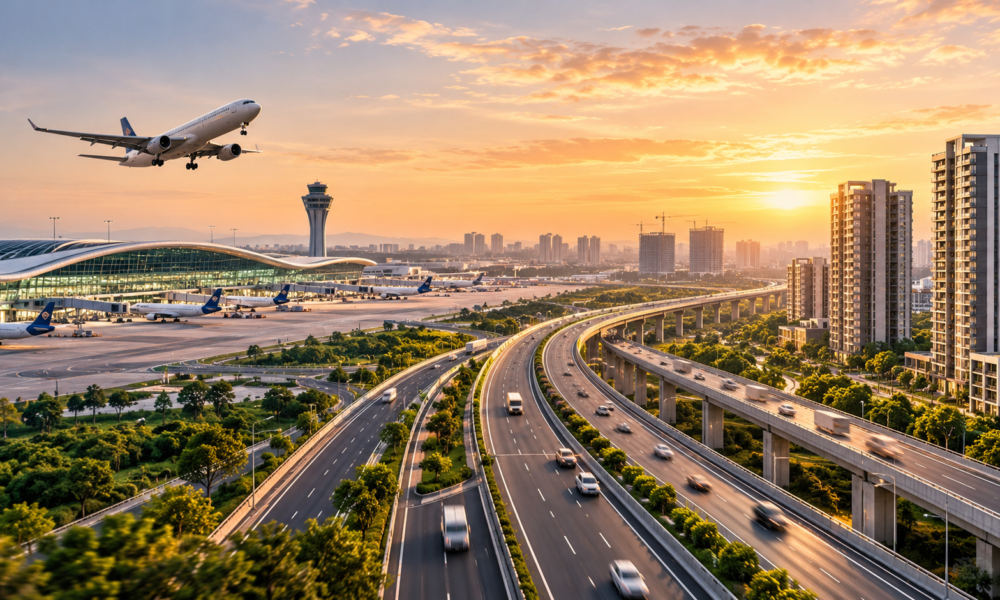
A new airport or expressway can change how people travel, where businesses establish operations and which locations become easier to access. These changes can influence property demand, but the relationship between infrastructure development and real estate prices is more complicated than simply buying a home near a new road or airport.
For homebuyers and investors, the important question is not whether infrastructure is being built. It is whether that infrastructure will make a particular location more useful, accessible and attractive over the long term.
Why does infrastructure affect property prices?
Location is one of the most important factors influencing real estate values. Infrastructure can change a location’s practical advantages by reducing travel times, connecting it to employment centres and improving access to essential services.
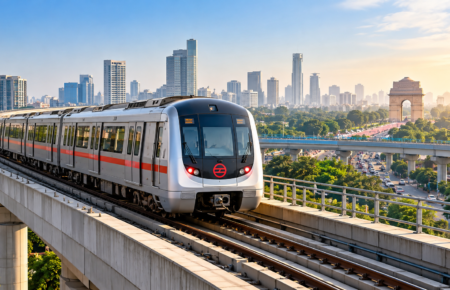
An expressway may make it easier to commute between two cities. An airport can improve access for business travellers and support demand for hotels, offices and logistics facilities. A Metro line can make daily travel more convenient for residents who work elsewhere.
When these improvements attract more buyers, tenants or businesses, property demand may increase. If the available supply cannot keep pace, prices and rents may come under upward pressure.
However, infrastructure is only one factor. Local employment, household incomes, housing supply, interest rates and the quality of a development also influence market performance.
How expressways can influence real estate
Expressways can improve regional connectivity by reducing travel times between urban centres, industrial areas and logistics hubs.
Areas near suitable interchanges may become more accessible to businesses that need to transport goods or connect with multiple markets. This can support demand for warehouses, industrial facilities, hotels and some residential developments.
The location of access points is crucial. A property located close to an expressway on a map may still be far from the nearest usable interchange. Congestion on approach roads can also reduce the practical benefit of the new route.
Noise, air pollution and barriers to pedestrian movement may affect properties immediately beside major roads. Therefore, the value impact can differ even between neighbouring developments.
How airports influence property markets
Airports can create demand for hotels, offices, cargo facilities, warehouses, retail services and employee housing.
A new airport may also encourage businesses to establish operations in surrounding regions, particularly where road access, utilities and industrial land are available.
Jewar International Airport in Uttar Pradesh provides a useful example of the wider connectivity approach. In March 2026, the Union Cabinet approved a revised capital cost of ₹3,630.77 crore for a 31.42-kilometre corridor connecting the airport with the Delhi-Mumbai Expressway’s Delhi-Faridabad-Ballabhgarh-Sohna spur. The proposed link is intended to improve access from parts of Delhi-NCR.
For property buyers, this illustrates why the surrounding road network matters as much as the airport itself. The potential benefits depend on actual travel times, the progress of connecting projects and the development of nearby employment centres.
Why property prices may rise before a project opens
Real estate markets often respond to expectations. When a major infrastructure project is announced, some buyers may anticipate improved connectivity and purchase property before completion.
This can increase demand in selected locations even while construction is under way.
But expectations can also be exaggerated. If a project is delayed, access routes are less convenient than expected or new housing supply exceeds demand, property prices may not rise as anticipated.
Buyers should distinguish between a proposed project, an approved project, a project under construction and an operational facility. Each stage carries a different level of uncertainty.
Does better connectivity guarantee higher returns?
No. A well-connected location is not automatically a profitable investment.
A property can underperform because of high purchase prices, poor construction quality, weak rental demand, inadequate civic services or excessive competing supply. An infrastructure project may improve accessibility without creating enough new employment or housing demand to justify premium prices.
Investors should also account for maintenance costs, taxes, financing costs, transaction expenses and the time required to sell a property.
Five things to check before buying near new infrastructure
- Project status: Confirm the latest official construction and commissioning updates.
- Actual accessibility: Check the distance to operational access points, public transport and major employment centres.
- Local development plans: Examine whether water, drainage, electricity, schools, healthcare and roads can support future population growth.
- Existing property prices: Compare the asking price with recent transactions and comparable developments, rather than relying on future appreciation claims.
- Rental and resale demand: Consider who would realistically rent or buy the property if your plans changed.
What does this mean for Delhi-NCR?
Delhi-NCR contains established employment centres, expanding residential districts, expressways, Metro corridors and major airport infrastructure. Their effects on property markets vary by location.
A project with direct access to employment centres may have a different impact from one that mainly improves long-distance travel. Similarly, a location with strong connectivity but inadequate drainage or civic services may struggle to deliver the same residential appeal as a well-planned neighbourhood.
Buyers should evaluate each micro-market independently rather than assuming that the entire region will benefit equally.
The bottom line: Airports and expressways can create real estate opportunities by improving accessibility and supporting economic activity. But the strongest investment decisions are based on verified project progress, local demand, infrastructure quality and realistic pricing, not headlines alone.








No Comment! Be the first one.