






Bengaluru Gets a ₹15,600 Crore Infrastructure Push: Metro, Railways and Renewable Energy Projects Take Centre Stage
Bengaluru is set to receive a significant infrastructure boost as Prime Minister Narendra Modi visits Karnataka on November 13 and 14 to inaugurate, dedicate and launch development projects worth...

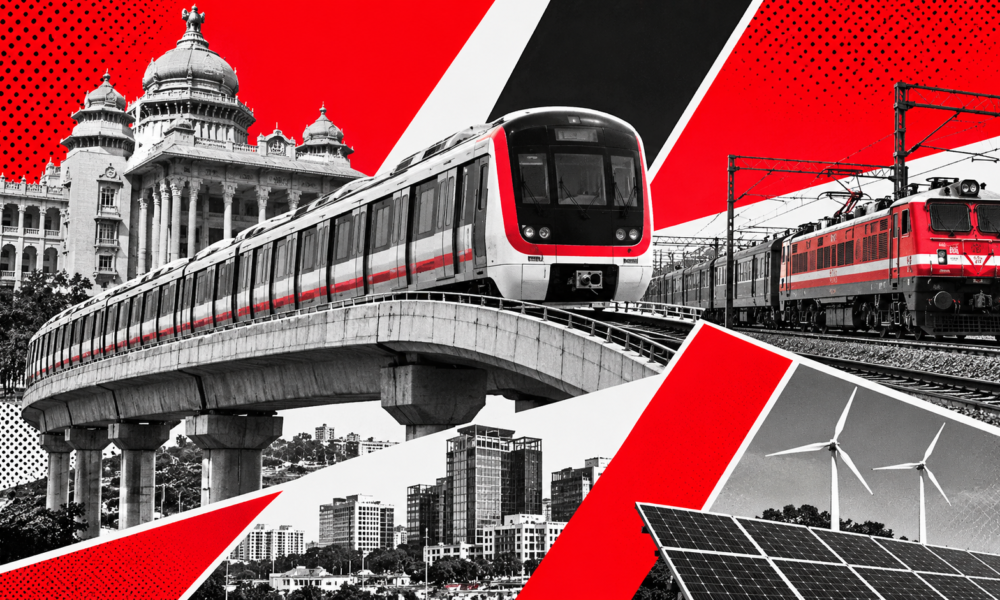
Bengaluru is set to receive a significant infrastructure boost as Prime Minister Narendra Modi visits Karnataka on November 13 and 14 to inaugurate, dedicate and launch development projects worth more than ₹15,600 crore.
The projects cover several critical sectors, including urban mobility, renewable energy, electricity transmission, petroleum infrastructure, waste management and railway connectivity. The package reflects the growing importance of integrated infrastructure development as Indian cities attempt to manage expanding populations, industrial demand and transportation requirements.
According to the Prime Minister’s Office, the programme includes the inauguration of Bengaluru Metro’s Pink Line, new renewable energy transmission infrastructure, railway improvements and India’s largest underground LPG storage cavern in Mangaluru.
Bengaluru Metro Pink Line to strengthen urban connectivity
One of the most significant developments is the inauguration of the Bengaluru Metro Pink Line stretch between Kalena Agrahara and Tavarekere.
Developed at an investment of approximately ₹3,470 crore, the new section is expected to improve public transportation connectivity across the city.
The expansion is important for Bengaluru, where traffic congestion and long commuting times remain major urban challenges. Additional metro connectivity can improve access to employment centres, residential neighbourhoods and commercial districts while encouraging greater use of public transportation.
The development also highlights the growing role of metro rail networks in India’s urban infrastructure strategy.
Renewable energy transmission receives a major investment
The infrastructure package also places considerable emphasis on strengthening electricity transmission networks.
Two major transmission schemes will be inaugurated: the Koppal-II and Gadag-II renewable energy zone integration project, costing approximately ₹4,450 crore, and the Bidar solar energy zone transmission project, costing around ₹1,370 crore.
The first project is designed to facilitate the evacuation of approximately 2 GW of renewable energy potential, while the Bidar project will support the transmission of 2.5 GW of solar power.
Additionally, the foundation stone will be laid for transmission infrastructure connecting renewable energy potential in Davanagere, Chitradurga and Ballari.
These investments are significant because renewable energy generation alone cannot support India’s energy transition. Efficient transmission infrastructure is equally necessary to move electricity from generation locations to consumption centres.
Mangaluru strengthens India’s petroleum storage infrastructure
Another important development is the dedication of India’s largest underground LPG storage cavern in Mangaluru.
Constructed at an investment exceeding ₹850 crore, the facility has a storage capacity of 80,000 metric tonnes.
The project also includes a 9.4-kilometre LPG pipeline connecting New Mangalore Port with the main terminal.
The facility is expected to strengthen petroleum storage, improve distribution efficiency and support India’s energy security by expanding domestic LPG storage infrastructure.
Railway and waste management projects complete the package
The programme also includes the redevelopment of four railway stations under the Amrit Bharat Station Scheme: Chamarajanagar, Chikkamagaluru, Sakleshpur and Subrahmanya Road.
The 45-kilometre Bagalkot-Wandal railway doubling section will also be dedicated to the nation, alongside electrification of the 55-kilometre Sakleshpur-Subrahmanya Road Ghat railway section.
In Bengaluru, the foundation stone will be laid for a compressed biogas facility at Haralakunte. The proposed plant will process approximately 300 tonnes of municipal solid waste daily to produce 12.6 tonnes of compressed biogas.
What this means for India’s infrastructure sector
The ₹15,600 crore package demonstrates how infrastructure development increasingly involves interconnected investments rather than isolated construction projects.
Metro expansion can improve urban mobility, transmission networks can support renewable energy, and railway improvements can strengthen passenger and freight connectivity.
For construction companies, infrastructure developers, energy businesses and investors, these projects represent opportunities across multiple sectors.
The bigger challenge will be timely execution, efficient coordination and ensuring that these investments deliver lasting benefits.
Bengaluru’s latest infrastructure push offers a glimpse into how India’s next phase of urban and industrial development could take shape.









No Comment! Be the first one.