








India’s ₹33,660 Crore BHAVYA Push Could Create 100 New Industrial Parks
India is moving towards a new model of industrial development, with the Centre’s ₹33,660 crore Bharat Audyogik Vikas Yojana (BHAVYA) beginning to take shape across states. The six-year scheme aims to...

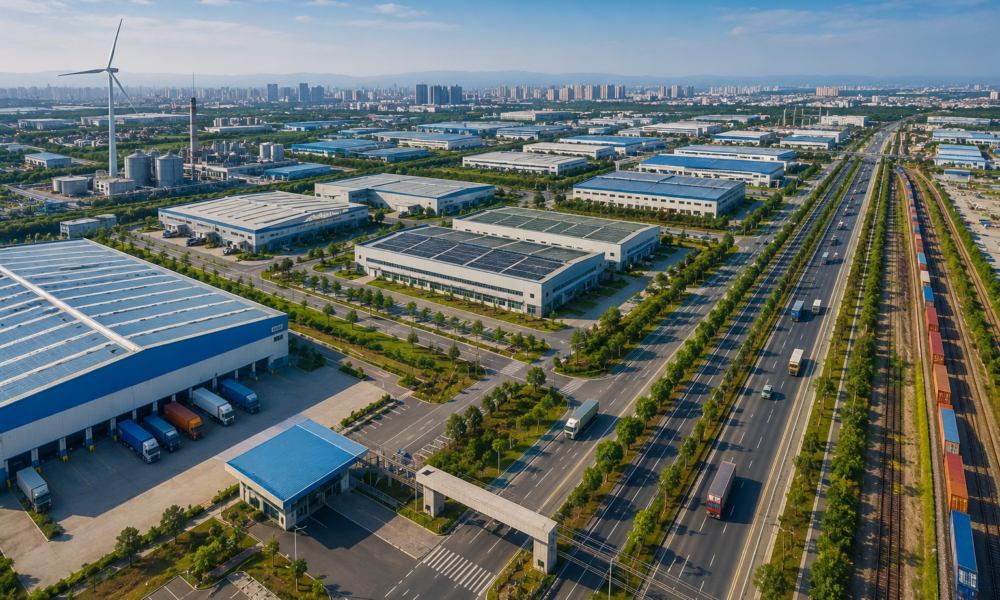
India is moving towards a new model of industrial development, with the Centre’s ₹33,660 crore Bharat Audyogik Vikas Yojana (BHAVYA) beginning to take shape across states. The six-year scheme aims to develop 100 investment-ready, plug-and-play industrial parks between 2026-27 and 2031-32, with the National Industrial Corridor Development Corporation (NICDC) leading implementation.
The initiative is designed to provide businesses with infrastructure that is ready before factories arrive. The planned parks will include multimodal connectivity, reliable utilities, logistics facilities, digital governance systems and worker-support infrastructure. The objective is to reduce the time and complexity involved in setting up manufacturing units and encourage companies to establish production facilities in locations beyond India’s biggest industrial centres.
The scheme is now moving into its selection phase. The first phase will select up to 50 industrial parks through two rounds. The first application window ran from 1 June to 31 July, while the second window opened on 1 August and will remain open until 30 September 2026. Up to 20 proposals can be selected during the first round, with applications assessed on factors including site suitability, multimodal connectivity, infrastructure quality, industrial potential and state-level policy support.
States have already begun positioning projects for the programme. Madhya Pradesh has sought approval for 11 industrial parks under BHAVYA, with the proposed developments intended to support industrial growth across the state. West Bengal has also identified land for BHAVYA industrial parks as it looks to strengthen its industrial base and attract new investment.
The scheme could also support the development of specialised industrial clusters. In Tamil Nadu, the second SIPCOT industrial park at Thiruverumbur near Tiruchirappalli has emerged as a potential BHAVYA project, with the area being positioned for defence and aerospace manufacturing.
For developers and investors, the programme could create opportunities beyond factory construction. New industrial parks can generate demand for warehouses, logistics centres, worker accommodation, commercial spaces, hotels and other supporting infrastructure. Locations with strong road, rail, airport and port connectivity could have an advantage in attracting manufacturers and supply-chain companies.
BHAVYA also fits into the government’s wider industrial-corridor strategy. The Centre said in February that projects across 11 industrial corridors were under implementation, with a combined pipeline covering nearly 26,000 acres, ₹28,602 crore in project costs, ₹1.53 lakh crore in investment potential and more than 9.39 lakh potential jobs.
The larger significance of BHAVYA is therefore not limited to 100 industrial parks. If implemented effectively, the programme could help distribute manufacturing activity across more regions, strengthen local supply chains and create new economic centres. For India’s real estate and infrastructure sectors, the development of these industrial parks could become another major driver of demand over the next decade.









No Comment! Be the first one.