







Bullet Train Project Crosses 80% Completion, Marking Major Milestone for India’s High Speed Rail Network
India’s first high speed rail corridor has reached a significant milestone, with nearly 80 per cent of the Mumbai Ahmedabad Bullet Train project now complete. The development marks steady...

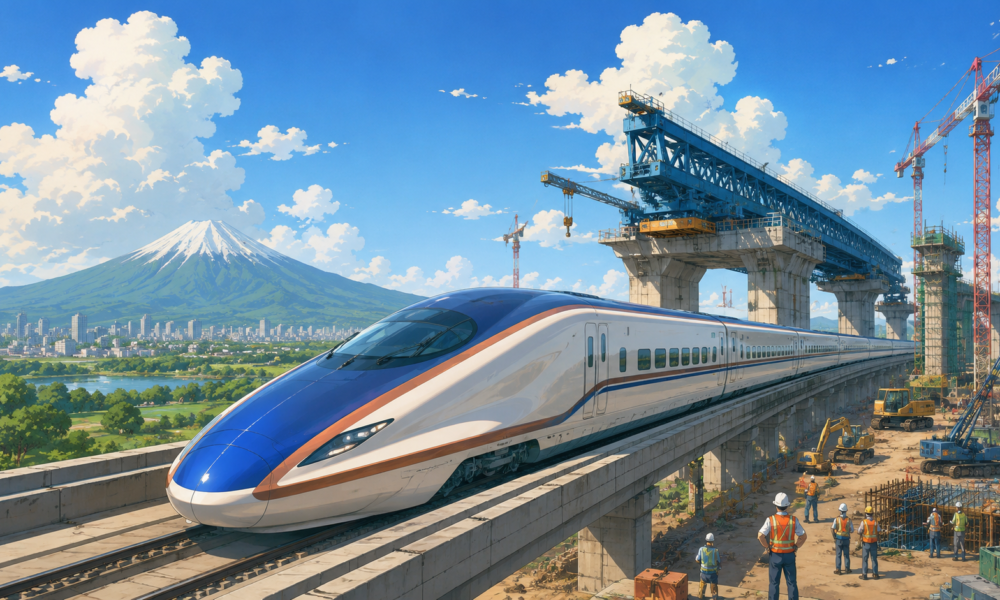
India’s first high speed rail corridor has reached a significant milestone, with nearly 80 per cent of the Mumbai Ahmedabad Bullet Train project now complete. The development marks steady progress on one of the country’s most ambitious transport infrastructure projects, bringing India closer to the launch of its first bullet train service. The first operational section between Surat and Bilimora is expected to open in 2027, with the remaining stretches becoming operational in phases.
The 508 kilometre corridor is designed to transform intercity travel by reducing journey times, improving connectivity and supporting economic growth across Maharashtra and Gujarat. Once fully operational, the high speed rail line will significantly cut travel time between Mumbai and Ahmedabad while offering passengers a faster, safer and more reliable mode of transport.
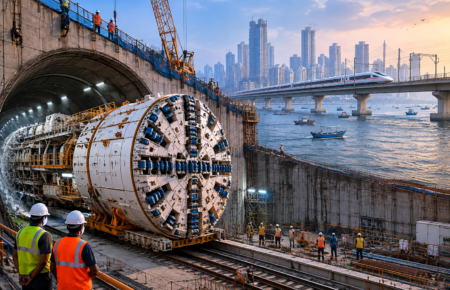
Construction activity has accelerated across several sections of the route. A major engineering milestone was recently achieved with the deployment of the first tunnel boring machine for the underground section in Mumbai. The machine will excavate part of India’s first undersea rail tunnel beneath Thane Creek, making the project one of the country’s most technologically advanced railway developments.
The undersea tunnel represents a major achievement in Indian engineering. Built using advanced tunnel boring technology, the underground section is expected to improve safety while overcoming geographical challenges in one of the country’s busiest metropolitan regions. Engineers are using specialised equipment capable of handling varying soil conditions and complex underground geology throughout construction.
Beyond faster travel, the bullet train project is expected to generate long term economic benefits. Large infrastructure projects of this scale create demand for construction materials, engineering services, heavy equipment, signalling systems, electrical infrastructure and skilled manpower. Businesses located near future stations are also expected to benefit from improved accessibility and increased commercial activity.
The project is introducing several technologies that are relatively new to India’s railway sector. High precision track systems, earthquake detection technology, modern signalling, automated train control and advanced safety features are being incorporated throughout the corridor. These systems are expected to establish new standards for future rail infrastructure projects across the country.
Infrastructure surrounding the stations is also being developed to improve connectivity. Road links, metro systems, bus services and urban transport networks are expected to integrate with bullet train stations, creating multimodal transport hubs that make travel more convenient for passengers while supporting urban development around key locations.
The project also reflects growing cooperation in international infrastructure development. Technical expertise, advanced engineering practices and modern construction methods are helping deliver a project that could influence the future of high speed rail development in India.
As construction moves towards completion, the Mumbai Ahmedabad Bullet Train project is emerging as a landmark infrastructure initiative. Beyond introducing high speed rail, it represents investment in advanced engineering, transport efficiency and long term economic development. With the first section expected to become operational in 2027, the project is set to become a defining milestone in India’s transport infrastructure journey.






No Comment! Be the first one.