





Delhi AI Traffic Management System: ₹1,789 Crore Plan to Modernise Urban Mobility
Delhi is set to receive a major technology upgrade to its road infrastructure after the Union Cabinet approved a ₹1,789.52 crore Intelligent Traffic Management System (ITMS). The project will cover...

Delhi is set to receive a major technology upgrade to its road infrastructure after the Union Cabinet approved a ₹1,789.52 crore Intelligent Traffic Management System (ITMS).
The project will cover 42 identified traffic corridors across the national capital and will be implemented in three phases over 24 months. This will be followed by five years of operation and maintenance.
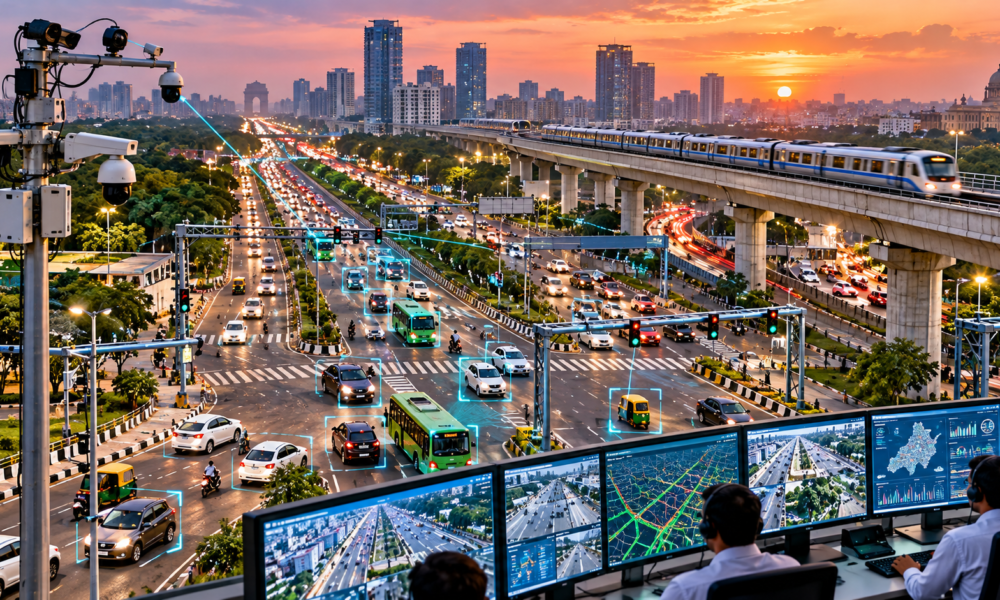
The system is designed to use artificial intelligence, real-time traffic information, adaptive traffic signals and automated enforcement to improve the management of Delhi’s existing road network.
One of the main components will be adaptive traffic signals. Unlike fixed-time signals, these systems can adjust signal timings according to traffic conditions. This can allow traffic authorities to respond to changes in vehicle volumes throughout the day.
The project will cover 1,092 Adaptive Traffic Control System locations and 1,029 enforcement locations.
Real-time monitoring will also allow authorities to detect congestion, slow-moving traffic and road incidents. Traffic control centres can then use this information to coordinate diversions and respond to problems more quickly.
The system is also designed to support priority movement for ambulances and other emergency vehicles. Coordinated signals can create green corridors that allow emergency vehicles to move through congested roads with fewer stops.
Automated enforcement is another major component. The system will be capable of detecting violations such as red-light jumping, stop-line violations, speeding, wrong-way driving, illegal parking and driving without helmets or seat belts.
AI-based analytics can also assist authorities in identifying stolen, blacklisted and repeat-offender vehicles and vehicles linked to hit-and-run cases.
Delhi currently has around 7.1 million active registered vehicles, according to government-linked reporting, while vehicle growth has outpaced the expansion of road infrastructure. This creates pressure on existing roads and intersections.
The ITMS therefore focuses on making better use of infrastructure that already exists. Instead of relying only on building more roads, the system aims to improve the efficiency of existing corridors through technology and real-time management.
A central part of the project will be the integration of traffic regulation, enforcement and information systems. Traffic Command and Control Centres will be supported by a dedicated data centre and disaster-recovery infrastructure.
The use of open standards and application programming interfaces could also allow the system to connect with other digital platforms in the future. Commuters may receive information about congestion, diversions, parking and traffic conditions through digital platforms and variable message signs.
Delhi Police will implement the project by selecting a Master System Integrator through competitive bidding. The Centre for Development of Advanced Computing, or C-DAC, will provide technical support as the Project Management Consultant.
The project represents a broader shift in urban infrastructure. Roads are increasingly being connected with digital systems that can monitor traffic, analyse data and change operations in real time.
For a city like Delhi, where road space is limited and vehicle demand is high, intelligent traffic management could become an important part of urban mobility infrastructure.
The ₹1,789.52 crore project therefore combines physical road infrastructure with digital infrastructure, creating a technology-led approach to managing congestion, road safety and emergency response across the capital.






No Comment! Be the first one.