







India Approves ₹10,000-Crore Container Manufacturing Scheme to Expand Domestic Capacity Ten-Fold
Container Manufacturing Promotion Scheme NEW DELHI, October 31, 2026: The Union Cabinet has approved a ₹10,000-crore Container Manufacturing Promotion Scheme (CMPS) to strengthen India’s...

Container Manufacturing Promotion Scheme
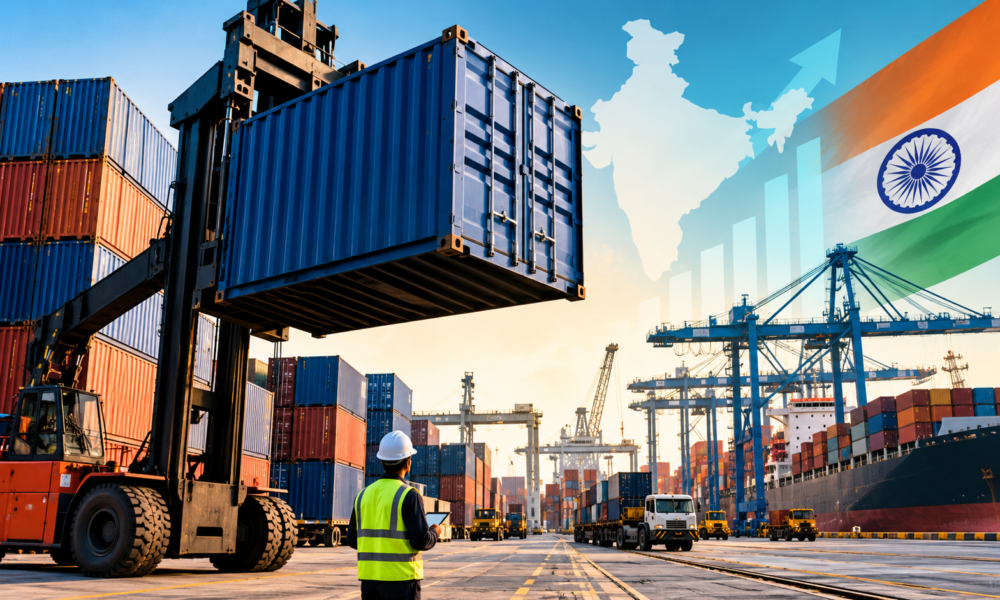
NEW DELHI, October 31, 2026: The Union Cabinet has approved a ₹10,000-crore Container Manufacturing Promotion Scheme (CMPS) to strengthen India’s domestic manufacturing capabilities, reduce import dependence and improve the resilience of its maritime logistics network.
Approved on October 28, 2026, the programme will operate from FY 2027–28 to FY 2039–40. It aims to increase India’s annual container manufacturing capacity approximately ten-fold, from around 70,000 Twenty-foot Equivalent Units (TEUs) to 7.5 lakh TEUs.
The initiative is intended to encourage investment in new manufacturing facilities and support capacity expansion at existing plants.
₹10,000 crore allocated for domestic manufacturing
The scheme includes several financial support mechanisms designed to make domestic container production more competitive.
The largest allocation, ₹8,891 crore, has been earmarked for Operational Expenditure Assistance. This component will provide financial support for eligible containers manufactured according to international shipping standards and sold by approved manufacturers.
Another ₹859 crore has been allocated for Interest Subvention Assistance.
Eligible manufacturers can receive an annual interest subsidy of 3% on qualifying term loans used for establishing new facilities or expanding existing manufacturing capacity.
The programme also includes ₹150 crore for testing and certification infrastructure and ₹100 crore for scheme management.
Capacity expansion and eligibility requirements
The government has specified minimum production requirements for manufacturers seeking financial support.
New greenfield manufacturing facilities must have an annual production capacity of at least 1 lakh TEUs.
Existing brownfield facilities seeking assistance must add at least 25,000 TEUs of annual capacity.
The scheme also introduces domestic value-addition requirements. Eligible manufacturers must maintain at least 70% domestic content through FY 2031–32, with the requirement increasing to 90% from FY 2032–33.
These conditions are intended to encourage the development of a domestic supplier network rather than relying heavily on imported components.
Why container manufacturing matters
Shipping containers are essential to international trade because they allow goods to move between ships, trains and trucks without repeated unloading and repacking.
India’s ports, exporters, importers and logistics companies depend on the availability of standardised containers to transport commodities and manufactured products.
According to the Ministry of Ports, Shipping and Waterways, India’s maritime sector handles approximately 95% of the country’s trade by volume and 70% by value.
The growing importance of maritime transportation makes domestic container manufacturing strategically relevant.
Increasing domestic production could reduce dependence on overseas suppliers and improve supply-chain resilience during international disruptions.
Employment and industrial opportunities
The government expects the scheme to generate approximately 3,000 direct jobs and more than 50,000 indirect employment opportunities.
The initiative is also expected to support industries supplying specialised steel, corner castings, wooden frames, paints and other container components.
Manufacturing facilities could create opportunities for engineering companies, industrial equipment suppliers, logistics operators and testing service providers.
The scheme also has the potential to strengthen India’s position in global container manufacturing and maritime supply chains.
Supporting India’s maritime ambitions
The programme complements wider initiatives focused on port development, shipping capacity and multimodal logistics.
The government has also been pursuing the Bharat Container Shipping Line initiative to develop an integrated domestic container shipping ecosystem.
By combining manufacturing support with port and shipping development, India aims to strengthen more parts of the maritime value chain.
However, achieving the targeted production capacity will require investment, reliable industrial infrastructure, skilled workers and compliance with international quality standards.
The ₹10,000-crore scheme therefore represents a major policy push, with its actual impact depending on how quickly manufacturing facilities become operational and competitive.






No Comment! Be the first one.