






India’s Data Centre Boom Could Consume 17 GW of Power. Is the Country Ready?
India’s data centre industry is expanding rapidly as artificial intelligence, cloud computing and digital services increase demand for computing infrastructure. But a government estimate of...


India’s data centre industry is expanding rapidly as artificial intelligence, cloud computing and digital services increase demand for computing infrastructure. But a government estimate of approximately 17 GW in potential data centre power demand by 2031–32 raises a critical question: can India’s electricity infrastructure keep pace?
Artificial intelligence may be transforming how businesses operate, but behind every AI application is an enormous physical infrastructure requirement.
Data centres house the servers, networking equipment and storage systems that power digital platforms.
As companies invest in AI infrastructure and cloud computing, demand for these facilities is increasing across India.
However, the next phase of digital growth will depend on something that cannot be downloaded: reliable electricity.
India’s Data Centre Capacity Is Growing
According to information shared by the Ministry of Electronics and Information Technology in August 2026, India’s installed data centre capacity has reached approximately 1,575 MW, compared with 375 MW in 2020.
This represents substantial expansion within six years.
Major data centre locations include Mumbai, Navi Mumbai, Chennai, Hyderabad, Bengaluru, Delhi-NCR and Jamnagar.
Noida is also emerging as an important destination because of its connectivity, commercial ecosystem and access to the wider NCR market.
The 17 GW Electricity Challenge
The government has indicated that electricity demand from data centres could reach approximately 17 GW by 2031–32.
This is a major infrastructure consideration.
Data centres require continuous electricity to operate servers, cooling systems, networking equipment and backup facilities.
Unlike many conventional commercial buildings, these facilities cannot simply switch off their operations during routine power disruptions.
They therefore require dependable grid connections, backup power systems and sophisticated energy management.
As AI workloads increase, high-density computing facilities could place additional pressure on electricity infrastructure.
Water Is Another Infrastructure Challenge
Electricity is not the only concern.
Cooling systems are essential to prevent servers from overheating, and some cooling technologies require significant quantities of water.
The actual water requirement depends on the facility’s design, climate, cooling technology and operating conditions.
The industry is increasingly exploring alternatives such as direct-to-chip liquid cooling, immersion cooling and closed-loop systems.
These technologies can help improve resource efficiency, although their performance depends on implementation.
For water-stressed urban regions, sustainable cooling will become an increasingly important consideration.
Why Noida Could Benefit
Delhi-NCR is already part of India’s growing data centre ecosystem.
Noida offers proximity to enterprise customers, connectivity infrastructure and an established technology and commercial environment.
The region could benefit from investment in server infrastructure, electrical equipment, cooling systems, engineering services and supporting industrial facilities.
However, attracting data centre investment requires more than available land.
Power availability, grid reliability, fibre connectivity, regulatory approvals and access to water-efficient cooling solutions are equally important.
Can India Build Sustainable Digital Infrastructure?
India’s digital ambitions will require a coordinated infrastructure strategy.
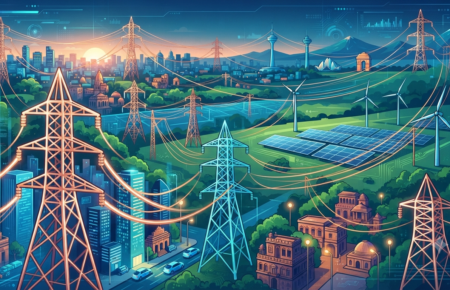
Expanding transmission networks, improving energy efficiency and increasing renewable energy integration will be important to supporting the sector.
Data centre developers will also need to consider energy consumption, water usage and environmental impact when selecting locations.
The opportunity is enormous, but so is the infrastructure responsibility.
India’s AI ambitions will not be determined only by computing power. They will also depend on whether the country can generate, transmit and manage enough electricity to keep its digital economy running.






No Comment! Be the first one.