







India’s Digital Highway Is Expanding: Optical Fibre Network Crosses 7.5 Lakh Km as Connectivity Demand Rises
India’s digital infrastructure is expanding rapidly, with the country’s optical fibre cable (OFC) network reaching approximately 7.52 lakh kilometres by August 2026. The network added...


India’s digital infrastructure is expanding rapidly, with the country’s optical fibre cable (OFC) network reaching approximately 7.52 lakh kilometres by August 2026. The network added another 29,256 kilometres during the first five months of FY2026-27, highlighting the growing importance of physical connectivity infrastructure in India’s digital economy.
The latest figures were published by the Ministry of Statistics and Programme Implementation (MoSPI) in its October 2026 Performance Monitoring Dashboard of Infrastructure Sector in India.
The expansion comes as demand for high-speed internet, cloud computing, digital payments, artificial intelligence and connected services continues to increase. While digital services are becoming increasingly accessible, their performance depends on the underlying network of cables, transmission systems and telecom infrastructure.
Press Information Bureau
Optical fibre is becoming critical infrastructure
Optical fibre cables transmit data through pulses of light, allowing large volumes of information to travel over long distances at high speeds.
Unlike traditional copper-based networks, fibre infrastructure offers higher bandwidth and lower signal loss, making it suitable for modern telecommunications requirements.
For India, expanding this network is important for supporting 5G connectivity, enterprise networks, cloud services and data centre operations.
The growing use of video streaming, online education, digital banking and enterprise software is also increasing demand for reliable broadband infrastructure.
The addition of 29,256 kilometres during April-August 2026 demonstrates continued investment in the country’s digital connectivity backbone.
Press Information Bureau
Digital infrastructure goes beyond urban internet connectivity
Optical fibre expansion is not limited to improving internet access in major cities.
It also plays an important role in connecting smaller towns, government institutions, industrial locations and rural communities.
A stronger fibre network can support digital public services, telemedicine, online education and financial inclusion by improving the infrastructure available to service providers.
Government initiatives such as BharatNet and PM-WANI are part of India’s broader efforts to strengthen digital connectivity and expand access to internet-based services.
For businesses, improved connectivity can make emerging industrial locations more attractive by supporting cloud-based operations, communication networks and digital supply-chain management.
Data centres and AI are creating additional demand
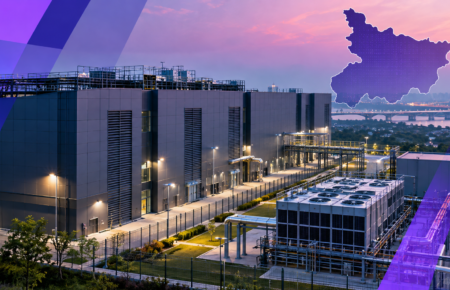
India’s growing data centre industry is another important reason why digital infrastructure is receiving greater attention.
Modern data centres require high-capacity fibre connectivity to transfer information between servers, cloud platforms, businesses and users.
As companies invest in artificial intelligence, cloud computing and digital services, reliable network infrastructure becomes increasingly important.
The relationship works in both directions: data centres need strong fibre networks, while expanding digital connectivity supports demand for more data processing and storage facilities.
This makes optical fibre an important component of India’s broader technology and infrastructure investment ecosystem.
India’s infrastructure expansion extends beyond digital networks
The MoSPI dashboard also highlights growth across other infrastructure sectors.
Major ports handled 390.4 million tonnes of cargo during April-August 2026, registering 7.2% year-on-year growth. National highway projects awarded increased 62.9% to 2,236.3 kilometres during April-September 2026.
India’s installed power capacity reached 5.33 lakh MW in FY2025-26, with renewable energy accounting for 42% of the total installed capacity.
These developments demonstrate how India’s infrastructure expansion is increasingly connected across transport, energy, logistics and digital networks.
Press Information Bureau
The next challenge is last-mile connectivity
Expanding the national fibre network is only one part of the challenge.
India must also ensure reliable last-mile connections, affordable broadband services, network maintenance and sufficient capacity in underserved regions.
The quality of digital infrastructure will depend not only on the kilometres of fibre installed but also on how effectively that infrastructure connects households, businesses and public institutions.
For telecom companies, infrastructure developers and technology investors, India’s expanding fibre network presents opportunities across network deployment, equipment, data centres and connectivity services.
India’s digital economy will ultimately depend on more than applications and platforms. It will depend on the physical infrastructure carrying every byte of information.






No Comment! Be the first one.