




Indian Cities Face Pressure to Upgrade Roads, Drainage and Civic Infrastructure
India’s growing cities need stronger roads, drainage networks and public services to support rising populations and expanding business activity. Urban infrastructure is essential for daily...

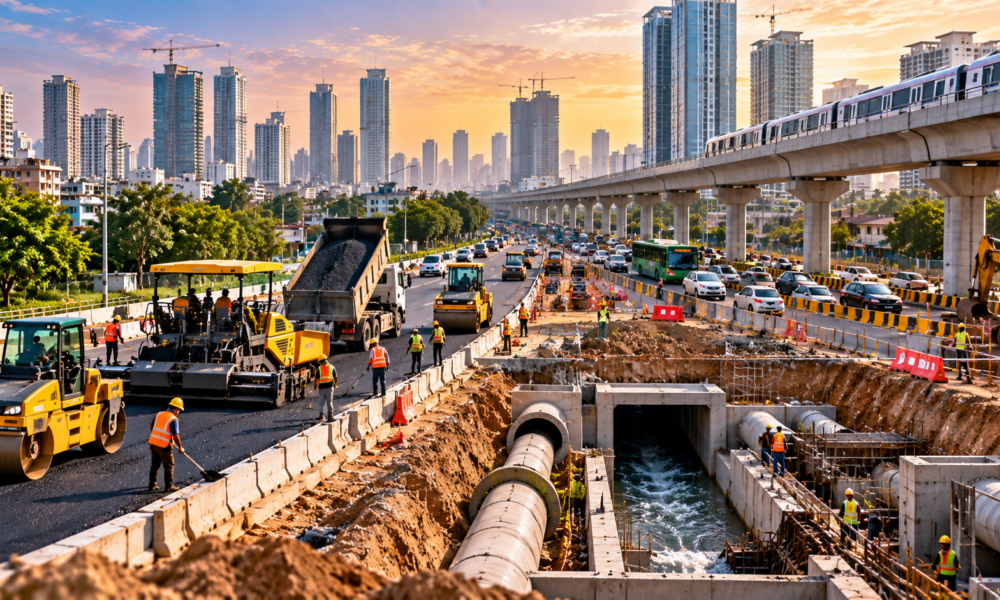
India’s growing cities need stronger roads, drainage networks and public services to support rising populations and expanding business activity.
Urban infrastructure is essential for daily life. Roads connect homes and workplaces, drainage systems help manage rainwater, and civic facilities support public health and safety.
However, new construction alone cannot solve urban problems. Cities also need regular maintenance, effective planning and better coordination between civic agencies.
Why are civic upgrades important?
Urban areas depend on several systems working together.
Roads carry buses, cars, delivery vehicles and emergency services. Drainage networks help move rainwater away from streets and buildings. Water supply systems provide essential services to households and businesses.
When these systems fail, the effects can spread quickly. Poor drainage can lead to waterlogging, damaged roads can slow traffic, and unreliable water supply can affect homes, hospitals and commercial establishments.
These problems can become more difficult to manage as cities expand beyond their older boundaries.
Roads need more than new construction
Road development is often measured by the length of roads built or repaired. But the quality of the network also matters. Roads need proper surfaces, safe crossings, footpaths, working streetlights and connections with public transport.
Utility work can also damage roads. Water pipelines, electricity cables and telecommunications networks may require excavation, followed by repairs.
If agencies do not coordinate their work, newly repaired roads can be dug up again, increasing costs and causing disruption.
Cities need better planning to ensure that road construction and utility upgrades are carried out in a coordinated manner.
Drainage is a major urban concern
Drainage systems help carry rainwater away from roads and residential areas.
When drains are blocked, undersized or poorly maintained, heavy rainfall can cause waterlogging. Construction over natural drainage paths can make the problem worse.
Urban authorities need to inspect drainage systems, remove waste and plan upgrades based on rainfall patterns and local conditions.
New drainage projects should also consider where the water will flow after leaving a neighbourhood. Moving water from one area to another without a wider plan may shift the problem rather than solve it.
How can better planning help?
City authorities can use infrastructure surveys and local data to identify areas that need urgent attention.
They can prioritise damaged roads, drainage bottlenecks and public facilities that serve large numbers of residents.
Coordination between municipal bodies, development authorities and utility providers can reduce repeated excavation and project delays.
Public reporting systems can also help authorities identify local problems, although complaints need to be verified and followed by action.
Funding and maintenance challenges
Civic infrastructure requires funding for both construction and upkeep.
A city may build a new road or drainage system, but it must also budget for repairs, inspections and cleaning.
Maintenance can be less visible than new construction, yet it is important for protecting public investment.
Authorities must also manage competing priorities. A growing city may need roads, public transport, water supply, sewage treatment, housing and waste management at the same time.
Projects should be selected according to need, cost and expected public benefit.
What should cities focus on next?
Cities need to identify their most urgent infrastructure gaps and publish clear plans for addressing them.
Useful measures include tracking road conditions, monitoring drainage performance, publishing project timelines and reporting on completed work.
Infrastructure development should also consider climate risks, accessibility and the needs of pedestrians and people with disabilities.
The goal should be to make existing urban systems more reliable while building new facilities where demand requires them.
India’s cities need a balanced approach to infrastructure development.
New roads and drainage projects matter, but so do maintenance, coordination and transparent reporting. Well-planned civic investment can improve daily life and help cities support future growth.



No Comment! Be the first one.