








Underground Infrastructure Emerges as India’s Next Growth Frontier
India’s expanding metro rail networks and rapid urbanisation are creating substantial opportunities in underground infrastructure development, positioning tunnelling and subterranean...

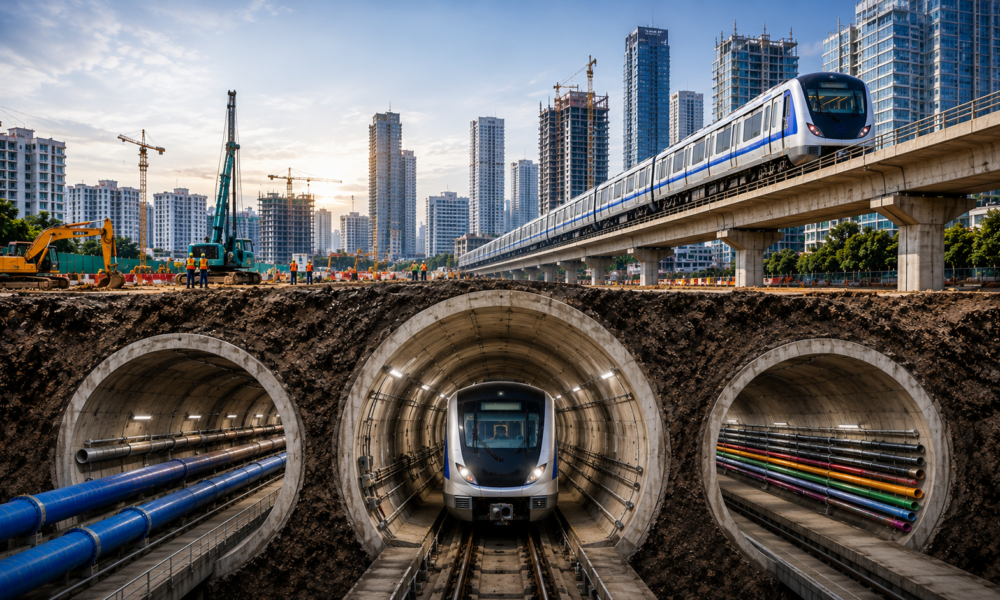
India’s expanding metro rail networks and rapid urbanisation are creating substantial opportunities in underground infrastructure development, positioning tunnelling and subterranean engineering as one of the country’s emerging infrastructure frontiers.
As cities continue to grow and urban populations increase, governments and infrastructure developers are increasingly looking beneath the surface to solve complex urban challenges. Underground transport systems, utility corridors and tunnel-based infrastructure are becoming essential components of modern city planning.
Several major Indian cities are currently investing heavily in metro rail projects, underground roads and integrated utility networks. These projects require specialised engineering capabilities, advanced construction technologies and significant investments in tunnelling expertise.
Industry experts believe underground infrastructure offers several advantages for rapidly urbanising cities. Subterranean transport systems can reduce traffic congestion, optimise land use and minimise disruptions to existing urban structures. Underground utility corridors can also improve maintenance efficiency while reducing pressure on surface-level infrastructure.
The growing pipeline of metro rail projects across India has already generated significant demand for advanced engineering and tunnelling services. Cities such as Delhi, Mumbai, Bengaluru, Chennai and Kolkata have demonstrated the critical role underground infrastructure can play in improving urban mobility and supporting economic growth.
Infrastructure companies are increasingly investing in specialised equipment and technologies required for underground construction. Tunnel boring machines, advanced geological assessment techniques and digital construction management systems are becoming essential tools for delivering complex subterranean projects.
The underground infrastructure segment is also attracting interest from investors and construction firms seeking long-term growth opportunities. The sector requires significant capital investments but offers considerable potential as India’s infrastructure pipeline continues to expand.
Urban planners argue that underground development will become increasingly important as Indian cities confront challenges related to land scarcity, environmental sustainability and increasing transportation requirements. Surface-level expansion alone may no longer be sufficient to accommodate future urban growth.
The development of underground infrastructure also has implications for the broader economy. Large-scale tunnelling projects generate employment opportunities and create demand across engineering, manufacturing, construction and technology sectors. They also encourage the development of specialised skills and technical expertise within the domestic infrastructure industry.
As India moves towards becoming one of the world’s largest urban economies, integrated and multi-layered infrastructure systems are expected to become increasingly important. Underground infrastructure is likely to play a critical role in building resilient, efficient and sustainable cities capable of supporting future economic growth.
Industry observers believe the coming decade could witness a significant expansion in subterranean infrastructure investments, making underground engineering one of the defining themes of India’s next phase of urban development.









No Comment! Be the first one.