






Mumbai–Ahmedabad Bullet Train: First Steel Bridge Launched in Maharashtra
The Mumbai–Ahmedabad Bullet Train project has reached another major construction milestone with the launch of its first steel bridge in Maharashtra. The 100-metre-long structure was installed over...

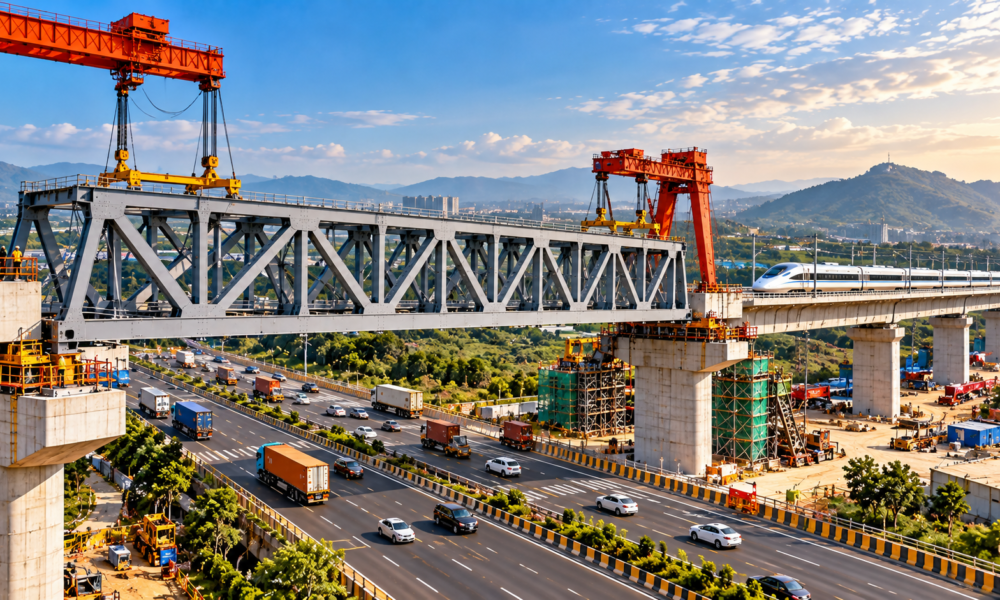
The Mumbai–Ahmedabad Bullet Train project has reached another major construction milestone with the launch of its first steel bridge in Maharashtra. The 100-metre-long structure was installed over National Highway-3 at Dive-Anjur village in Bhiwandi, Thane district.
The bridge weighs around 1,405 metric tonnes and stands about 14 metres high. It forms part of the Mumbai–Ahmedabad High-Speed Rail corridor, India’s first dedicated bullet train project.
The bridge was fabricated at a workshop in Trichy, Tamil Nadu, around 1,300 km from the installation site. It was transported to Maharashtra on trailers and assembled before being launched over the highway. The process highlights the complex logistics involved in constructing large infrastructure components for high-speed rail projects.
The structure has also been designed with features intended to improve durability and manage vibrations. Protective painting systems and elastomeric bearings have been incorporated into the bridge.
The Mumbai–Ahmedabad High-Speed Rail corridor stretches across Maharashtra and Gujarat and includes a combination of elevated viaducts, bridges, tunnels and stations. The project requires construction across highways, railway tracks, rivers and other transport infrastructure, making coordination between different infrastructure systems a major part of its execution.
The corridor includes 28 steel bridges over highways, canals, rivers and railway tracks. Major river crossings are also being developed over the Sabarmati, Narmada, Tapi, Jagani and Vaitarna rivers.
Another major engineering component is the undersea rail tunnel between Ghansoli and Shilphata in Maharashtra. Construction of the tunnel is progressing using a tunnel boring machine with a cutter-head diameter of 13.6 metres.
The project also incorporates technology for operating trains safely in difficult weather and geological conditions. Rainfall monitoring systems are being installed along critical sections of the corridor, while wind-speed monitoring systems are planned at locations across Maharashtra and Gujarat.
An earthquake detection system is also being developed. The system will use seismometers to detect primary earthquake waves and can trigger an automatic power shutdown to help bring trains to a safe stop during an earthquake.
The construction of large steel bridges is therefore only one part of the broader engineering programme. The project requires coordination between civil construction, railway systems, tunnels, bridges, power supply, signalling, safety systems and urban connectivity.
The Maharashtra steel bridge milestone also highlights the role of India’s domestic engineering and manufacturing capabilities. Fabricating the structure in Tamil Nadu and transporting it more than 1,000 km for installation demonstrates the supply-chain requirements involved in large national infrastructure projects.
For the infrastructure sector, the bullet train project represents a combination of high-speed rail technology and complex civil engineering. Its bridges, tunnels, stations and safety systems are creating a large ecosystem involving engineering companies, manufacturers, construction contractors and logistics providers.
As construction progresses, these individual milestones will gradually build the physical network required for India’s first high-speed rail service.
The latest steel bridge is therefore more than another structure on the route. It represents another step in building a complex high-speed transport corridor linking Mumbai and Ahmedabad through advanced railway infrastructure.





No Comment! Be the first one.