








Noida Airport Waterlogging Puts Drainage Design Under Spotlight
Noida International Airport in Jewar has come under scrutiny after heavy rainfall caused temporary waterlogging in a passage connecting the terminal with the parking and taxi areas. The incident took...

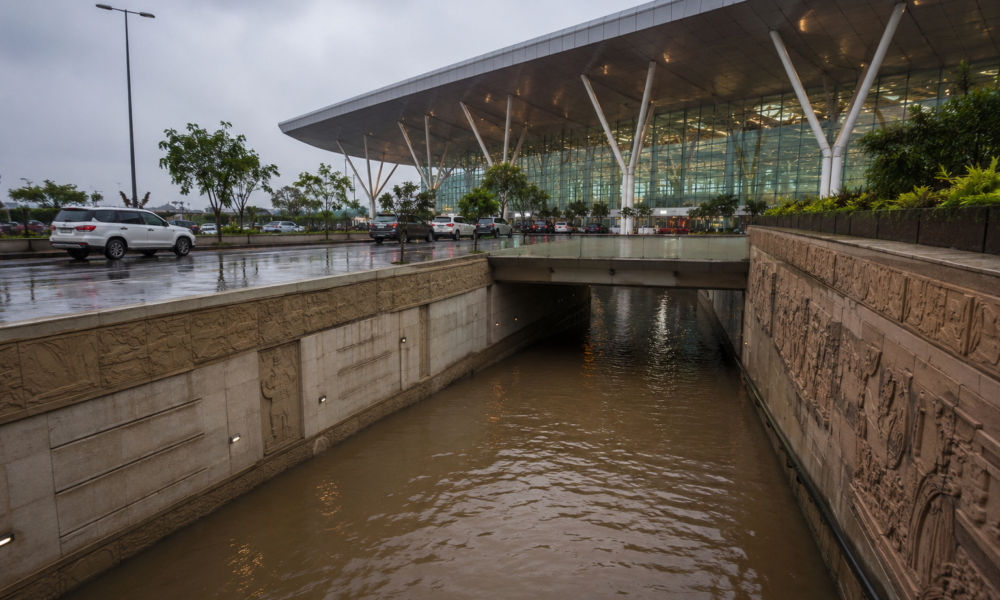
Noida International Airport in Jewar has come under scrutiny after heavy rainfall caused temporary waterlogging in a passage connecting the terminal with the parking and taxi areas. The incident took place on Tuesday, with videos of the affected section circulating widely on social media and raising questions about the airport’s drainage design.
Airport authorities said the water accumulated after an intense spell of rain over a short period. Teams used pumps to clear the water in less than 30 minutes, while passenger movement was redirected through an alternative route. Flight operations and the wider functioning of the airport were not affected, according to airport officials.
The incident has nevertheless put attention on an important part of infrastructure planning: how large public facilities manage sudden and heavy rainfall. For an airport, drainage is not simply a civic facility. It forms part of the wider system that supports passenger movement, access roads, parking areas and the safe operation of the terminal.
The affected area was an underground passage between the terminal and parking facilities. The passage had been designed to reflect the ghats of Varanasi, but water entered the section after heavy rain. The airport’s response included pumping out the accumulated water and providing alternative access for passengers.
The airport is now considering changes to reduce the possibility of a repeat incident. According to a report by The Times of India, officials are looking at redesigning nearby landscaping, increasing kerb heights and potentially widening the drainage shaft. The existing drainage shaft was designed to collect surface runoff, but the intense rainfall led to more water entering the passage than the system could discharge at the time.
The issue matters beyond the airport itself because Jewar is emerging as a major growth corridor for the wider Delhi-NCR region. Noida International Airport began commercial operations on 15 June 2026 and is being developed as a second international gateway for the region. Phase I has an annual handling capacity of 12 million passengers, with later expansion planned to increase capacity significantly.
For the real estate and infrastructure sectors, the episode offers a practical lesson. Large projects cannot be judged only by their size, appearance or connectivity. Drainage, water management, road design and the ability to handle extreme weather are becoming increasingly important measures of infrastructure quality.
The airport authorities have maintained that the waterlogging was temporary and that operations continued normally. However, the decision to review the landscaping and drainage arrangements shows that even a short disruption can reveal areas where infrastructure design needs adjustment.
As the Yamuna Expressway and Jewar region attract more development, the ability to manage monsoon rainfall will become increasingly important. The focus now will be on whether the corrective measures at Noida International Airport can prevent a similar incident during the next spell of intense rain.








No Comment! Be the first one.