








Pune’s ₹40,000 crore infrastructure plan signals scale, but execution will be key
The Maharashtra government’s decision to roll out a ₹40,000 crore “growth hub” plan for the Pune Metropolitan Region marks one of the more ambitious urban infrastructure pushes in recent years. The...

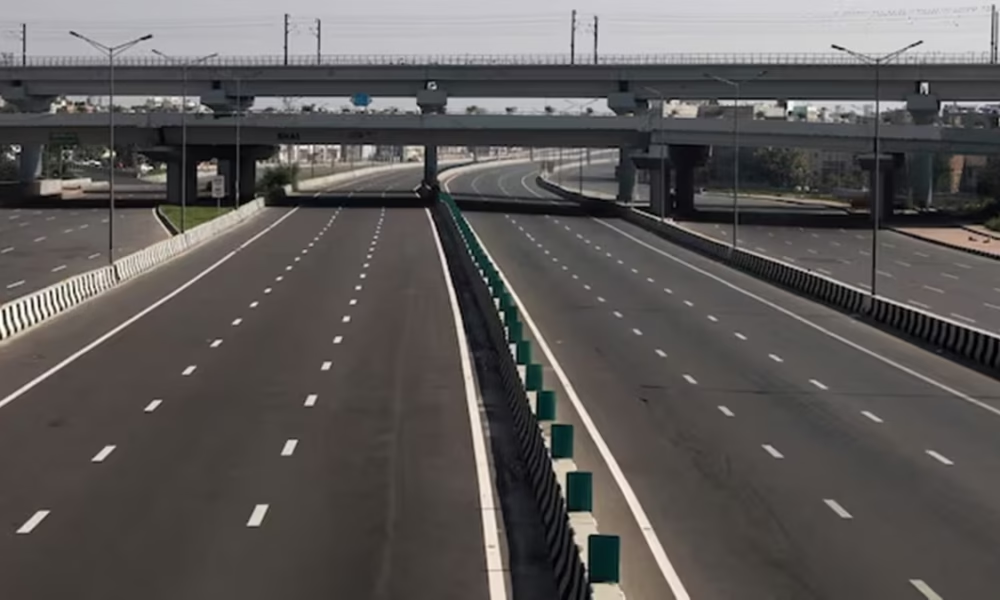
The Maharashtra government’s decision to roll out a ₹40,000 crore “growth hub” plan for the Pune Metropolitan Region marks one of the more ambitious urban infrastructure pushes in recent years. The blueprint seeks to address long-standing gaps in mobility, sanitation, and planned urban expansion in and around Pune, a city that has struggled to keep pace with its own rapid growth.
At the heart of the plan are investments in metro rail expansion, ring roads, and an upgraded sewage network, including the construction of dozens of treatment plants. These interventions are not merely additive. They attempt to correct years of uneven planning that have left critical services lagging behind population and industrial expansion.
Yet, large allocations alone do not guarantee outcomes. Urban infrastructure in Maharashtra has often been marked by delays, fragmented implementation, and coordination failures between agencies. Pune itself offers examples where projects have overshot timelines or failed to integrate with broader city planning.
What distinguishes this plan is its stated intent to combine transport, environmental infrastructure, and industrial growth within a single framework. If executed with discipline, it could improve not only intra-city mobility but also the region’s attractiveness as an economic hub. However, the challenge will lie in sequencing, governance, and sustained oversight.
For Pune, the question is no longer about the scale of investment. It is about whether the state can translate intent into timely delivery, and ensure that infrastructure keeps ahead of, rather than chases, the city’s expansion.






No Comment! Be the first one.