








SECI Moves to Build India’s Green Methanol Supply Chain Under Green Hydrogen Mission
India has taken another step towards building a cleaner industrial future with the Solar Energy Corporation of India (SECI) inviting expressions of interest to identify carbon dioxide (CO₂) suppliers...

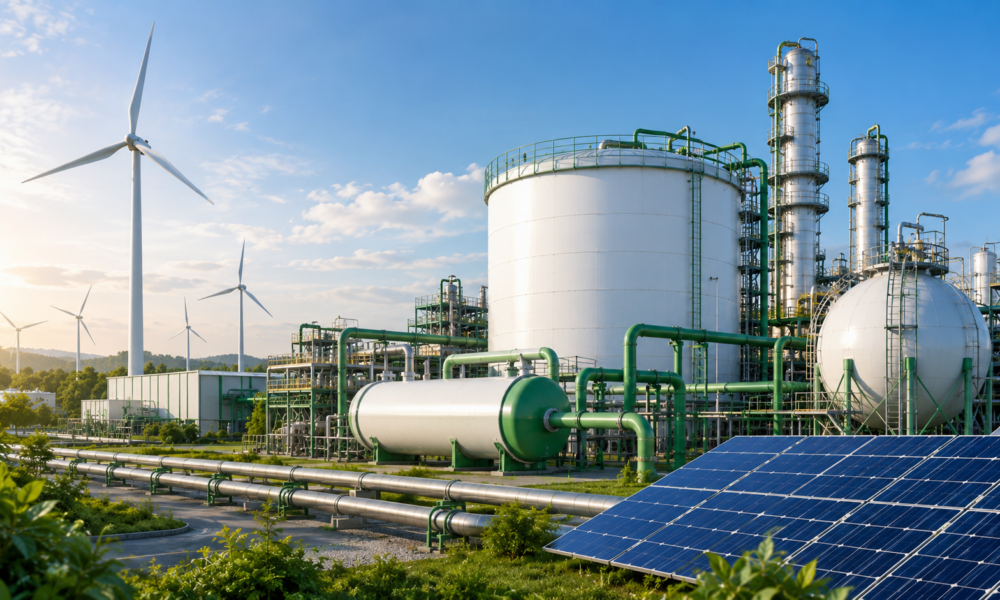
India has taken another step towards building a cleaner industrial future with the Solar Energy Corporation of India (SECI) inviting expressions of interest to identify carbon dioxide (CO₂) suppliers for upcoming green urea and green methanol projects. The move is part of the National Green Hydrogen Mission and aims to create a reliable supply chain for low-carbon fuels that could support industries, agriculture and exports.
Green methanol and green urea are produced using green hydrogen along with captured carbon dioxide. While green hydrogen receives most of the attention, a dependable source of CO₂ is equally important for manufacturing these products. Through the latest exercise, SECI wants to understand where suitable CO₂ is available, how much can be supplied, and what infrastructure will be needed to transport it efficiently.
The initiative is not a tender for awarding projects. Instead, it is a nationwide market consultation that will help the government design future policies, incentive schemes and infrastructure for the green fuels sector. Companies from industries such as cement, steel, fertilisers, refineries, paper, distilleries, waste-to-energy plants and biomass facilities have been invited to share details about their CO₂ sources. Direct Air Capture technology has also been included as a potential source.
For green methanol meant for export, SECI is focusing on carbon sources that meet international sustainability standards, particularly those required by the European Union. The corporation has also indicated a preference for CO₂ sources located close to major ports such as Deendayal Port in Gujarat and V.O. Chidambaranar Port in Tamil Nadu. This could reduce transportation costs and improve export competitiveness.
For green urea, the approach is wider. Since the product is mainly intended for domestic use, SECI is considering a broader range of CO₂ suppliers located near existing and upcoming fertiliser plants. Shorter transport distances can lower production costs and improve project viability.
The development is important for India’s infrastructure sector because it goes beyond renewable power generation. A successful green hydrogen economy will require pipelines, storage facilities, specialised terminals, transport networks, carbon capture systems and new industrial clusters. Ports, logistics companies, engineering firms and industrial developers are all expected to play a role in building this ecosystem.
The National Green Hydrogen Mission aims to establish India as a global hub for the production and export of green hydrogen and its derivatives. Alongside hydrogen, products such as green ammonia, green methanol and green urea are expected to create new opportunities in shipping, chemicals, fertilisers and manufacturing. Building a dependable CO₂ supply chain is therefore becoming an important part of India’s clean energy infrastructure.
Industry experts believe that mapping CO₂ resources today will help reduce delays when large commercial projects begin. It will also provide policymakers with better information on transport networks, storage requirements and investment needs. As India expands its green fuel ambitions, this early planning could help attract private investment while supporting the country’s long-term decarbonisation goals.







No Comment! Be the first one.