






Tamil Nadu Prepares for Heavy Rain: Why Roads, Drains and Water Systems Are in Focus
Chennai: Tamil Nadu is preparing for a challenging period of weather as experts have warned that the state could face heavy rainfall and flooding during the October-December northeast monsoon,...

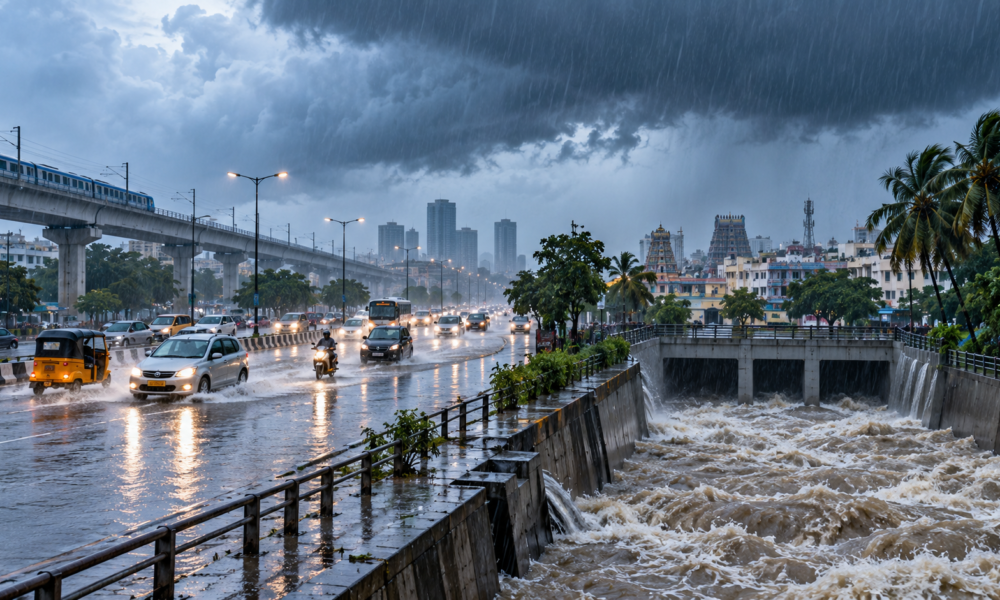
Chennai: Tamil Nadu is preparing for a challenging period of weather as experts have warned that the state could face heavy rainfall and flooding during the October-December northeast monsoon, followed by water-stress risks in parts of the state during 2027.
The warning has made infrastructure preparedness an important issue for the state.
An expert committee examining the impact of El Niño has recommended a multi-hazard approach covering floods, water shortages, heatwaves, cyclones and critical infrastructure. The committee has also called for reservoir monitoring, desilting of waterways, flood-risk mapping and stronger early-warning systems.
Tamil Nadu’s infrastructure challenge is complicated because the state may have to prepare for two opposite problems: too much water in a short period and insufficient water later.
Heavy rainfall can quickly overwhelm urban drainage systems. Roads can become waterlogged, low-lying areas can flood and traffic can be disrupted. In cities such as Chennai, drainage capacity is therefore closely linked to transport infrastructure.
The state’s experience shows why preparation matters. During major rainfall events in previous years, parts of Chennai experienced severe flooding when large amounts of rain fell over a short period.
The committee has recommended frequent monitoring of reservoirs and inflows, desilting of waterways and district-level flood-risk mapping.
These measures may sound basic, but they form an important part of urban infrastructure management.
Drainage channels have to remain clear. Storm-water drains need sufficient capacity. Roads and bridges need to be designed and maintained to withstand repeated flooding. Electricity infrastructure also needs protection because waterlogging can damage power systems and create safety risks.
The state is also expected to face another challenge in 2027. Areas receiving below-normal or uneven rainfall could experience water shortages and reduced reservoir inflows.
This means infrastructure planning cannot focus only on flood control.
Water storage is equally important. Reservoir management, rainwater harvesting, groundwater recharge and better water distribution systems can help cities and rural areas manage periods of shortage.
Climate conditions also affect electricity demand. Higher temperatures can increase the use of air conditioners and cooling systems, putting additional pressure on power networks.
The Tamil Nadu committee has therefore recommended that preparedness cover energy, agriculture, fisheries, public health and essential services along with physical infrastructure.
Recent weather alerts have also highlighted the immediate risk of heavy rain in several Tamil Nadu districts, with authorities warning about waterlogging and possible damage to trees, electricity lines and other public infrastructure.
Roads, drainage networks, reservoirs, power lines and buildings can no longer be planned only around average weather conditions.
They increasingly need to account for extreme rainfall, heat and water shortages.
Tamil Nadu’s preparations for 2026 and 2027 therefore offer a wider lesson for Indian cities: infrastructure has to be designed not only for growth, but also for changing weather risks.








No Comment! Be the first one.