






Vande Bharat Express Expansion: How India’s Rail Network Is Entering a New Phase
India’s railway infrastructure is entering a new phase as Vande Bharat Express services continue expanding across important passenger corridors. The latest additions show that the Vande Bharat...

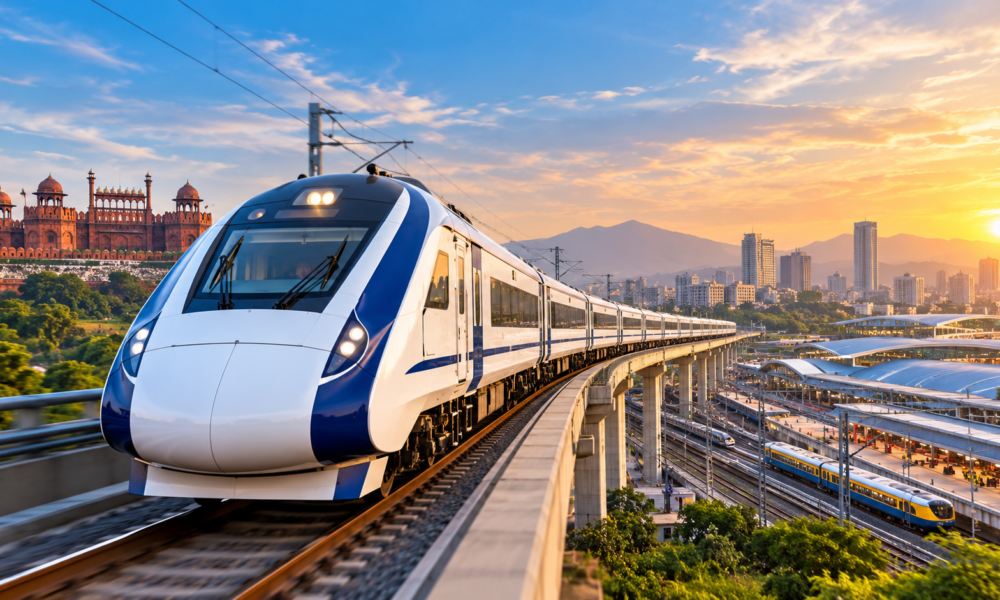
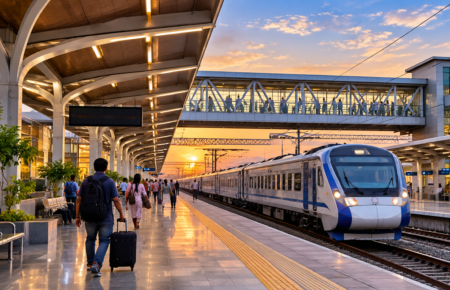
India’s railway infrastructure is entering a new phase as Vande Bharat Express services continue expanding across important passenger corridors.
The latest additions show that the Vande Bharat programme is moving beyond a handful of flagship routes and becoming part of a wider strategy to improve intercity connectivity.
The Surat-Udaipur Vande Bharat Express began operations in October 2026, connecting major cities across Gujarat and Rajasthan. The service covers around 530 km and is designed to strengthen connectivity between the two states.
The expansion comes as passenger demand for Vande Bharat services continues to grow.
Vande Bharat Passenger Demand Is Rising
According to the government, approximately 3.98 crore passengers travelled on Vande Bharat trains during FY2025-26, representing nearly 34% growth compared with the previous year.
Since its introduction, the network has carried more than 9.1 crore passengers across around one lakh trips.
The numbers indicate that faster and more modern train services are finding a growing passenger base.
The introduction of sleeper services could further expand this market.
The first Vande Bharat Sleeper service began regular operations between Howrah and Kamakhya in January 2026. As of March 22, 2026, Indian Railways had 81 pairs of Vande Bharat Chair Car services and one pair of Vande Bharat Sleeper services operating across the network.
Connectivity Is Becoming the Bigger Story
Vande Bharat’s importance goes beyond reducing travel time.
Better rail connectivity can improve access between major cities, industrial centres, tourism destinations and emerging economic corridors.
The Surat-Udaipur route, for example, connects commercial centres in Gujarat with tourism and industrial destinations in Rajasthan.
Other routes are similarly being developed around regional connectivity.
This makes railway infrastructure an important component of India’s broader economic development strategy.
Sleeper Trains Could Change Long-Distance Travel
The next major opportunity could come from Vande Bharat Sleeper trains.
A new Bengaluru-Mumbai Vande Bharat Sleeper service is expected to reduce travel time between the two cities from roughly 24 hours to under 16 hours once introduced. The train is expected to include features such as CCTV surveillance, KAVACH safety technology, upgraded toilets and pantry facilities.
If such services expand across long-distance corridors, they could create a stronger alternative to conventional overnight trains and, on some routes, short-haul air travel.
Infrastructure Beyond the Train
However, faster trains alone cannot transform India’s railway network.
Stations, signalling systems, tracks, bridges, maintenance facilities and last-mile connectivity must also develop alongside new services.
The recent progress on railway infrastructure shows that India’s strategy is increasingly focused on upgrading the entire passenger experience rather than simply adding new trains.
The challenge will be ensuring that expansion remains financially sustainable while maintaining safety, reliability and affordability.
For India’s infrastructure story, Vande Bharat therefore represents something larger than a premium train.
It is becoming a test of how effectively the country can modernise one of its most important public transportation networks while connecting more cities to the next phase of economic growth.
Disclaimer: This article is for informational purposes only and does not constitute investment advice.







No Comment! Be the first one.