








India’s Core Infrastructure Output Climbs 5% in June, Signalling Stronger Momentum Across Key Sectors
India’s infrastructure sector gathered pace in June 2026, with the country’s core infrastructure output rising by 5 per cent year on year under the revised 2022-23 base series. The latest...

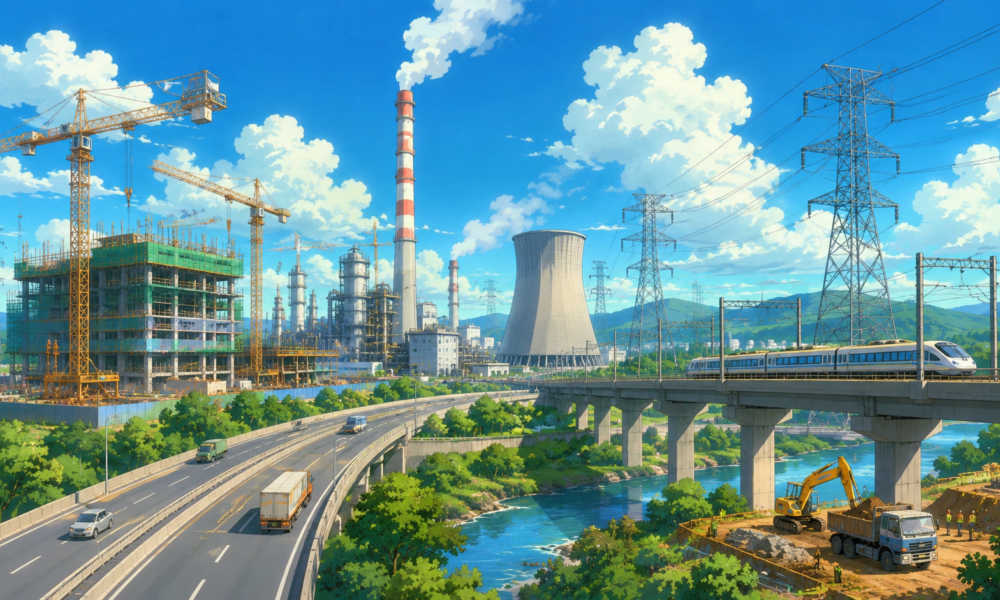
India’s infrastructure sector gathered pace in June 2026, with the country’s core infrastructure output rising by 5 per cent year on year under the revised 2022-23 base series. The latest figures indicate renewed strength across construction-linked industries, supported by robust growth in electricity generation, cement production and iron ore output, providing fresh confidence for infrastructure developers and investors.
The Index of Core Industries, which now covers nine sectors after the inclusion of iron ore, serves as an important indicator of economic activity. These industries account for nearly 41 per cent of India’s industrial production and often reflect the health of infrastructure development across roads, railways, housing, manufacturing and energy.
One of the strongest contributors during June was iron ore production, which recorded a remarkable 43.9 per cent annual increase. The sharp rise reflects growing demand from the steel industry as construction activity continues across multiple infrastructure projects. Cement production also expanded by 9.8 per cent, highlighting sustained demand from residential construction, commercial developments and public infrastructure works. Electricity generation matched this growth with a 9.8 per cent increase, supported by higher industrial consumption and seasonal demand.
Steel production maintained steady momentum, increasing by 4.6 per cent during the month. Although the growth rate moderated slightly compared with previous months, industry analysts believe demand remains healthy as several large transport and industrial projects move through execution.
The revised series also paints a clearer picture of India’s industrial landscape. By including iron ore in the core sector basket, policymakers can better assess the performance of industries that directly feed into manufacturing and infrastructure development. The updated methodology replaces the previous 2011-12 base year, aligning economic measurement with current industrial realities.
Not every sector recorded positive results. Crude oil production declined by 4.2 per cent, while natural gas output fell 7.4 per cent. Refinery products also remained under pressure, reflecting continuing challenges within the energy sector. Fertiliser production slipped by 3.3 per cent during the month. Despite these declines, the strong performance of construction related industries helped offset weakness elsewhere.
For infrastructure developers, the latest numbers reinforce expectations of continued public and private investment. Government backed programmes including highway expansion, railway modernisation, urban infrastructure and logistics corridors continue to support demand for cement, steel and construction materials. Recent approvals for railway capacity expansion and continued investment in expressways are expected to maintain this momentum during the second half of the financial year.
The cumulative growth in core infrastructure output during the April to June quarter stood at 3.6 per cent, significantly higher than the corresponding period last year. Economists suggest that stable capital expenditure by both the Centre and states, combined with increasing private investment, could sustain growth if commodity prices remain stable and project execution continues at the current pace.
As India targets long term economic expansion, strong performance across core industries remains essential. Higher production of cement, steel, electricity and iron ore not only supports ongoing infrastructure development but also strengthens supply chains that underpin manufacturing, logistics and urban development. The latest figures suggest that India’s infrastructure engine continues to provide a solid foundation for broader economic growth in 2026.







No Comment! Be the first one.