








Rajasthan Must Focus on Water Efficiency Alongside New Projects: Experts
Recently, experts in Rajasthan suggested that the state should not only build more water projects but also use them more efficiently. The discussion included government officials, engineers, industry...

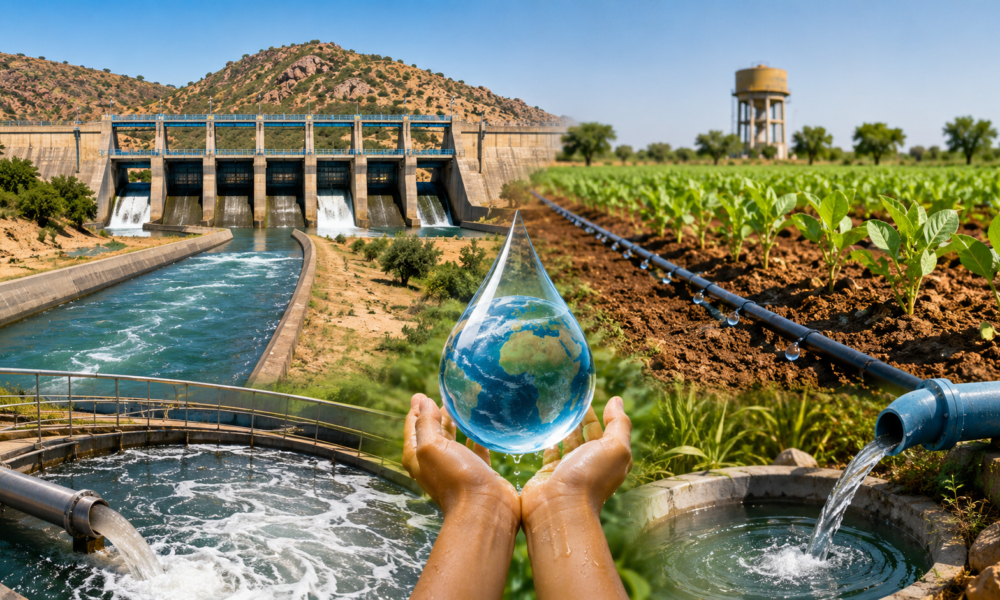
Recently, experts in Rajasthan suggested that the state should not only build more water projects but also use them more efficiently. The discussion included government officials, engineers, industry leaders, NGOs, and global organisations. Experts said that better technology, stronger policies, and greater community participation are essential for long-term water security. The panel also stressed that the state should focus on using every drop of water wisely, rather than just creating new water sources. Officials added that protecting rivers should remain an important part of future water planning.
The Indira Gandhi Nahar Project, which has been operating since 1958, now irrigates over 16.37 lakh hectares of farmland and provides drinking water to more than 2 crore people.
The project has boosted economic growth, infrastructure development, regional development, employment, skill creation, and social equity. It has received around ₹7,000 crore in investments and now generates agricultural output worth over ₹30,000 crore every year.
Experts said that modern irrigation methods such as drip irrigation, sprinkler systems, and laser land levelling can save large amounts of water.
They also said that affordable water-saving technologies are needed for small and marginal farmers. WaterAid India added that treated wastewater and water recycling should become a key part of Rajasthan’s water management strategy.
Experts urged villages and cities to reuse water through local treatment systems. Scientists also said that groundwater monitoring can help communities prevent future water shortages.
The World Bank’s 2030 Water Resources Group said that better policies and modern irrigation technologies can improve water efficiency in agriculture.
Shree Cement said it has reduced its water consumption to less than 80 litres per tonne of cement, which is much lower than the industry average of about 180 litres per tonne.
AI, soil moisture sensors, and automated irrigation systems are also helping farmers reduce water use. Experts concluded that Rajasthan’s future water strategy should combine better infrastructure, technology, scientific planning, wastewater reuse, and community participation to achieve long-term water security and realise its Vision 2047 goals.









No Comment! Be the first one.