








Green Energy Corridor III: India’s ₹1.86 Lakh Crore Plan to Build Renewable Power Infrastructure
India is preparing for another major expansion of its power transmission infrastructure with the approval of Green Energy Corridor Phase III (GEC-III). The scheme, approved by the Union Cabinet on...

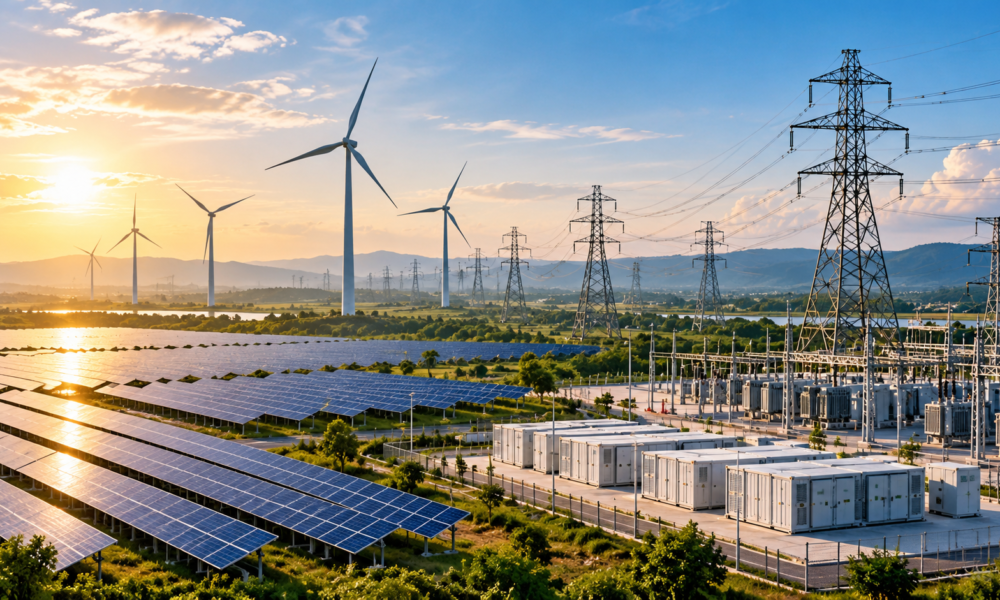
India is preparing for another major expansion of its power transmission infrastructure with the approval of Green Energy Corridor Phase III (GEC-III). The scheme, approved by the Union Cabinet on September 30, 2026, has a total outlay of ₹1,86,405 crore and is designed to help India move more renewable electricity from generation centres to consumers.
The programme focuses on strengthening intra-state transmission networks across India. This is becoming increasingly important as the country adds large amounts of solar and wind capacity. Renewable power projects are often located far from major electricity demand centres, making transmission infrastructure essential for delivering the electricity generated at these projects.
Under GEC-III, the government aims to enable the evacuation of up to 135 GW of renewable energy. The scheme also includes 50 GWh of Battery Energy Storage Systems (BESS), which are designed to provide greater flexibility to the power grid.
The transmission component accounts for ₹1,36,378 crore of the total investment, while ₹50,000 crore has been allocated for battery storage. The government will provide ₹54,082 crore in central financial support for the programme.
Battery storage is becoming increasingly important as renewable generation can change depending on weather and time of day. Solar power, for example, is strongest during daylight hours, while electricity demand can continue into the evening. Storage systems can help shift electricity availability and reduce pressure on the grid during peak periods.
The government expects GEC-III to help address several infrastructure challenges, including renewable power intermittency, transmission congestion and curtailment during periods when the grid cannot absorb all available electricity.
The scheme is targeted for completion by FY2032-33. Greenfield transmission projects under the programme will be implemented through tariff-based competitive bidding, while brownfield upgrades and network strengthening will be undertaken under a cost-plus model.
The initiative also has implications for India’s domestic manufacturing and construction sectors. Transmission projects require equipment such as transformers, conductors, switchgear and substations, while battery storage creates demand for energy storage technologies and related infrastructure.
GEC-III comes as India continues to expand its renewable energy and non-fossil power capacity. The government has planned transmission systems to integrate more than 500 GW of renewable energy by 2030, while the longer-term transmission plan is being developed around even higher non-fossil capacity.
The importance of the programme goes beyond building more power lines. India’s energy transition will depend on whether electricity generated from renewable projects can be transported reliably, stored when necessary and delivered when demand is highest.
For the infrastructure sector, GEC-III therefore represents a major investment in the less visible but critical backbone of India’s clean-energy transition. Solar farms and wind projects may generate the headlines, but transmission lines, substations and battery systems will determine how effectively that electricity reaches homes, businesses and industries.









No Comment! Be the first one.