








EQT Plans $50 Billion India Investment by 2030, Data Centres and Renewable Energy in Focus
Swedish investment firm EQT Group is planning to invest $50 billion in India over the next four years, with data centres and critical infrastructure, particularly renewable energy, expected to form...

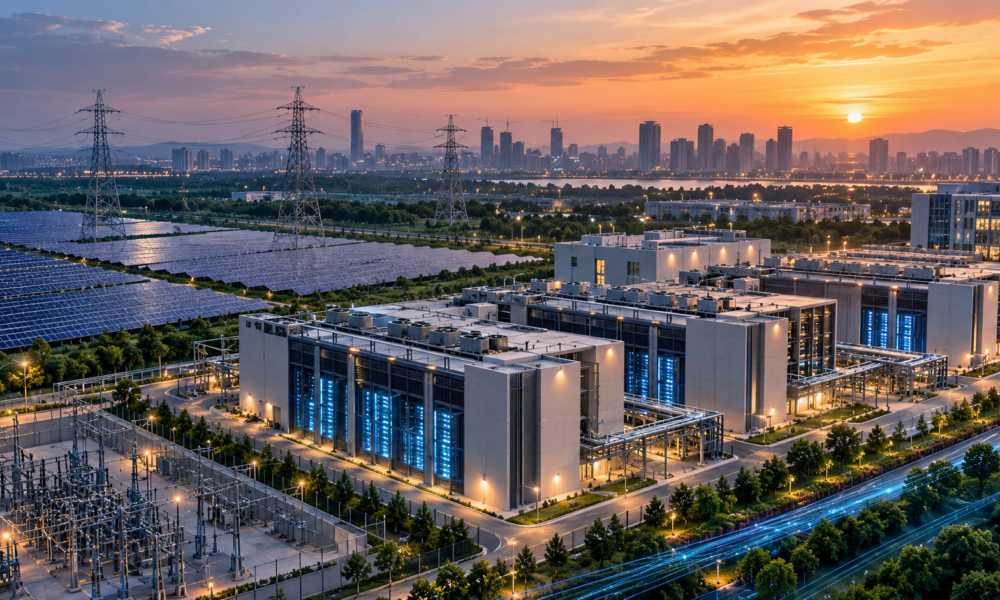
Swedish investment firm EQT Group is planning to invest $50 billion in India over the next four years, with data centres and critical infrastructure, particularly renewable energy, expected to form major areas of focus.
The announcement comes as India accelerates investment in digital infrastructure, artificial intelligence, renewable power and other capital-intensive sectors. EQT Chairman Jean Eric Salata said the proposed investment programme reflects the firm’s long-term commitment to India and its growing infrastructure requirements.
Data centres emerge as a major investment theme
India’s rapidly expanding data centre industry is becoming an increasingly important part of the country’s infrastructure landscape.
Demand for data centres is being supported by artificial intelligence, cloud computing, digital services and enterprise technology adoption. Cushman & Wakefield’s H1 2026 India Data Centre Update estimates that India’s operational data centre capacity has reached nearly 1.8 GW, with a development pipeline of approximately 3.9 GW.
JLL has projected an even larger expansion, with India’s data centre capacity potentially reaching 6 GW by 2029 from around 1.6 GW in mid-2026. The consultancy said the expansion is being supported by AI demand, state incentives and more than $50 billion in commitments from global hyperscalers.
This growth is creating investment opportunities beyond the physical data centre buildings. Developers require land, electricity, transmission infrastructure, fibre connectivity, cooling systems and renewable power to operate large facilities.
Renewable energy becomes critical
The link between data centres and renewable energy is becoming increasingly important because hyperscale and AI facilities require large and reliable electricity supplies.
A recent example came from Telangana, where the Solar Energy Corporation of India (SECI) signed an agreement with HyperVault AI Data Center Limited to explore renewable energy supply for upcoming data centre facilities.
Under the agreement, SECI will explore captive renewable energy projects as well as support for land identification and transmission connectivity.
Such developments illustrate how digital infrastructure and clean-energy infrastructure are increasingly being planned together.
India expands its infrastructure ecosystem
The proposed EQT investment comes amid a broader increase in institutional capital flowing into India’s infrastructure sector.
Cushman & Wakefield reported that 18,158 acres were transacted across more than 880 land deals in 33 Indian cities between 2021 and Q1 2026. The transactions have the potential to generate approximately 1.4 billion sq ft of future built-up development, with infrastructure-led growth corridors contributing to the expansion of Tier-II markets.
Industrial and logistics facilities, offices, mixed-use developments and data centres are all contributing to changing land demand.
The government’s focus is also expanding. At a September 2026 CEO roundtable, the Ministry of Commerce and Industry highlighted India’s potential to attract $200 billion of investment into the data centre industry, while discussions focused on reliable power, ready-to-use land and streamlined approvals.
The infrastructure opportunity is becoming interconnected
EQT’s proposed $50 billion programme therefore arrives at a time when several infrastructure themes are converging.
Data centres require power. AI requires computing capacity. Computing capacity requires specialised facilities and connectivity. And the growing electricity requirement is creating additional demand for renewable generation and transmission infrastructure.
For India, this means the next phase of infrastructure investment may increasingly involve interconnected ecosystems rather than isolated projects.
The combination of digital infrastructure, renewable energy, real estate and power networks could shape a significant portion of India’s infrastructure investment landscape through the end of the decade.





No Comment! Be the first one.