




India’s Commercial Real Estate Enters New Growth Cycle as Demand Spreads Beyond Traditional Hubs
India’s commercial real estate market is entering a new phase of expansion, with office demand increasingly spreading beyond traditional business districts and into emerging corridors supported by...

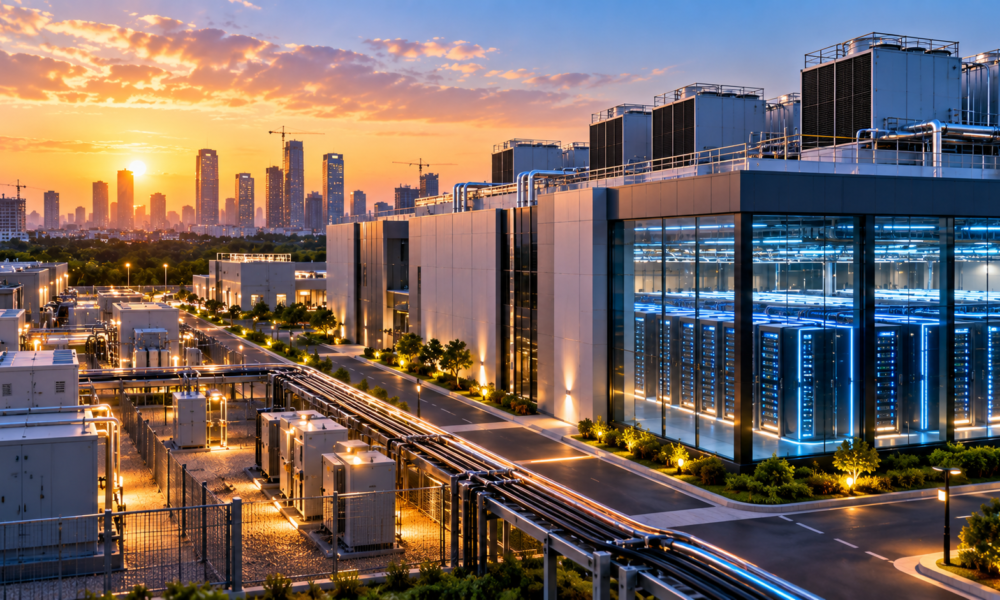
India’s commercial real estate market is entering a new phase of expansion, with office demand increasingly spreading beyond traditional business districts and into emerging corridors supported by better infrastructure, technology investments and changing occupier requirements.
According to CBRE data cited in recent industry reporting, India recorded approximately 45.5 million sq ft of office absorption during the first half of 2026, the highest level recorded for any half-year period. The second quarter alone accounted for around 24.6 million sq ft of leasing.
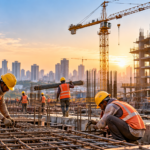
Developers also added significant new supply. Around 32 million sq ft of office space was completed during H1 2026, indicating that the market is expanding on both the demand and supply sides.
One of the biggest drivers has been the continued growth of Global Capability Centres, or GCCs. Colliers data shows that GCCs accounted for approximately 46% of Grade A office leasing during the first half of 2026, representing around 16.6 million sq ft.
The expansion of GCCs is changing the geography of commercial real estate in India. While Bengaluru, Mumbai, Hyderabad, Delhi-NCR and Pune remain major office markets, businesses are increasingly exploring locations that offer connectivity, talent availability and development potential.
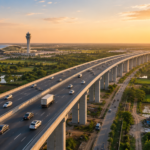
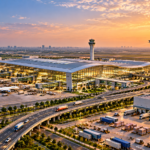
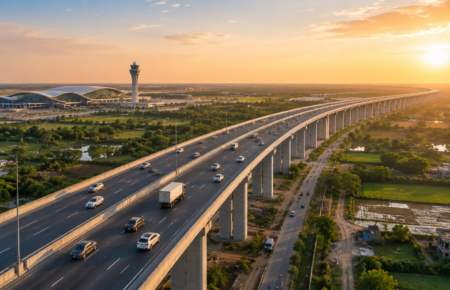
Delhi-NCR provides a clear example of this shift. Noida, Greater Noida and the Yamuna Expressway corridor are seeing increasing interest as road connectivity, metro expansion, technology infrastructure and large-scale development reshape the region.
Data centres are also becoming an important component of this transformation. The growth of cloud computing and artificial intelligence is creating demand for specialised digital infrastructure, particularly in locations with access to power, fibre connectivity and large development parcels.
The changing commercial landscape is also influencing retail and residential development. As employment centres move into emerging corridors, demand for restaurants, shopping centres, hotels, housing and other supporting services can develop around them.
This creates the possibility of integrated business districts rather than isolated office developments.
Retail leasing is already reflecting some of this trend. Recent industry data shows that retail leasing in India remained strong during H1 2026, with high streets and mixed-use destinations gaining importance alongside traditional shopping malls.
For developers, however, simply adding office space may not be enough. Companies are becoming increasingly selective about factors such as connectivity, building quality, sustainability, employee accessibility and surrounding amenities.
Sustainability is another important consideration. Green-certified buildings accounted for a significant share of recent office completions and leasing, indicating that environmental credentials are becoming increasingly relevant to occupiers.
The expansion of commercial real estate therefore has implications beyond office buildings themselves. New business districts can influence residential demand, transportation networks, retail activity and land values in surrounding areas.
India’s commercial property market enters the second half of 2026 with strong leasing momentum, but the next stage of growth may depend increasingly on how effectively developers and infrastructure agencies create well-connected, sustainable and integrated urban districts.
The emerging story is no longer simply about where companies lease offices. It is about how entire commercial ecosystems are being built around India’s next generation of business corridors.




No Comment! Be the first one.