








India Doubles Port Environmental Clearance Validity to 20 Years
India has extended the validity period of environmental clearances for several maritime infrastructure projects from 10 years to 20 years, a regulatory change that could provide greater planning...

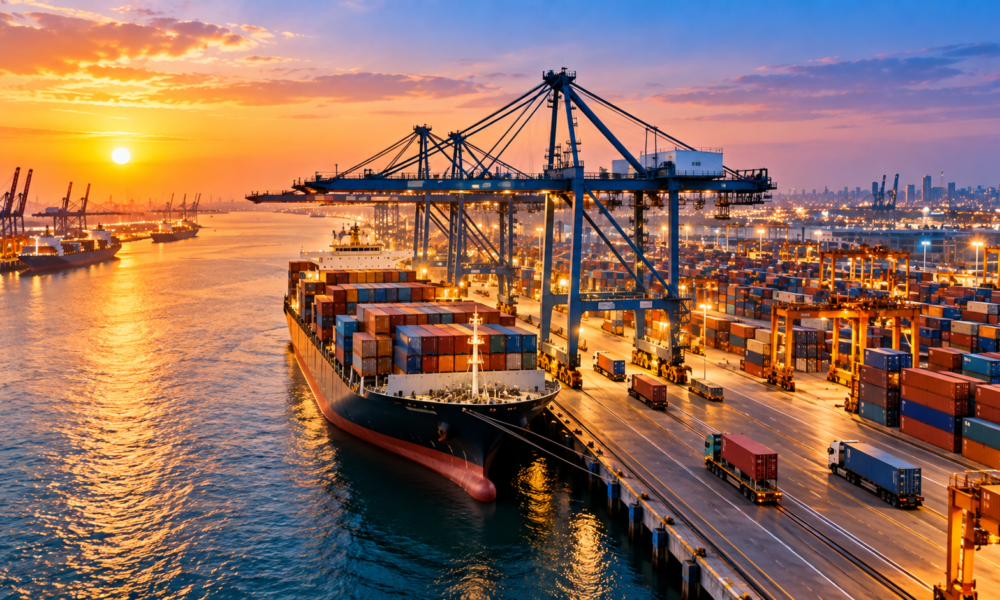
India has extended the validity period of environmental clearances for several maritime infrastructure projects from 10 years to 20 years, a regulatory change that could provide greater planning visibility for long-gestation port and harbour developments.
The Ministry of Environment, Forest and Climate Change notified the amendment to the Environment Impact Assessment Notification, 2006, on September 21, changing the validity framework for ports, harbours, breakwaters and dredging projects.
Under the earlier framework, environmental clearances for these projects were generally valid for 10 years. The revised rules provide an initial validity period of 20 years.
The change is relevant because port infrastructure projects can take several years to move from planning and approvals to construction and commercial operations.
Longer validity could provide developers and investors with greater certainty when planning projects involving large capital commitments.
The revised framework does not mean environmental safeguards have been removed. Additional extensions remain subject to scrutiny and expert appraisal.
Projects that require more time can potentially receive further extensions of up to five years, subject to the prescribed environmental safeguards.
A second five-year extension may also be considered in eligible cases where a project has still not become operational. Such extensions remain subject to assessment of environmental safeguards and additional measures that may need to be included in the project’s Environmental Management Plan.
The policy change comes as India continues to expand its maritime infrastructure.
According to the XInfra report based on the government’s broader infrastructure targets, India’s port capacity is currently around 2,762 million tonnes per annum. The government has set an ambitious target of reaching 10,000 million tonnes per annum by 2047.
Ports are central to India’s trade infrastructure because they connect domestic manufacturing and logistics networks with global markets.
Greater capacity can also support industrial corridors, logistics parks, warehousing, manufacturing clusters and coastal economic activity.
The environmental-clearance change could therefore have implications beyond ports themselves.
Large maritime projects frequently require supporting road and rail connectivity, storage facilities, logistics infrastructure and industrial development. As port capacity expands, surrounding regions can see increased demand for these supporting assets.
However, project execution will remain dependent on multiple factors, including land acquisition, financing, construction progress, regulatory approvals and environmental compliance.
The longer clearance validity therefore provides greater regulatory visibility but does not automatically guarantee faster project completion.
For infrastructure investors and developers, the key change is the longer planning horizon.
A 20-year validity period gives projects with extended construction and development timelines more room to progress without facing the same frequency of clearance renewal associated with the earlier framework.
As India seeks to expand its maritime infrastructure over the coming decades, the new environmental-clearance framework could become an important part of the regulatory architecture supporting that expansion.
The balance between infrastructure development and environmental safeguards will remain central as more large-scale port projects move through planning and execution.






No Comment! Be the first one.