



Extreme Weather and Urban Infrastructure: Why Indian Cities Need Greater Climate Resilience
India’s cities are confronting a growing infrastructure challenge: extreme weather is increasingly exposing weaknesses in drainage, roads, housing, open spaces and water-management systems....

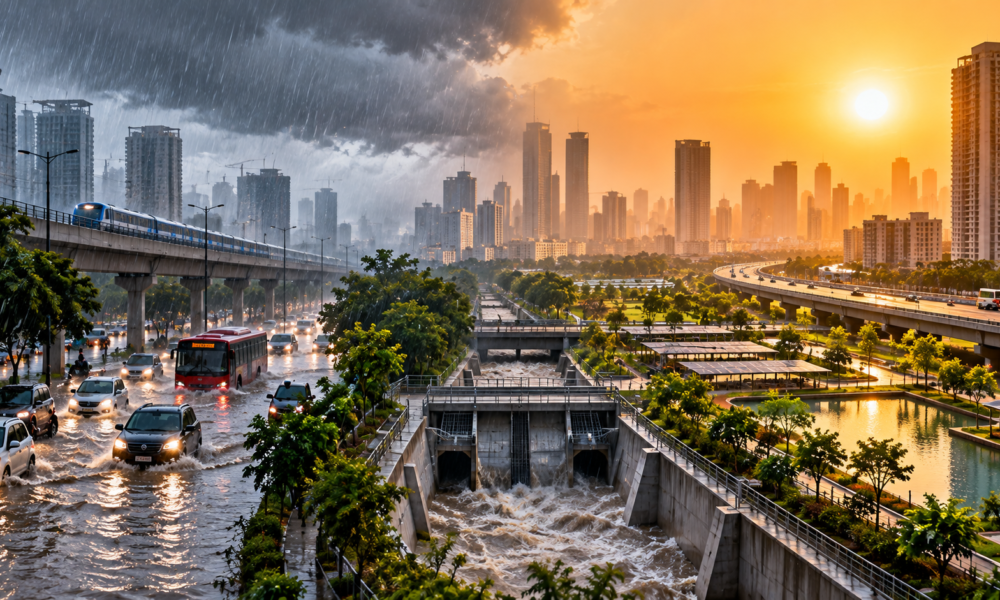
India’s cities are confronting a growing infrastructure challenge: extreme weather is increasingly exposing weaknesses in drainage, roads, housing, open spaces and water-management systems.
Heavy rainfall can overwhelm drainage networks, while extreme heat can place pressure on electricity, water supply and public spaces.
Recent events have demonstrated how quickly weather can turn into an urban infrastructure crisis.
In October 2026, flooding affected parts of Lucknow even without significant recent rainfall in the city. Officials linked the flooding to exceptionally heavy rainfall upstream in the Gomti catchment, where some areas received as much as 257 mm of rain between September 22 and 27. Around 40,000 residents were reported to be affected.
The incident illustrates an important point: urban flood risk does not always originate inside the city.
Why Drainage Alone Is Not Enough
Urban flooding is often treated as a drainage problem.
But the causes can be much broader.
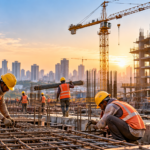
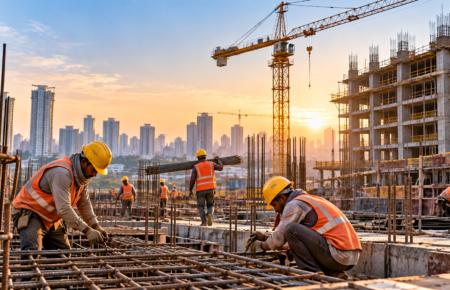
Rapid construction can reduce natural areas where rainwater can be absorbed.
Encroachment, inadequate drainage capacity and poorly planned development can increase the speed at which water accumulates.
The result is that even relatively short periods of intense rainfall can disrupt roads, transport, homes and commercial activity.
Recent analysis of Indian cities has similarly linked extreme weather impacts with dense construction, loss of open land, weak drainage and inadequate urban systems.
Government Is Expanding Urban Flood Programmes
The government has approved the Urban Flood Risk Management Programme in multiple phases.
Phase I covers seven cities including Ahmedabad, Bengaluru, Chennai, Hyderabad, Kolkata, Mumbai and Pune, with a total financial outlay of ₹3,075.65 crore.
Phase II covers 11 additional cities, including Kanpur, Jaipur, Patna, Guwahati and Lucknow, with an outlay of ₹2,444.42 crore.
The programme reflects a broader shift towards treating urban flooding as a resilience and infrastructure-planning issue.
Heat Is Another Infrastructure Problem
Flooding is only one side of the challenge.
Indian cities are also becoming increasingly exposed to extreme heat.
Urban areas with limited vegetation, large amounts of concrete and high traffic can experience intense heat stress.
This can increase demand for cooling and electricity while affecting outdoor workers and vulnerable populations.
Climate-resilient urban planning therefore needs to combine flood management with heat mitigation.
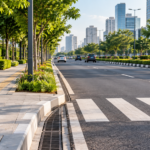
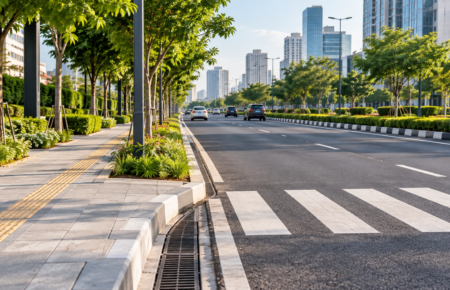
Trees, green spaces, water bodies, reflective surfaces, shaded pedestrian infrastructure and better building design can all contribute to resilience.
Infrastructure Needs to Anticipate Risk
The traditional approach to infrastructure has often focused on building enough capacity for normal conditions.
The climate challenge is different.
Cities increasingly need systems capable of handling abnormal conditions.
That means drainage systems designed around updated rainfall patterns, power networks prepared for heat-related demand, roads capable of recovering quickly from flooding and emergency systems that can respond when multiple infrastructure networks fail simultaneously.
India’s Next Urban Challenge
India’s urban population and economic activity will continue to grow.
That makes infrastructure resilience increasingly important for both public safety and economic productivity.
The objective should not simply be to build bigger cities.
It should be to build cities that can continue functioning when weather conditions become extreme.
For India’s infrastructure sector, climate resilience is therefore moving from a sustainability discussion into a practical requirement for urban development.
Disclaimer: This article is for informational purposes only and does not constitute investment advice.





[…] Also Read: https://xinfra.onextelcommunication.com/extreme-weather-urban-infrastructure-india/ […]