







Transmission Infrastructure: The Hidden Backbone of India’s Clean Energy Transition
India’s clean-energy transition is often measured through solar panels, wind turbines and renewable power capacity. But behind every renewable energy project is another infrastructure network that is...

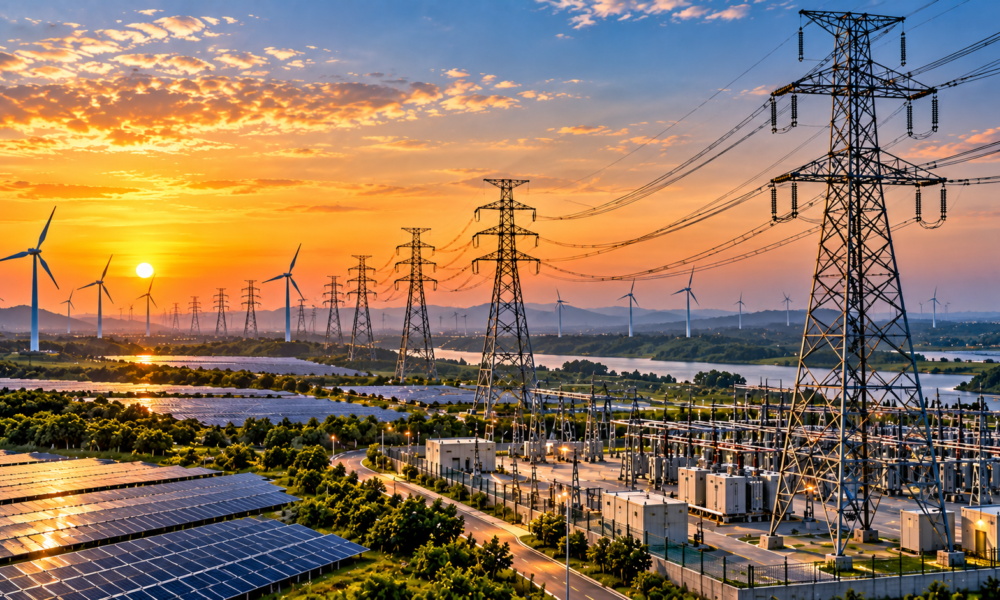
India’s clean-energy transition is often measured through solar panels, wind turbines and renewable power capacity. But behind every renewable energy project is another infrastructure network that is just as important: the electricity transmission grid.
India is expanding this network rapidly as renewable generation increases and electricity demand grows across industries, cities, transport and digital infrastructure.
The government has planned transmission systems capable of integrating more than 500 GW of renewable energy by 2030. Under the National Electricity Plan, the transmission network at 220 kV and above is planned to expand from around 5.04 lakh circuit kilometres in February 2026 to 6.48 lakh circuit kilometres by 2032.
Transformation capacity is also planned to increase from around 1,429 GVA to 2,345 GVA during the same period. Inter-regional transmission capacity is expected to rise from 120 GW in February 2026 to 168 GW by 2032.
These numbers highlight the scale of infrastructure required to support India’s changing power system.
Renewable generation is not evenly distributed across the country. Some of India’s strongest solar and wind resources are located far from major centres of electricity demand. This creates a need for long-distance transmission infrastructure capable of moving electricity between regions.
Transmission infrastructure includes high-voltage lines, substations, transformers, switchgear and grid-management systems. Together, these assets form the network that carries electricity from power-generation areas to distribution systems serving cities, industries and other consumers.
The challenge becomes more complex with renewable power because solar and wind generation varies according to weather and time of day. A stronger transmission network can help move electricity between regions when generation and demand do not match.
Energy storage is another part of the solution. Battery systems and pumped-storage projects can help balance periods when renewable generation is low or demand is high. The government’s current grid planning therefore combines transmission expansion with storage and other flexibility measures.
India is also developing high-voltage direct-current, or HVDC, transmission links for long-distance bulk power transfer. These systems can help move large quantities of electricity efficiently over long distances and improve control of the grid.
The expansion of transmission infrastructure is also connected to new categories of electricity demand. Data centres, electric mobility, industrial corridors and manufacturing facilities can create large concentrated loads that require reliable power connections.
This means transmission planning is increasingly becoming a wider economic infrastructure issue rather than simply a power-sector concern.
The infrastructure investment also creates opportunities for equipment manufacturers, engineering companies and construction firms. Demand for transformers, conductors, cables, towers, substations and grid-control technologies is expected to grow as the network expands.
India’s energy transition will ultimately depend on how well these systems work together. Adding generation capacity without adequate transmission can create congestion and limit the amount of renewable power that can be delivered.
The transmission grid is therefore the hidden backbone of India’s clean-energy infrastructure. While solar farms and wind parks are visible symbols of the energy transition, high-voltage networks determine whether that electricity can travel from where it is generated to where it is needed.
As India moves towards a larger non-fossil electricity system, investment in transmission, storage and grid technology will become increasingly important for creating a reliable and flexible power network.






No Comment! Be the first one.