








JNPA Shore Power: How India’s Port Infrastructure Is Moving Towards Cleaner Shipping
Jawaharlal Nehru Port Authority (JNPA) is preparing to introduce shore-power infrastructure across its terminals in Navi Mumbai, marking a new step in India’s efforts to reduce emissions from...

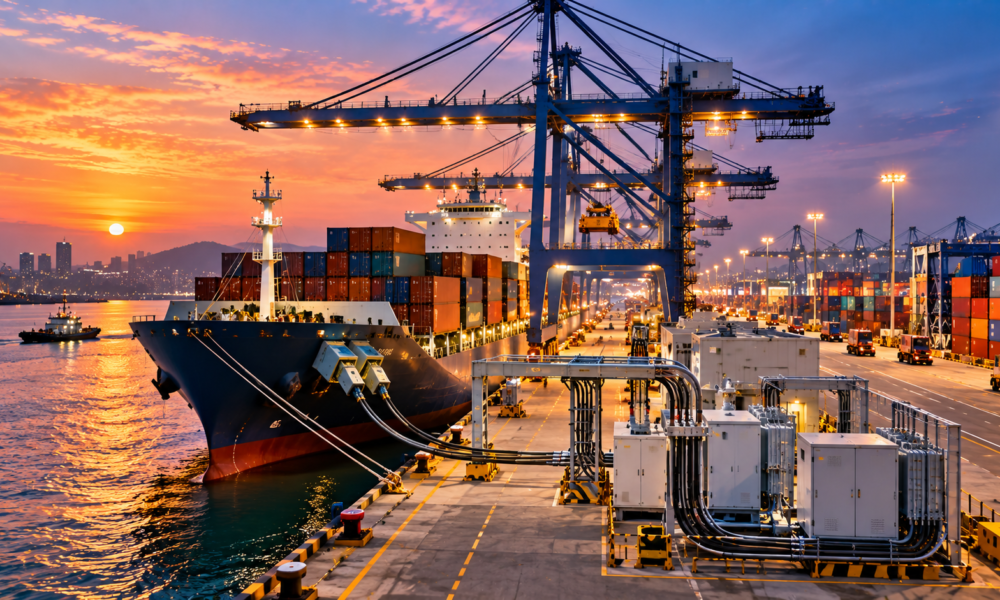
Jawaharlal Nehru Port Authority (JNPA) is preparing to introduce shore-power infrastructure across its terminals in Navi Mumbai, marking a new step in India’s efforts to reduce emissions from port operations.
The International Finance Corporation (IFC) has committed $70 million to the project. The financing has been described as India’s first blue-financing framework for the maritime sector.
Shore power allows ships to connect to electricity from the port while they are berthed instead of continuing to run their diesel-powered auxiliary engines. This can reduce emissions and air pollution around busy port areas.
At present, ships often keep auxiliary engines running while they are at berth to power onboard systems such as lighting, refrigeration and other equipment. Connecting vessels to land-based electricity can allow these engines to be switched off during their stay.
According to project estimates, the JNPA shore-power system could reduce carbon emissions by around 63% and harmful air pollution by up to 90%. The project is also expected to create more than 400 jobs.
The infrastructure will require more than simply installing electrical connections at the port. Shore-power systems need dedicated electrical equipment, transformers, cables, control systems and connections to the wider electricity network.
This makes the project an important example of how port infrastructure is increasingly intersecting with energy infrastructure.
JNPA operates multiple container terminals and other cargo facilities and is one of India’s major maritime gateways. Its location near Mumbai also makes its environmental performance important for the wider urban and industrial region.
The project could also provide a model for other Indian ports. Shore power is still relatively new in the country’s maritime sector, and commercial-scale adoption remains limited. Developing a working system at a major container port could provide operational experience for future installations elsewhere.
The initiative is also linked to India’s wider push to reduce emissions from ports. The government’s Harit Sagar Green Port Guidelines identify shore power as one of the interventions that can support greener port operations.
Financing is another important part of the development. The IFC investment is structured as blue financing, creating a potential model for using sustainable finance to fund maritime infrastructure.
This could become increasingly important as ports require investment not only in cargo capacity but also in environmental infrastructure. Future port projects may need to combine terminals, logistics facilities and connectivity with systems that reduce emissions and improve energy efficiency.
The project also comes as Maharashtra develops the Vadhvan Port, a large deep-draft greenfield port project. The wider expansion of maritime capacity means that India’s coastal infrastructure will require both additional cargo-handling capacity and cleaner operating systems.
For the infrastructure sector, JNPA’s shore-power project illustrates how decarbonisation is changing the design of traditional assets. Ports are no longer being planned only around ships, cranes, storage yards and road connections. Electricity systems, digital technology and environmental infrastructure are becoming increasingly important.
If the JNPA model proves effective, shore power could become an important component of future Indian port development.
The project therefore represents more than an environmental upgrade. It connects maritime infrastructure, electricity infrastructure and sustainable finance, showing how India’s ports are beginning to evolve for a lower-emission logistics economy.






No Comment! Be the first one.