








LPG Cylinder Price Rise Highlights India’s Expanding Gas Infrastructure
New Delhi: Changes in LPG cylinder prices often become a household and business issue, but they also highlight the large infrastructure network required to move cooking gas across India. From October...

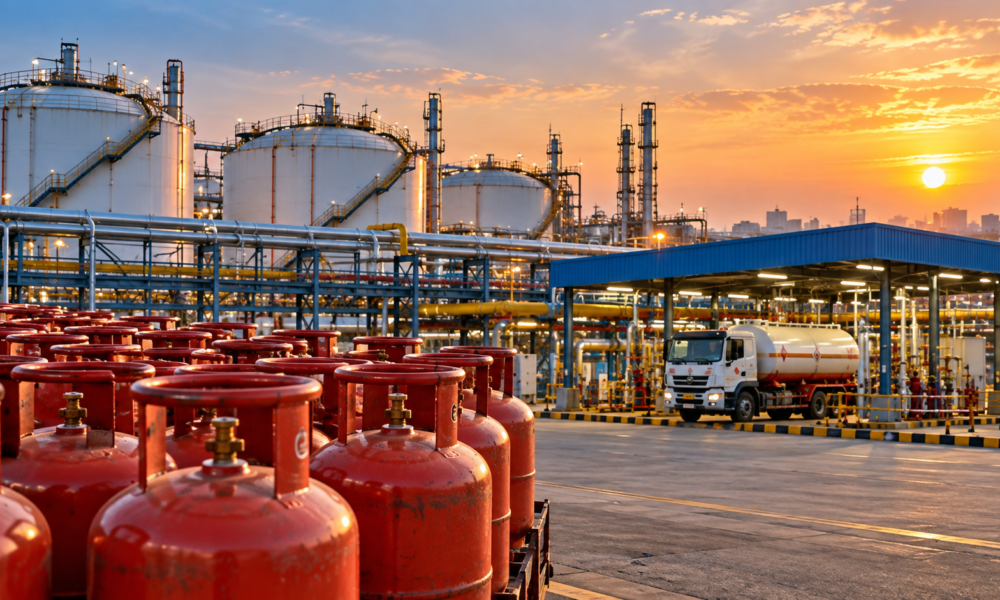
New Delhi: Changes in LPG cylinder prices often become a household and business issue, but they also highlight the large infrastructure network required to move cooking gas across India.
From October 1, the price of a 19-kg commercial LPG cylinder increased in several cities. In Delhi, the increase was ₹62.50, taking the price to ₹2,810. Household LPG cylinder prices were unchanged.
Behind every LPG cylinder is a large supply chain.
LPG has to be imported or produced at refineries and gas-processing facilities before it reaches storage terminals, bottling plants, distributors and finally consumers.
This makes LPG infrastructure an important part of India’s energy system.
Storage facilities are required to hold LPG safely before distribution. Bottling plants then fill cylinders and send them to distributors.
Transportation is another major component.
LPG moves through pipelines, tankers, rail networks and road vehicles depending on the location and type of facility.
India’s growing population and expanding urban centres have increased the importance of reliable fuel distribution.
Commercial users such as restaurants, hotels, food businesses and small industries depend heavily on LPG.
This means changes in commercial cylinder prices can affect operating costs across the hospitality and food-service sectors.
For infrastructure companies, the LPG network creates demand for storage terminals, bottling plants, pipelines, safety equipment and transportation infrastructure.
Safety is particularly important because LPG is highly flammable.
Storage and bottling facilities therefore require specialised systems for pressure control, leak detection, fire protection and emergency response.
India has also been expanding access to cleaner cooking fuels, particularly through household LPG connections.
The infrastructure required for this expansion includes distribution networks that can reach both urban and rural consumers.
The future of India’s gas infrastructure is also connected with pipelines and alternative fuels.
Natural gas pipelines, LNG terminals and city gas distribution networks are expanding in different parts of the country.
While LPG and natural gas serve different purposes, both depend on reliable energy infrastructure.
For cities, the challenge is to make fuel distribution efficient while maintaining high safety standards.
For businesses, the availability and cost of fuel remain important operating factors.
The latest commercial LPG price increase therefore has an infrastructure angle that goes beyond the price of a cylinder.
It highlights the large physical network required to transport, store and distribute energy across a country as large as India.
As India’s energy demand continues to rise, the infrastructure supporting fuel distribution will remain an important part of the country’s economic system.





No Comment! Be the first one.