








India’s Semiconductor Push Raises Demand for Power, Water and Industrial Infrastructure
India’s plans to expand semiconductor manufacturing are creating new requirements for industrial infrastructure, including reliable electricity, water supply, specialised buildings and...

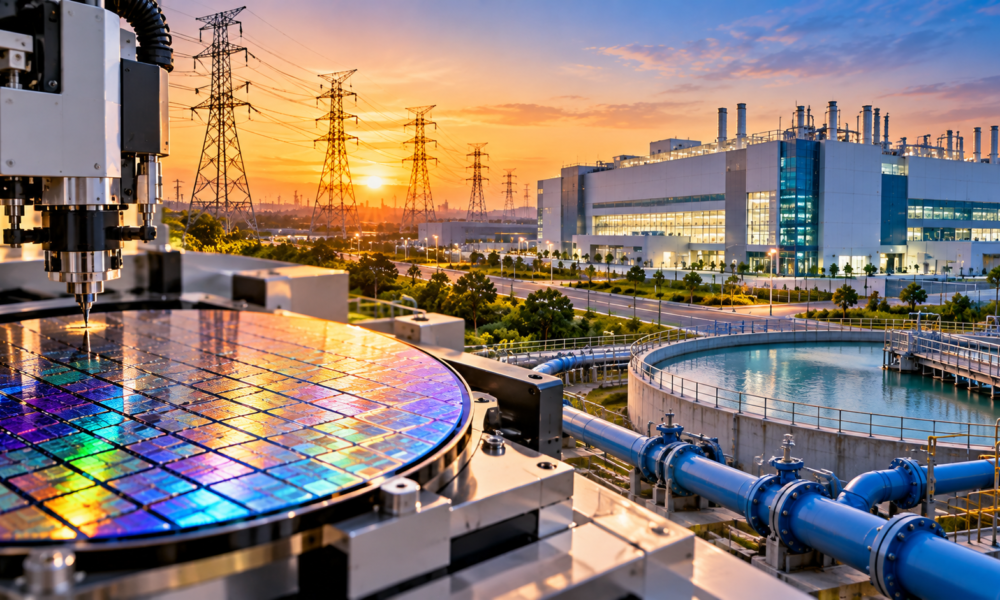
India’s plans to expand semiconductor manufacturing are creating new requirements for industrial infrastructure, including reliable electricity, water supply, specialised buildings and transport links.
The government’s semiconductor programme aims to develop a domestic ecosystem covering chip design, fabrication, assembly, testing and packaging. In February 2026, the Press Information Bureau reported that 10 semiconductor projects had been approved with planned investments of about ₹1.6 lakh crore.
The investment commitments represent planned development, and individual projects must still progress through construction, installation and production stages.
Why do semiconductor plants need specialised infrastructure?
Semiconductors are used in mobile phones, computers, vehicles, telecommunications equipment and many industrial systems.
Manufacturing chips requires highly controlled production environments. Dust, temperature changes and other contaminants can affect the quality of the finished products. A semiconductor fabrication plant, commonly called a fab, uses specialised cleanrooms and equipment to manufacture chips on silicon wafers.
These facilities need a stable power supply because interruptions can disrupt production and damage sensitive processes.
They also require carefully managed water systems. Manufacturing processes use water for cleaning and other operations, and facilities may need advanced treatment systems to meet quality requirements.
Power supply is a major requirement
Semiconductor plants operate complex equipment that requires reliable electricity.
A suitable industrial location needs more than access to a nearby power line. It may require sufficient grid capacity, backup arrangements and systems to manage power quality.
Unplanned interruptions can create operational problems and increase costs.
As more advanced manufacturing facilities are developed, utilities and industrial authorities must coordinate their infrastructure plans with project schedules.
Water supply and waste treatment
Water is another important requirement. Chip manufacturing can require high-purity water for cleaning and other processes. Plants may therefore need treatment facilities that can produce water of the required quality.
Industrial authorities must also plan for wastewater treatment and safe disposal. These needs are important in areas where water resources are under pressure. The location of a manufacturing plant should be assessed alongside water availability, recycling options and environmental requirements.
What is happening in India?
The government’s semiconductor programme has supported projects across different parts of the country.
A government update published in April 2026 said the programme had approved 10 projects with investment commitments of around ₹1.6 lakh crore. It also described plans to develop activities across the semiconductor value chain.
The broader goal is to reduce dependence on imported components and develop domestic manufacturing capabilities.
However, a complete semiconductor ecosystem requires more than factories. It also needs specialised suppliers, skilled workers, research facilities, logistics networks and reliable utilities.
How can industrial regions prepare?
Industrial areas seeking semiconductor investment need to assess power availability, water supply, transport links and the ability to provide suitable sites. They also need clear approval processes and effective coordination between government departments and utility providers.
Training institutions can help develop workers with skills in electronics, equipment maintenance, quality control and specialised manufacturing.
Local businesses may also gain opportunities to supply equipment, materials and support services.
What are the challenges?
Semiconductor plants are expensive to build and operate. They depend on advanced equipment, technical expertise and consistent production quality. Project delays, infrastructure gaps and changes in global demand can affect their financial performance.
Environmental safeguards are also important because manufacturing can require substantial energy and water resources.
India’s semiconductor ambitions depend on the development of supporting infrastructure alongside manufacturing facilities.
Reliable electricity, specialised water systems, cleanrooms, transport links and skilled workers will be essential to turn investment commitments into operational production.








No Comment! Be the first one.