








Hindustan Zinc: Production, Silver Exposure and Expansion Plans
Hindustan Zinc is an important producer of zinc, lead and silver, supplying metals used across industrial and manufacturing applications. Its performance is influenced by commodity prices, production...

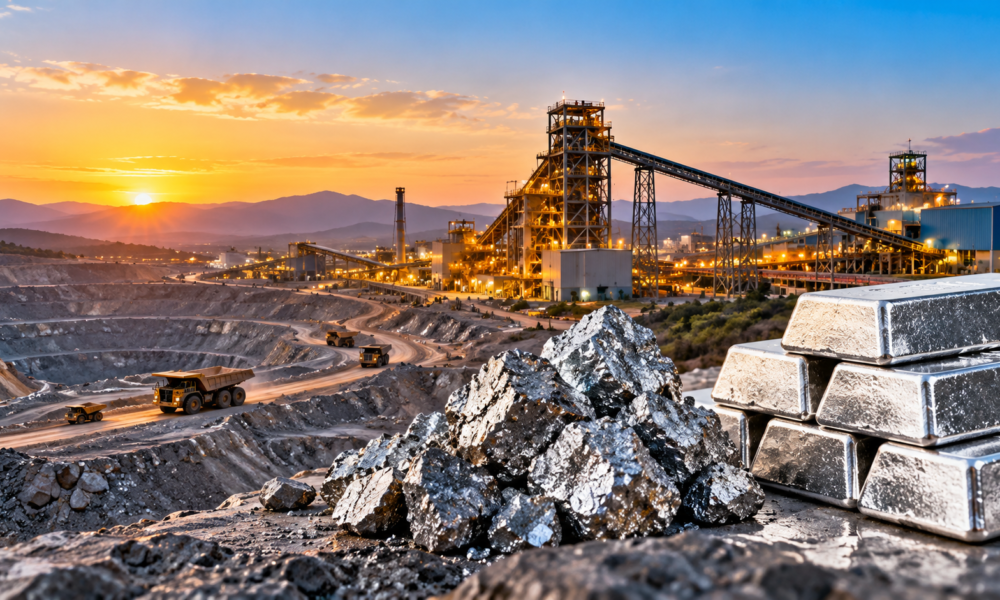
Hindustan Zinc is an important producer of zinc, lead and silver, supplying metals used across industrial and manufacturing applications. Its performance is influenced by commodity prices, production volumes, operating costs and investment in mining and processing capacity.
The company reported strong results for the quarter ended September 2026. Reuters reported that revenue increased 76.5% year-on-year to ₹15,093 crore, while net profit more than doubled to ₹6,412 crore. Mined metal production rose 5% to 271,000 tonnes, refined metal production increased 7% to 264,000 tonnes, and silver production climbed 20% to 173 tonnes.
Why zinc matters to industry
Zinc is widely used to protect steel from corrosion through galvanisation. This makes it relevant to construction, infrastructure, automobiles, engineering and industrial manufacturing.
Demand for galvanised steel is connected to economic activity. Infrastructure construction, industrial investment and manufacturing output can influence metal consumption. However, demand and prices can also be affected by global economic conditions, inventories, mine supply and smelter capacity.
For producers, the combination of production volumes and realised prices often matters more than either measure alone.
Silver adds another dimension
Silver gives Hindustan Zinc exposure to a metal with both investment and industrial applications. It is used in electronics and other industrial products, while demand can also respond to investment flows and precious-metal market movements.
This diversified metal exposure can support revenue when silver prices are strong. At the same time, commodity prices can move sharply, making it important to separate operational improvements from gains driven by market prices.
The company’s latest reported increase in silver production is a relevant operating indicator, but sustained performance will depend on output, recovery rates, pricing and costs.
Costs and expansion
Hindustan Zinc has also revised its fiscal 2027 zinc production cost forecast downward to $825-$850 per tonne from its earlier guidance of $975-$1,000, according to Reuters. The company cited improved production efficiency, while reported costs for the September quarter fell to $703 per tonne.
Lower costs can strengthen margins, particularly when commodity prices are supportive. But investors should check whether the improvement reflects lasting efficiency gains or factors that could change in future quarters.
The company is also progressing with a zinc expansion project designed for an additional 250,000 tonnes of annual capacity. Expansion can improve production potential, but it requires capital, timely execution and reliable demand.
What investors and industry watchers should monitor
Key indicators include mined and refined metal output, silver production, realised prices, production costs, capital expenditure and project progress. Changes in global zinc supply and demand also deserve attention.
A strong quarter does not necessarily establish a permanent earnings trend. Commodity prices can reverse, input costs can rise and expansion projects may take time to generate returns.
Hindustan Zinc’s performance highlights the close relationship between mining efficiency, industrial demand and commodity-market cycles. Its future results will depend on how effectively it balances output growth, cost control and investment.
Investor note: This is an industry analysis, not investment advice. Refer to company filings and exchange disclosures for full financial details.





No Comment! Be the first one.