





CCEA Approves ₹25,446 Crore Highway Projects to Transform Connectivity in Varanasi
India’s highway network is set for another major expansion after the Cabinet Committee on Economic Affairs (CCEA) approved two flagship road infrastructure projects worth ₹25,446 crore for...

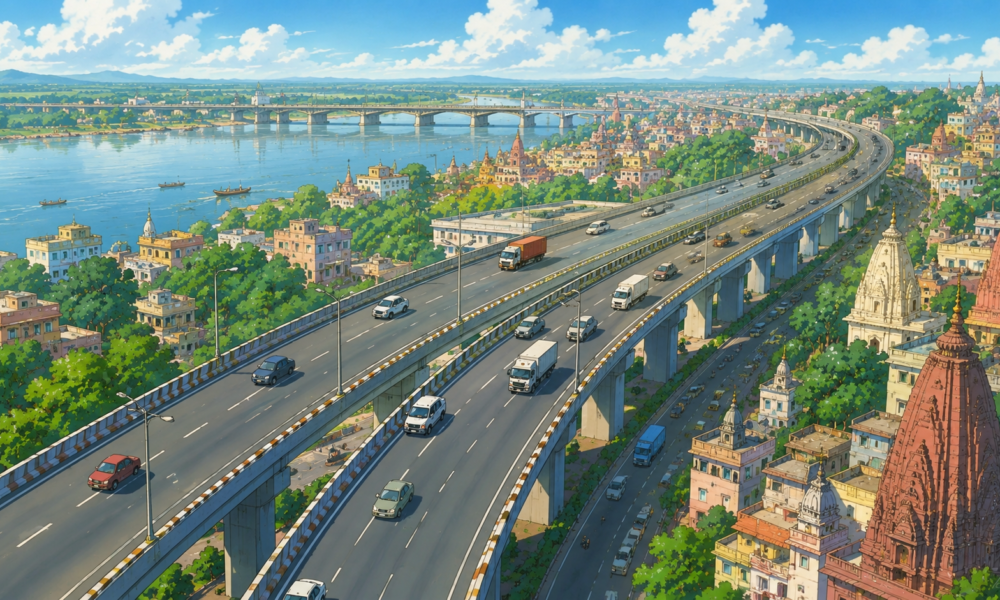
India’s highway network is set for another major expansion after the Cabinet Committee on Economic Affairs (CCEA) approved two flagship road infrastructure projects worth ₹25,446 crore for Varanasi. The project aims to ease congestion, improve freight movement and strengthen connectivity across one of the country’s fastest-growing urban and religious destinations.
The approved developments include a 43.2-kilometre elevated corridor that will run along the Varuna riverbank and a 46.04-kilometre elevated corridor connecting National Highway 19 with the Varanasi Ring Road along the Ganga riverbank. Together, the two corridors are expected to create a seamless transport network that will significantly reduce travel time for both local commuters and long-distance traffic.
Varanasi has witnessed a sharp increase in passenger and freight traffic over the past few years, driven by rapid urbanisation, tourism, industrial activity and public infrastructure investments. Existing roads often experience heavy congestion, particularly during peak hours and festive seasons. The newly approved corridors are designed to divert through traffic away from city roads while improving access to key commercial and residential areas.
The elevated corridors will also strengthen regional logistics by improving connectivity between national highways, industrial areas and transport hubs. Faster movement of goods is expected to lower travel costs for businesses while supporting supply chains across eastern Uttar Pradesh. Improved connectivity is likely to benefit manufacturing, warehousing, retail and tourism sectors, all of which rely on efficient road infrastructure.
The project forms part of the government’s wider strategy to modernise India’s transport infrastructure through high-capacity expressways, ring roads and urban mobility corridors. Better road connectivity is increasingly being viewed as a catalyst for economic development, encouraging private investment and supporting industrial expansion in emerging growth centres.
For Varanasi, the investment carries additional significance. As one of India’s oldest cities and a major religious destination, it attracts millions of visitors every year. Reducing traffic bottlenecks will improve visitor experience while making daily travel easier for residents. Better transport infrastructure is also expected to support future commercial development along the new corridors.
Construction of elevated roads instead of conventional widening has been chosen to minimise disruption in densely populated urban areas. The design allows existing local traffic to continue operating beneath the elevated structures while creating uninterrupted routes for through vehicles. This approach has become increasingly common in major Indian cities where land acquisition remains a challenge.
Industry observers believe the projects will generate substantial employment during construction while creating long-term economic opportunities through improved connectivity. Businesses dependent on road transport, logistics operators and commercial developers are expected to benefit from the enhanced infrastructure.
The approval also reflects India’s continued focus on infrastructure-led growth, with roads remaining one of the government’s highest investment priorities. Large highway projects have become central to improving freight efficiency, reducing logistics costs and strengthening regional economic integration.
Once completed, the two elevated corridors are expected to reshape mobility across Varanasi, making journeys faster, reducing congestion and supporting the city’s long-term economic ambitions. The investment further reinforces the role of modern transport infrastructure in driving urban development while improving connectivity across northern India.




No Comment! Be the first one.