








How Some Indian Homes Are Embracing Climate-Responsive Architecture
A tall sandstone-walled home in Nashik shows how architecture can respond to the local climate while still looking modern and luxurious. The home uses its walls, courtyards, materials and greenery to...

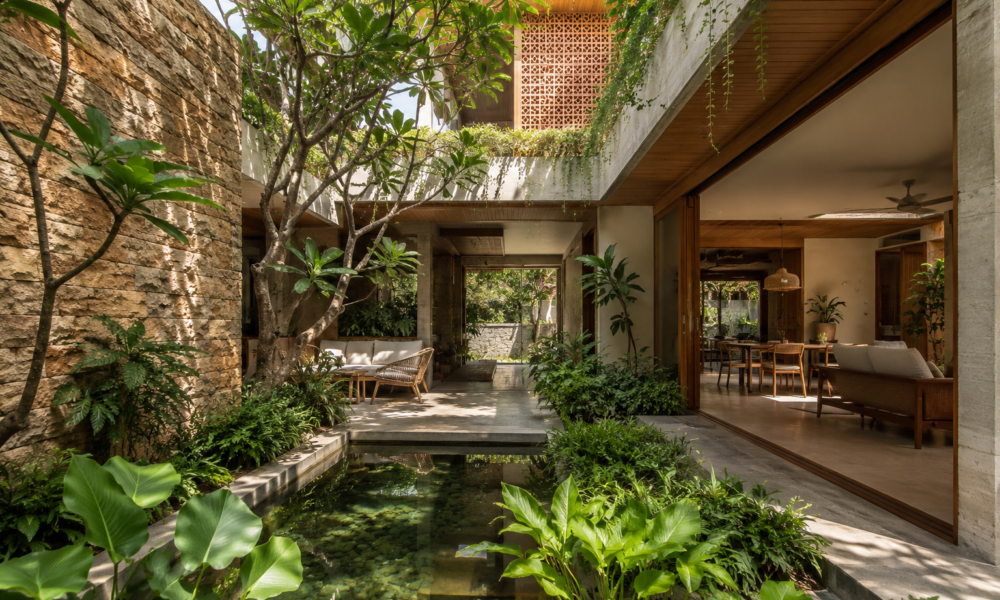
A tall sandstone-walled home in Nashik shows how architecture can respond to the local climate while still looking modern and luxurious. The home uses its walls, courtyards, materials and greenery to reduce the impact of heat and strong sunlight, while allowing fresh air and natural elements to enter the living spaces.
The tall sandstone walls at the front of the house help reduce the impact of strong sunlight and heat, creating a cooler and more sheltered interior. The home is also designed around courtyards, bringing open spaces into the house and creating a stronger connection between indoor and outdoor areas.
One of the courtyards has a terracotta breeze wall on its southern side. The wall helps block harsh sunlight while allowing fresh air to enter the centre of the house. This means the design does not completely shut the home off from the outdoors. Instead, it controls how sunlight and air enter the living spaces.
Water is another important element. A sunken courtyard contains water and can be seen from the bedrooms, creating a visual connection with nature. The home also has a terrace garden above the living room, bringing greenery into the design and creating another layer between the building and the outside environment.
The bathrooms follow the same approach. Terracotta jaali walls allow air to move through the space, while sunlight enters from above. Plants add to the connection with the outdoors, making the bathrooms feel more open and connected to nature.
The materials used throughout the home also support its climate-led design. Red sandstone, laterite stone, terracotta and wood give the house a natural look while connecting its modern design with traditional Indian architecture.
The home shows that climate-responsive architecture does not necessarily mean making major changes to the way a building looks. Simple decisions about walls, courtyards, airflow, sunlight, water and greenery can make a home more comfortable.
It also changes the way we think about luxury. Luxury is no longer only about large spaces, expensive materials or marble floors. Quiet comfort, shade, fresh air, greenery and a strong connection with nature can also become important features of a premium home.
This is particularly relevant as Indian cities face rising temperatures and more frequent heatwaves. Climate-responsive architecture can help homes respond better to local weather by managing heat, sunlight and airflow through design itself.
As a result, homes that combine premium design with climate-conscious planning could become increasingly valuable in India’s luxury real estate market. The future of luxury housing may not simply be about building bigger. It could also be about building smarter and designing homes that work with the climate rather than against it.







No Comment! Be the first one.