





Cochin Shipyard and South Korea’s HD Hyundai Sign Expansion Plan to Boost India’s Shipbuilding Capacity
India’s shipbuilding ambitions have received another major push after Cochin Shipyard Limited (CSL) and South Korea’s HD Hyundai Heavy Industries secured in principle approval to expand...

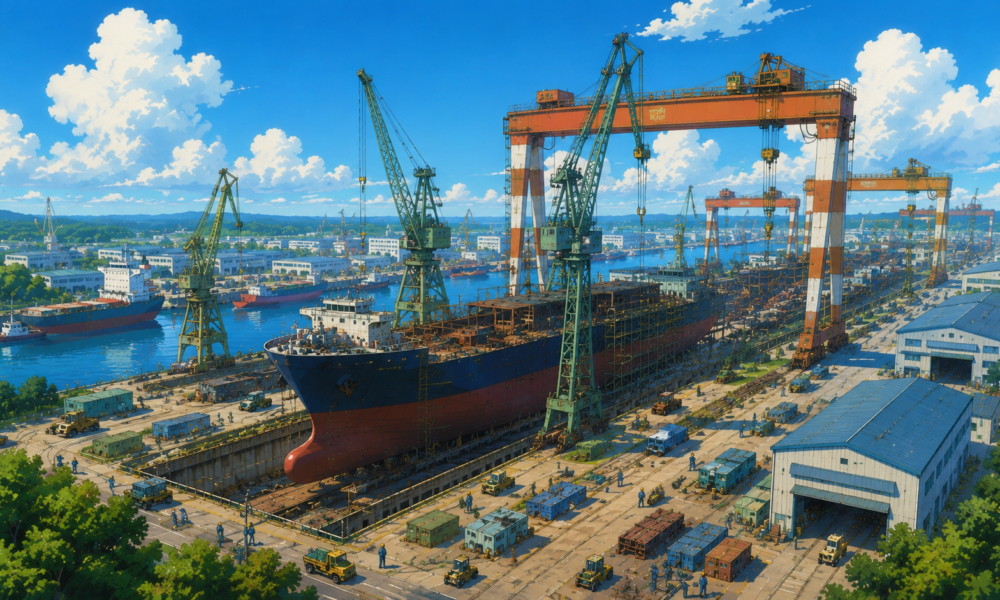
India’s shipbuilding ambitions have received another major push after Cochin Shipyard Limited (CSL) and South Korea’s HD Hyundai Heavy Industries secured in principle approval to expand shipbuilding infrastructure through a brownfield development programme. The move is expected to strengthen India’s commercial shipbuilding capabilities, enhance technology transfer and improve the country’s position in the global maritime manufacturing sector.
The proposed expansion will modernise existing shipbuilding facilities instead of developing an entirely new greenfield yard. Brownfield expansion allows existing infrastructure to be upgraded with advanced production systems, larger fabrication capacity and modern digital manufacturing technologies while reducing construction time and capital costs.
India has been steadily increasing investment in the maritime sector through Maritime India Vision 2030 and the Sagarmala Programme. While Indian shipyards have established strong capabilities in naval vessels, offshore support ships and specialised marine engineering, the latest expansion is expected to improve capacity for commercial cargo vessels, tankers, container ships and green shipping solutions.
The collaboration with HD Hyundai, one of the world’s leading shipbuilders, is expected to bring global expertise in shipyard automation, modular construction techniques and digital production management. These technologies can significantly reduce vessel construction timelines while improving quality and operational efficiency.
Industry analysts believe the expansion could also strengthen India’s domestic maritime supply chain. Increased shipbuilding activity is likely to create opportunities for steel manufacturers, marine equipment suppliers, electrical system providers, engine manufacturers and specialised engineering companies. The resulting industrial ecosystem could reduce dependence on imported marine components while supporting the government’s Make in India objectives.
The project aligns with India’s long term strategy of increasing domestic manufacturing while capturing a greater share of the international shipbuilding market. Global demand for cargo vessels, offshore wind support ships, liquefied natural gas carriers and low emission vessels is expected to remain strong over the coming decade as international shipping transitions towards cleaner technologies.
Beyond manufacturing, the expansion is expected to generate employment across shipyard operations, engineering, design, fabrication, logistics and maintenance services. Demand for skilled welders, naval architects, marine engineers and digital manufacturing specialists is also likely to rise as shipbuilding activity expands.
The brownfield approach offers additional environmental advantages by making use of existing industrial land and infrastructure instead of developing entirely new facilities. Modern equipment and energy efficient production systems are expected to reduce operational emissions while improving resource utilisation throughout the manufacturing process.
The project also complements wider government initiatives to improve port capacity, coastal shipping, inland waterways and multimodal logistics. As ports become more efficient and cargo volumes continue to rise, expanding domestic shipbuilding capacity will help India support growing maritime trade with locally built vessels.
With international partnerships, advanced manufacturing technologies and continued policy support, India is gradually building an integrated maritime ecosystem that extends beyond ports into vessel manufacturing, marine engineering and global exports. The Cochin Shipyard expansion demonstrates how strategic collaborations can strengthen industrial competitiveness while supporting long term infrastructure growth.
As global supply chains continue to diversify, India’s growing shipbuilding capacity could position the country as an important manufacturing destination for commercial vessels, marine equipment and advanced maritime technologies in the years ahead.




No Comment! Be the first one.