







Noida’s ₹5,881 Crore Dadri Integrated Logistics Hub Re-Tendered to Accelerate Multimodal Freight Infrastructure
The Delhi Mumbai Industrial Corridor Development Corporation (DMICDC) has issued fresh bids for the development of the ₹5,881 crore Integrated Industrial Township logistics hub at Dadri in Greater...

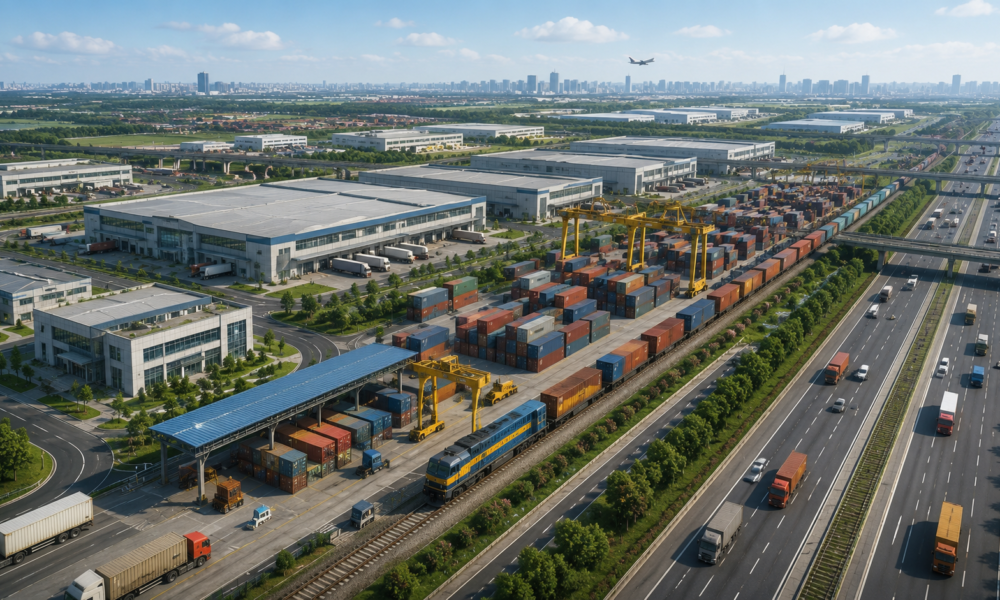
The Delhi Mumbai Industrial Corridor Development Corporation (DMICDC) has issued fresh bids for the development of the ₹5,881 crore Integrated Industrial Township logistics hub at Dadri in Greater Noida, marking another significant step towards strengthening India’s multimodal freight infrastructure. The project is expected to become one of North India’s largest integrated logistics ecosystems, supporting manufacturing, warehousing and export driven industries.
Strategically located near the Eastern and Western Dedicated Freight Corridors, the upcoming logistics hub is designed to connect road, rail and industrial infrastructure within a single integrated platform. The township will benefit from direct access to the Dedicated Freight Corridor network, Yamuna Expressway, Eastern Peripheral Expressway and the upcoming Noida International Airport, making it a major gateway for domestic and international trade.
The latest tender aims to attract experienced infrastructure developers capable of delivering world class logistics facilities, industrial plots, warehousing zones, utility infrastructure and digital services. The project is part of the Integrated Industrial Township Greater Noida initiative under the Delhi Mumbai Industrial Corridor programme, one of India’s flagship industrial infrastructure missions.
Once completed, the logistics hub is expected to reduce freight handling time, improve cargo movement efficiency and lower logistics costs for manufacturers operating across northern India. The integrated planning model will allow industries to access multimodal transport services without depending on multiple disconnected logistics networks.
Modern infrastructure planned within the township includes internal road networks, utility corridors, power distribution systems, water supply, sewage treatment, smart monitoring systems and environmentally sustainable industrial facilities. Warehousing clusters, container handling areas and commercial developments are also expected to form part of the project, creating a comprehensive industrial ecosystem.
The development complements India’s broader PM Gati Shakti and National Logistics Policy objectives, which seek to improve supply chain efficiency through integrated infrastructure planning. With logistics costs remaining higher than many competing manufacturing economies, projects such as Dadri are expected to play a vital role in improving India’s global competitiveness.
Industry observers believe the location offers exceptional strategic advantages. Dadri already serves as an important freight junction where Dedicated Freight Corridors intersect, while proximity to Jewar Airport will provide seamless connectivity for air cargo operations. Together with road and rail infrastructure, the region is expected to evolve into one of India’s largest multimodal logistics clusters.
The project is also expected to generate substantial employment across construction, logistics, manufacturing and support services. As industrial activity expands, demand for Grade A warehousing, cold storage facilities, automation technologies and digital logistics platforms is likely to increase, creating new opportunities for infrastructure developers and technology providers.
The fresh tender signals the government’s continued commitment to developing integrated industrial infrastructure despite evolving market conditions. By combining freight connectivity, industrial development and smart infrastructure within a single master planned ecosystem, the Dadri logistics hub is expected to become a key catalyst for manufacturing growth across the National Capital Region and beyond.
As India continues investing in industrial corridors and multimodal connectivity, projects such as the Dadri Integrated Logistics Hub demonstrate how infrastructure planning is shifting beyond individual roads or railways towards fully integrated economic ecosystems that support long term growth, exports and efficient supply chains.






No Comment! Be the first one.