








Cyclone-Ready Infrastructure: How India’s Roads, Ports and Power Networks Are Preparing for Extreme Weather
India’s approach to extreme weather is increasingly shifting from disaster response to cyclone-ready infrastructure. Roads, ports, power networks and drainage systems are being designed and upgraded...

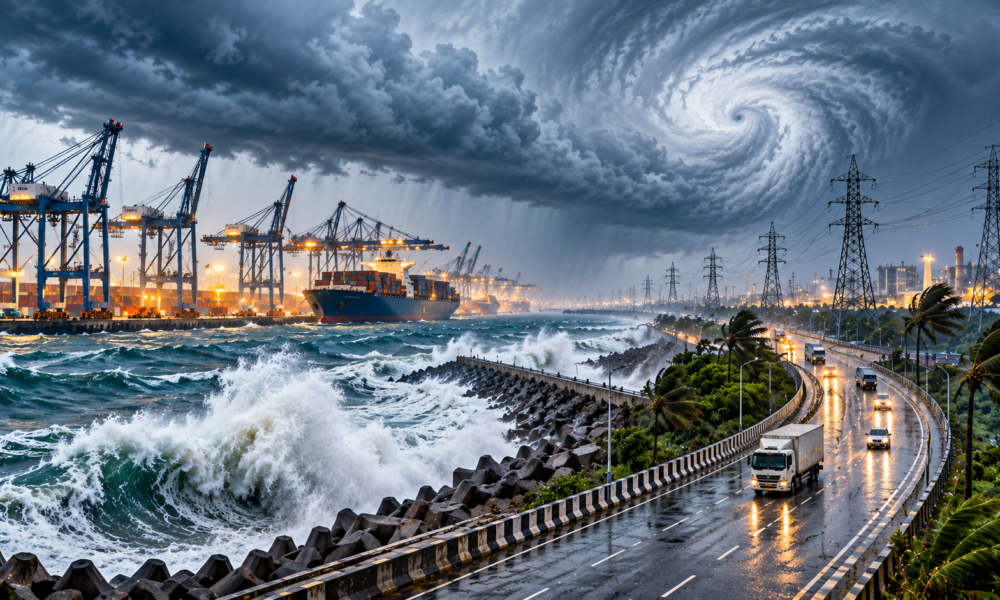
India’s approach to extreme weather is increasingly shifting from disaster response to cyclone-ready infrastructure. Roads, ports, power networks and drainage systems are being designed and upgraded to withstand stronger rainfall, high winds, flooding and storm-related disruption.
Recent weather systems have again demonstrated the infrastructure challenge. A deep depression over the Bay of Bengal brought heavy rainfall and strong winds to parts of Andhra Pradesh and Odisha in September, with authorities activating emergency teams, identifying vulnerable areas and preparing shelters.
Power infrastructure is one of the most vulnerable systems during cyclones. Strong winds can damage transmission towers, distribution lines and transformers, while flooding can affect substations and other critical equipment.
India’s Ministry of Power has already outlined measures for cyclone-resilient transmission and distribution infrastructure. These include mapping electricity infrastructure in cyclone-prone areas, protecting critical infrastructure, designing networks with greater redundancy and maintaining emergency restoration systems and spare equipment.
Coastal states are also seeing investment in distribution resilience. Under the Revamped Distribution Sector Scheme, disaster and cyclone-resilient works worth thousands of crores have been sanctioned for coastal areas, including underground cabling, ring main units, aerial bundled cabling and transformer upgrades.
Road infrastructure requires a similarly integrated approach. A cyclone rarely damages roads through wind alone. Heavy rainfall can cause flooding, landslides, erosion and drainage failures that make otherwise functional road networks unusable.
Ports face an additional challenge because they must maintain operational safety during rough sea conditions. During the September weather system, Odisha authorities issued danger signals for ports and restricted fishing activity as rough seas developed.
Future infrastructure planning will therefore need to consider redundancy, drainage capacity, elevated critical equipment, emergency access and faster restoration.
For cities and industrial clusters along India’s coastline, resilient infrastructure is becoming an economic requirement. A prolonged power outage can interrupt manufacturing, while port closures can affect cargo movement and supply chains.
The objective is not to make infrastructure completely immune to extreme weather. Instead, the focus is increasingly on reducing damage, maintaining essential services and restoring connectivity quickly.
With India’s coastline supporting major ports, industrial corridors, cities and energy infrastructure, cyclone resilience is becoming an increasingly important part of long-term infrastructure planning.





No Comment! Be the first one.