







Delhi-Amritsar-Katra Expressway Set to Redefine North India’s Connectivity and Tourism Economy
North India’s infrastructure network is entering a new phase with the inauguration of the Delhi-Amritsar-Katra Expressway, one of the country’s most significant highway projects. The new...

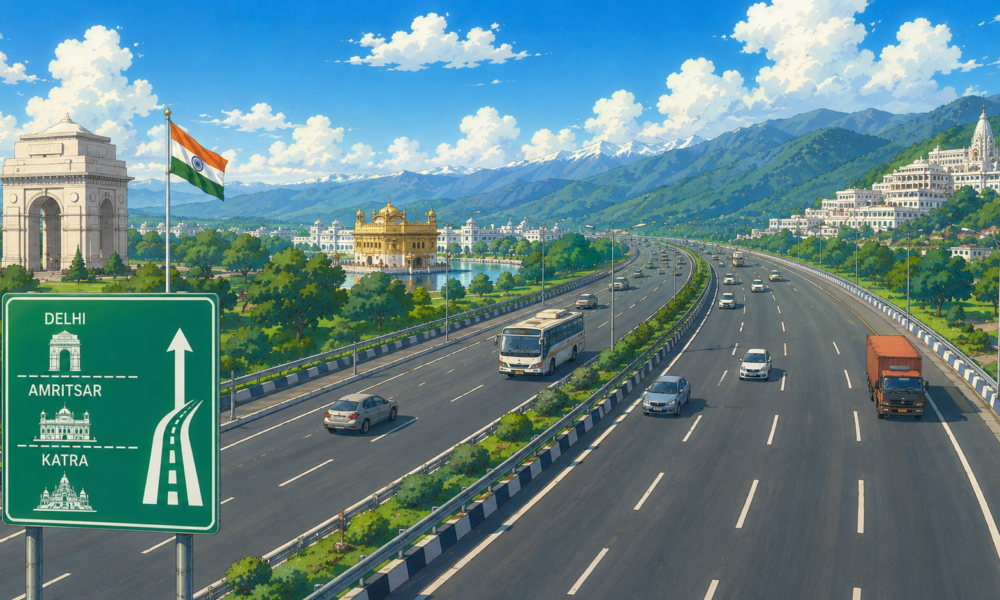
North India’s infrastructure network is entering a new phase with the inauguration of the Delhi-Amritsar-Katra Expressway, one of the country’s most significant highway projects. The new access controlled corridor is expected to reduce travel time between Delhi and Katra from around 14 hours to nearly six hours, while cutting the Delhi-Amritsar journey to approximately four hours. Beyond faster travel, the expressway is expected to strengthen trade, tourism, logistics and regional economic development across Delhi, Haryana, Punjab and Jammu & Kashmir.
Developed under the Bharatmala Pariyojana, the expressway has been designed to improve long-distance road connectivity while easing congestion on existing national highways. By offering a faster and more efficient route, the project is expected to reduce fuel consumption, improve freight movement and provide a more reliable transport network for businesses operating across northern India.
One of the biggest beneficiaries is expected to be the logistics sector. The expressway creates a high-speed corridor linking industrial centres with distribution hubs and consumer markets. Faster movement of commercial vehicles can lower transportation costs, shorten delivery schedules and improve supply chain efficiency. Industries such as agriculture, food processing, pharmaceuticals and manufacturing stand to gain from improved market access.
Tourism is another sector likely to receive a significant boost. Every year, millions of devotees travel to the Shri Mata Vaishno Devi shrine in Katra, while Amritsar attracts visitors from across India and overseas to the Golden Temple and the city’s rich cultural heritage. Shorter travel times are expected to encourage more weekend travel, increase hotel occupancy and support local businesses including restaurants, retail outlets and transport operators.
The expressway could also accelerate real estate activity along its route. Improved connectivity often increases demand for industrial land, logistics parks, warehouses and commercial developments near major interchanges. Developers are likely to explore opportunities for integrated townships, hospitality projects and service infrastructure that supports growing traffic volumes.
For businesses, the corridor offers more than convenience. Better connectivity improves access to labour markets, suppliers and customers, making northern India increasingly attractive for industrial investment. As companies continue to diversify manufacturing and distribution networks, modern transport infrastructure is becoming a key factor in site selection.
The project also complements the government’s wider vision of creating economic corridors that integrate highways with railways, airports and logistics parks. Rather than functioning as standalone roads, these corridors are intended to improve multimodal connectivity and strengthen India’s overall infrastructure ecosystem. Efficient transport networks reduce operational costs while enhancing the country’s competitiveness in domestic and international markets.
Environmental benefits may also emerge over time. Reduced congestion and smoother traffic flow can help lower vehicle idling, improving fuel efficiency and reducing transport emissions. While highways increase road capacity, modern access controlled corridors generally enable more consistent traffic movement than conventional highways.
The Delhi-Amritsar-Katra Expressway is therefore more than a road project. It represents an investment in regional development, economic integration and long-term infrastructure planning. By connecting major cities, industrial centres and religious destinations through world-class road infrastructure, the corridor has the potential to reshape mobility across North India.
As India continues expanding its expressway network, projects such as this demonstrate how transport infrastructure can support tourism, commerce and investment simultaneously. The success of the Delhi-Amritsar-Katra Expressway will ultimately be measured not only by shorter travel times but by the economic opportunities it creates for businesses and communities across the region.






No Comment! Be the first one.