





Bengaluru-Chennai Expressway Set to Unlock South India’s Next Industrial Corridor
South India’s manufacturing landscape is on the verge of a major transformation as the Bengaluru-Chennai Expressway moves closer to completion. Stretching about 262 kilometres, the...

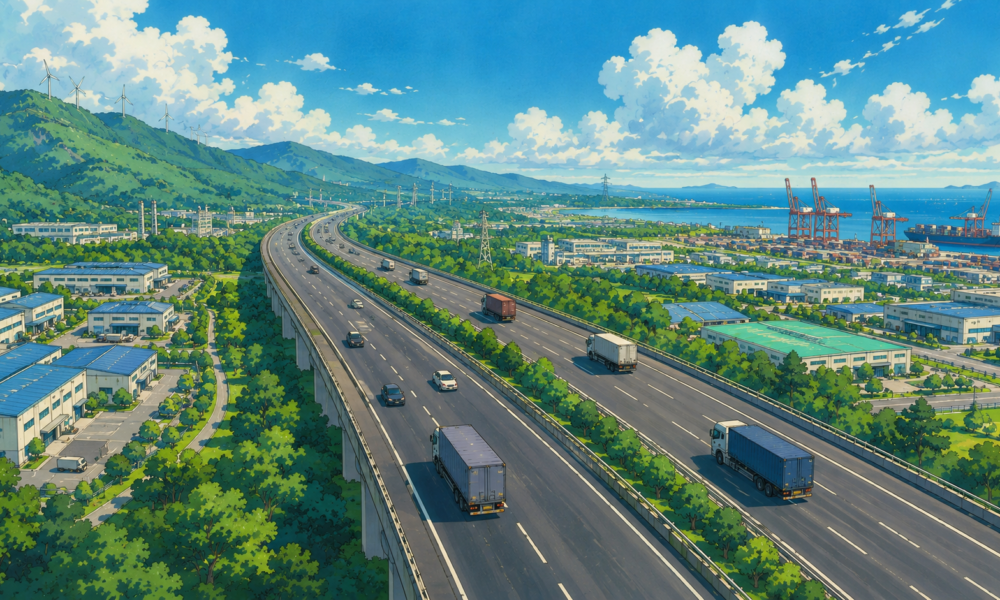
South India’s manufacturing landscape is on the verge of a major transformation as the Bengaluru-Chennai Expressway moves closer to completion. Stretching about 262 kilometres, the access-controlled greenfield corridor is designed to improve connectivity between two of India’s biggest economic centres while creating new opportunities for manufacturing, logistics, warehousing and real estate across Karnataka, Andhra Pradesh and Tamil Nadu. Although a legal dispute has delayed one section of the project, most stretches are complete or nearing completion, allowing parts of the corridor to begin supporting faster movement of goods and people.
The expressway is expected to reduce travel time between Bengaluru and Chennai from around six hours to nearly three hours once fully operational. This will significantly improve freight movement between factories, ports and distribution centres, helping businesses lower transportation costs and improve supply chain efficiency.
Both Bengaluru and Chennai are already major industrial and technology hubs. Bengaluru is home to leading aerospace, electronics, IT and startup companies, while Chennai has established itself as one of India’s largest automobile and electronics manufacturing centres. The expressway will strengthen the economic relationship between these cities by providing faster road connectivity for goods, raw materials and finished products.
The impact, however, extends far beyond the two cities. Towns located along the corridor are expected to emerge as new destinations for industrial parks, logistics hubs and warehousing facilities. Businesses that rely on efficient transport, including e-commerce, third-party logistics providers and manufacturing companies, are likely to benefit from shorter delivery times and lower operating costs.
The corridor also complements India’s broader infrastructure strategy under the Bharatmala programme, which aims to improve national connectivity through high quality expressways and economic corridors. Better road infrastructure enables industries to move goods more efficiently while improving access to ports, airports and railway networks. This integrated approach is expected to make southern India more competitive as a manufacturing and export destination.
Real estate is another sector likely to gain momentum. Improved connectivity often increases demand for industrial land, commercial developments and residential projects near major transport corridors. Developers are already monitoring locations along the expressway where future industrial clusters and logistics parks could emerge. Better infrastructure also makes smaller towns more attractive for investment, creating new employment opportunities outside major metropolitan areas.
For exporters, the expressway could provide faster access to Chennai Port and Ennore Port, reducing transit times for goods heading to international markets. This is particularly important for industries such as automobiles, electronics, textiles and engineering products, where delivery schedules play a critical role in global supply chains.
Despite its economic promise, the project continues to face challenges. Construction on one package in Tamil Nadu remains affected by ongoing litigation, preventing the full corridor from opening as originally planned. Authorities have indicated that the remaining work will move forward once legal issues are resolved, while completed sections may be opened in phases to provide immediate benefits to road users.
Even with these delays, the Bengaluru-Chennai Expressway represents far more than a faster highway. It is expected to become the backbone of South India’s next industrial corridor, connecting manufacturing centres with ports, suppliers and consumers through world class road infrastructure.
As India continues investing in modern transport networks, projects such as this demonstrate how highways can drive economic growth well beyond mobility. By encouraging industrial development, improving logistics and attracting private investment, the Bengaluru-Chennai Expressway has the potential to reshape the economic geography of southern India for decades to come.




No Comment! Be the first one.