






10 Upcoming Infrastructure Projects That Could Transform Delhi-NCR
Delhi-NCR’s infrastructure network is evolving through new transport corridors, airport connectivity, regional rail services and urban development policies. These projects could influence...

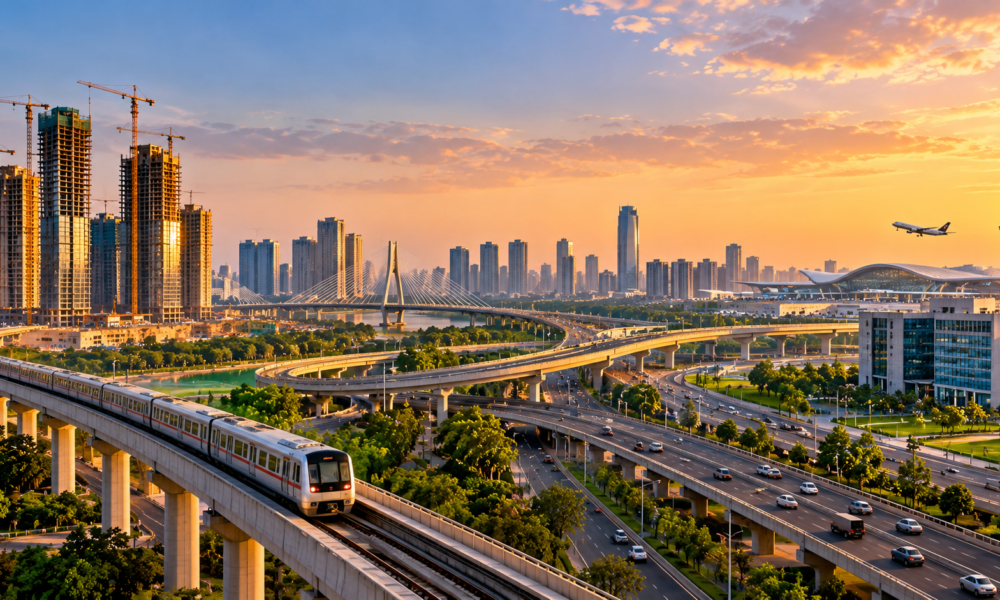
Delhi-NCR’s infrastructure network is evolving through new transport corridors, airport connectivity, regional rail services and urban development policies. These projects could influence commuting patterns, business activity and the way residential and commercial districts develop.
However, projects differ in their stage of implementation. Some are operational, some are under construction, and others remain proposals requiring further approvals or funding. Understanding that distinction is essential when assessing their potential impact.
Here are 10 major infrastructure developments worth watching across Delhi-NCR.
- Noida International Airport, Jewar
Noida International Airport is a major aviation infrastructure development in Uttar Pradesh, intended to expand air connectivity for the wider National Capital Region.
The airport’s potential significance extends beyond passenger travel. Improved aviation capacity can support tourism, logistics, commercial activity and employment. The actual economic impact will depend on operational capacity, airline services and access from surrounding cities.
For property buyers, the relevant questions include travel time, road connectivity, nearby employment growth and the availability of supporting civic infrastructure.
- Jewar Airport’s Expressway Connectivity Corridor
In March 2026, the Union Cabinet approved a revised capital cost of ₹3,630.77 crore for a 31.42-kilometre greenfield connectivity corridor linking Jewar International Airport with the Delhi-Faridabad-Ballabhgarh-Sohna spur of the Delhi-Mumbai Expressway.
According to the government, the corridor is intended to improve access from South Delhi, Faridabad and Gurugram towards the airport. It will also connect with the Eastern Peripheral Expressway, Yamuna Expressway and Dedicated Freight Corridor.
The key milestone to monitor is the project’s construction and commissioning progress, not simply the approval announcement.
3. Delhi-Ghaziabad-Meerut Namo Bharat Corridor
The Delhi-Ghaziabad-Meerut Regional Rapid Transit System (RRTS), known as Namo Bharat, offers a faster regional transport option for commuters travelling across parts of NCR.
In August 2026, the Ministry of Housing and Urban Affairs reported that the 82.15-kilometre corridor, including 23 kilometres of Meerut Metro infrastructure, had been fully operational since February 2026. The government also reported that more than 3.8 crore passenger journeys had been recorded on the corridor since services began.
The corridor demonstrates how regional rail can support access to employment centres beyond Delhi’s municipal boundaries. Its long-term benefits will depend on reliable services, station access and integration with local transport.
- Delhi’s Transit-Oriented Development Policy
Delhi’s Transit-Oriented Development Policy and Regulations, notified in April 2026, promote planned, higher-density and mixed-use development around designated Metro and RRTS corridors.
The Ministry of Housing and Urban Affairs has described the framework as covering approximately 207 square kilometres, with objectives that include improved connectivity, land utilisation and affordable housing.
The policy could influence how eligible land near public transport is developed. Actual outcomes will depend on project approvals, infrastructure capacity and implementation.
- Delhi’s Urban Extension Road-II
Urban Extension Road-II (UER-II) is an important road infrastructure corridor intended to improve movement around parts of Delhi.
The corridor is relevant to wider planning discussions because road access can influence the distribution of traffic, development patterns and connections between residential areas and other transport routes.
Its broader effects will depend on operational connectivity, the performance of junctions, access to surrounding neighbourhoods and coordination with public transport. Readers should verify the latest official status of individual stretches before treating them as completed or fully accessible.
- Delhi Metro Expansion
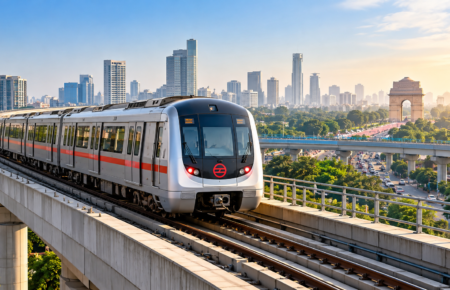
Delhi Metro remains a major part of the capital region’s urban transport network. Expansion and modernisation projects are intended to improve connections between residential areas, workplaces and transport interchanges.
New stations or corridors can improve accessibility for commuters, but their effectiveness depends on frequency, interchange quality, last-mile connections and pedestrian access.
For real estate, the relevant measure is not just the distance from a station. Buyers should also consider actual journey times, access routes and the convenience of reaching everyday destinations.
- Delhi’s Metro and RRTS-Linked Development Zones
The 2026 TOD framework gives greater emphasis to planned development around designated public transport corridors.
This creates a potential link between transport planning and housing supply. Well-planned development could place more residents near mass transit while supporting mixed-use neighbourhoods.
However, a designated development zone does not mean every property within the wider area is automatically eligible for additional construction. Plot-specific regulations and approvals remain important.
- Jewar Airport’s Wider Road and Logistics Network
Airport access is not limited to a single road. Regional expressways and connections to freight infrastructure can influence how passengers, employees and goods reach an airport.
The approved Jewar connectivity corridor is designed to connect with several major transport routes. These connections may improve the airport’s potential catchment area and support logistics activity.
The benefits will depend on completed links, travel times, freight demand and the development of businesses that use the network.
- Regional Transport Integration Across NCR
Delhi-NCR’s transport challenge is regional: many residents live in one city and work in another.
Integration between Metro services, Namo Bharat, buses and railway stations can help make longer journeys more manageable. The government has reported multimodal integration on the operational Delhi-Ghaziabad-Meerut Namo Bharat corridor, including links with Metro lines, railway stations and bus terminals.
Further progress will depend on convenient interchanges, coordinated schedules, accessible stations and effective last-mile transport.
- Infrastructure-Led Urban Redevelopment
Transport investment and urban redevelopment are increasingly linked through policies that encourage more efficient land use around existing and planned infrastructure.
Delhi’s TOD framework provides one example. Other parts of NCR may also see development shaped by road connectivity, employment hubs and public transport investment, although each location has its own planning rules.
The most sustainable outcomes will require more than transport construction. Water, sewage, drainage, electricity, schools, healthcare and open spaces must also keep pace with population growth.
What should residents and investors watch?
The most useful indicators are official project milestones, actual commissioning dates, travel-time improvements and the development of supporting services.
Residents should look at whether a project will improve their daily commute. Businesses should assess access to workers, customers and logistics networks. Property buyers should examine local infrastructure, transaction prices and housing supply before making investment decisions.
Infrastructure can create opportunities, but announcements alone do not guarantee economic growth or property appreciation.
The bottom line: Delhi-NCR’s transport and urban development projects could improve regional connectivity and reshape selected neighbourhoods. Their lasting impact will depend on execution, integration and the quality of supporting infrastructure.








No Comment! Be the first one.