








Tesla Charging Network in India: What It Means for Malls, Offices and Premium Real Estate
Electric vehicle charging is becoming an important consideration for commercial buildings, residential complexes and transport facilities. As electric cars become more visible in India’s...

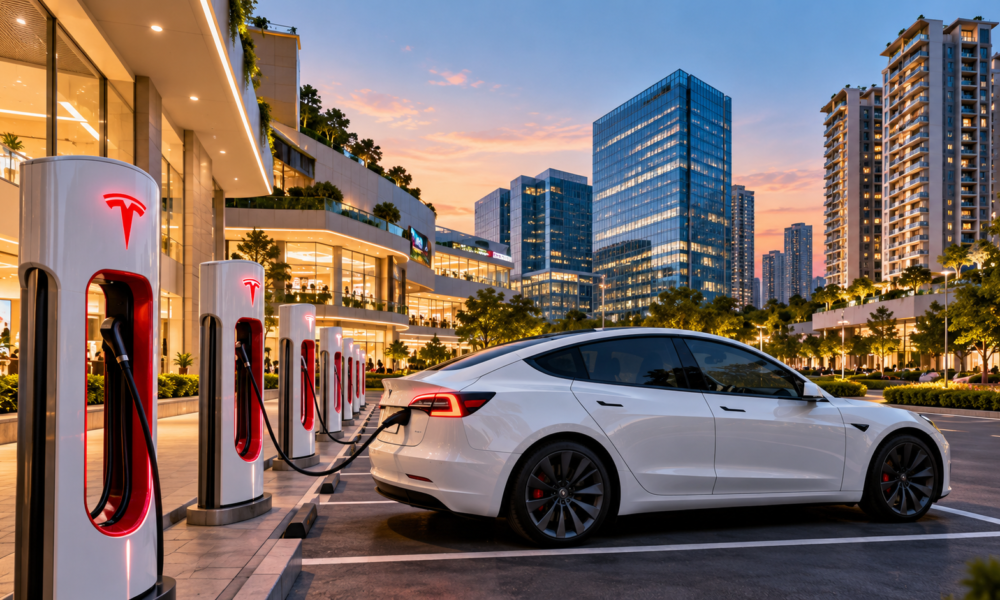
Electric vehicle charging is becoming an important consideration for commercial buildings, residential complexes and transport facilities. As electric cars become more visible in India’s premium vehicle market, property owners are also assessing whether charging facilities should be part of their buildings.
Tesla’s entry into the Indian market has brought additional attention to charging infrastructure. However, the availability of Tesla vehicles and charging locations should be checked through the company’s current official information. The future availability of the Tesla Roadster in India should not be assumed.
Why Are Charging Stations Relevant to Property?
Charging access can influence how people use a building. Offices may need chargers for employees and visitors, while shopping centres may install them to serve customers who park for longer periods.
Hotels, premium residential projects and highway facilities can also consider charging infrastructure as part of their services.
However, installing chargers involves more than placing equipment in a parking bay. Property owners need to consider electrical capacity, wiring, safety measures, parking arrangements and the cost of installation and maintenance.
What Do Commercial Buildings Need?
A building’s electrical system must be suitable for the proposed charging load. Large installations may require upgrades to electrical connections, distribution equipment or other systems.
Owners also need to decide how chargers will be managed. Some facilities may offer charging as an additional service, while others may use third-party operators or payment systems.
The business case depends on factors such as expected usage, installation costs, electricity tariffs and maintenance requirements. A charger that is rarely used may not justify a large investment without another clear benefit.
What About Residential Projects?
Residential complexes face different challenges because charging facilities must work for multiple users and parking arrangements.
Developers can plan electrical capacity and charging provisions during construction. Retrofitting older buildings may be more complicated if the existing electrical infrastructure was not designed for additional demand.
Housing societies should establish clear rules for installation, billing, access and maintenance. They should also ensure that work is carried out by qualified professionals and complies with applicable electrical safety requirements.
Can Charging Infrastructure Improve Property Appeal?
Charging access may make a property more convenient for some electric vehicle owners. It can also signal that a building is preparing for changes in transport technology.
However, charging facilities alone do not guarantee higher property values or rental income. Their value depends on the location, user demand, reliability and quality of the wider building.
Property developers should assess local vehicle ownership and charging needs before treating chargers as a major selling point.
What Should Investors Watch?
Investors should examine installation costs, electrical capacity, charger utilisation and the availability of reliable service providers.
They should also consider whether charging facilities can be expanded as demand changes. A well-planned system may be more useful than an expensive installation that does not match the building’s needs.
Conclusion
Electric vehicle charging is becoming part of the infrastructure conversation for offices, shopping centres, residential projects and transport facilities.
For developers and property owners, the priority is to plan for safe, reliable and financially sensible charging access. The long-term opportunity will depend on actual demand, not simply the presence of a well-known vehicle brand.








No Comment! Be the first one.