







How Flowers Inspired Some of the World’s Most Iconic Buildings
When it comes to designing infrastructure, the art of architecture can take inspiration from anywhere, even from flowers, while creating massive structures. These flower-shaped structures are not...

When it comes to designing infrastructure, the art of architecture can take inspiration from anywhere, even from flowers, while creating massive structures.
These flower-shaped structures are not only used to enhance the beauty of buildings but also to improve ventilation, making them stronger, cooler, and far more functional than conventional designs.
There are many buildings around the world that have been inspired by different flowers.
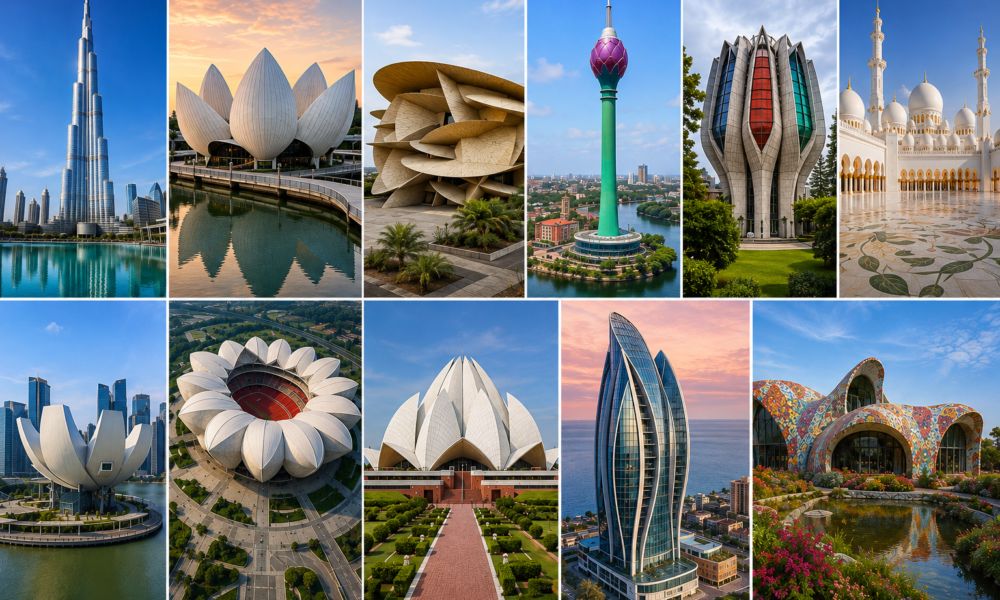
Take, for instance, the Burj Khalifa in Dubai, whose design is inspired by the spider lily flower. The world’s tallest building features a Y-shaped plan based on the spider lily, with three wings spreading out like petals. This flower-inspired design helps the tower remain stable even during the region’s strong desert winds. What may sound highly complex on paper appears remarkably elegant in reality, as the Burj Khalifa is widely admired for its striking design and innovative engineering.
While the Middle East has to deal with powerful winds, many structures in East Asia are designed to make the best use of limited space and resources. The Wujin Lotus Conference Center in China has been designed to resemble a lotus flower floating on a lake. It contains everything expected of a large conference centre, from meeting rooms to exhibition halls. At the same time, it conserves energy by using geothermal power and lake water to regulate its temperature. At night, the building truly comes alive as its petals light up in a dazzling display of changing colours.
Next is the National Museum of Qatar, whose design is inspired by the desert rose, a naturally occurring crystal formation. The building features numerous overlapping circular forms that tell the story of Qatar’s history, culture, and development. The design also creates large shaded outdoor spaces, making the structure both visually striking and practical.
Another remarkable example is the Colombo Lotus Tower in Sri Lanka. While it resembles a blooming lotus flower, the tower also carries symbolic meaning, representing purity and new beginnings. It houses modern facilities, including television and radio transmission services, restaurants, and an observation deck. It is also one of the tallest towers in South Asia.
La Tulipe in Switzerland is another awe-inspiring structure inspired by the tulip flower. Built using colourful glass and concrete, it houses fully functional laboratories and offices, all while resembling a flower emerging gracefully from the ground.
The Lotus Temple in New Delhi, India, is one of the country’s most iconic buildings. Constructed with 27 enormous marble petals, it can accommodate more than 2,500 people at a time. The surrounding pools and open design help cool the building naturally, making it both environmentally friendly and architecturally distinctive.
All in all, flower-inspired structures can be found across the globe. Architects use floral forms not only for their aesthetic appeal but also to create buildings that are energy-efficient, structurally strong, and meaningful. These remarkable designs demonstrate how nature continues to inspire modern architecture in both practical and artistic ways.









No Comment! Be the first one.