








India’s Data Centre Boom: Why Power, Water and Sustainability Matter
India’s data centre industry is growing as businesses adopt artificial intelligence (AI), cloud computing and other digital services. But this expansion requires more than buildings and servers. It...

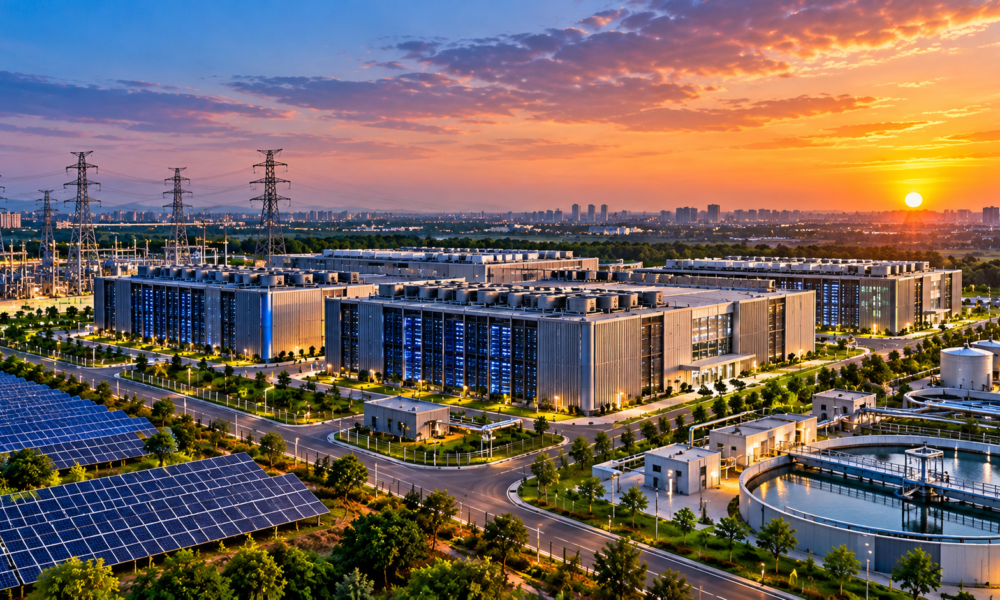
India’s data centre industry is growing as businesses adopt artificial intelligence (AI), cloud computing and other digital services. But this expansion requires more than buildings and servers. It also needs reliable electricity, water, land, connectivity and supporting infrastructure.
On October 14, 2026, NITI Aayog’s Frontier Tech Hub released a Data Centre Evaluation Framework to help states assess data centre projects and plan for sustainable growth.
The framework encourages governments to look beyond promised investment figures. They should also consider infrastructure readiness, environmental impact and the long-term economic benefits of each project.
How Fast Is India’s Data Centre Capacity Growing?
According to NITI Aayog’s announcement, India’s data centre capacity increased from approximately 375 megawatts in 2020 to around 1.5 gigawatts currently.
This growth reflects rising demand for AI, cloud computing, high-performance computing and digital applications.
Data centres are specialised facilities that store, process and manage digital information. They support services such as online payments, video streaming, business software, cloud storage and AI applications.
As demand grows, more facilities may be needed. However, a larger data centre footprint also increases the need for careful planning of electricity, cooling, water and local infrastructure.
Why Electricity Planning Is Important
Data centres use electricity to operate servers, networking equipment, cooling systems and other essential machinery. AI workloads can require particularly powerful computing systems.
If a proposed facility needs more electricity than the local grid can reliably supply, it could require additional power infrastructure before operations can scale.
NITI Aayog’s framework recommends assessing grid readiness, electricity requirements and the potential role of renewable energy and storage.
This approach could help states identify power constraints early and coordinate infrastructure development with expected demand.
The practical goal is to ensure that new facilities have a dependable power supply without overlooking the needs of other electricity consumers.
Water and Cooling: A Critical Infrastructure Challenge
Data centres generate heat, making cooling systems essential for reliable operations. Depending on the technology used, cooling can place pressure on local water resources.
The framework recommends assessing water availability and competing demand, including the needs of households and agriculture. It also calls for measures such as rainwater harvesting, on-site water treatment and storage.
In areas facing water stress, location decisions become particularly important. A project that appears attractive because of investment size may still face challenges if water supplies are insufficient.
Developers and state governments therefore need to consider resource availability over the long term, rather than assessing requirements only at the time of approval.
Five Areas States Should Evaluate
NITI Aayog’s framework is structured around five key areas:
- Power and energy: Can the local electricity system support the proposed facility? What role can renewable energy and storage play?
- Water and cooling: Are water supplies adequate? Can treated wastewater, efficient cooling and water-management systems reduce pressure on local resources?
- Location and environmental sustainability: Is the proposed site suitable? What are the potential effects on land, surrounding communities and the environment?
- Economic and strategic value: Will the project contribute to jobs, local procurement, research, skills and domestic technological capabilities?
- Policy and implementation: Are approvals clear, responsibilities defined and project commitments measurable?
These areas encourage states to assess whether a project is practical and beneficial, not simply whether it attracts a large investment announcement.
What Could This Mean for Real Estate and Infrastructure?
The growth of data centres creates opportunities for several infrastructure-related industries.
Power infrastructure may need upgrades to support large electricity requirements. Fibre-optic networks and telecommunications infrastructure are essential for data transmission. Construction, engineering, cooling equipment and specialised building services may also benefit from new projects.
Suitable locations could attract investment in industrial land, utility connections and supporting facilities. However, the effect on local real estate will depend on the location, project scale, infrastructure availability and actual construction progress.
A project announcement should not be treated as proof that all proposed investment, jobs or supporting development have already materialised.
Why Investment Announcements Are Not Enough
A state may attract a large data centre proposal, but its long-term value depends on execution.
The facility must receive the required approvals, secure power and water, complete construction and begin operations. Its benefits should also be assessed through measurable outcomes such as employment, local procurement, resource efficiency and technology development.
NITI Aayog’s framework recommends linking state incentives to measurable outcomes and monitoring project commitments.
This could help governments evaluate whether public support produces lasting economic benefits.
Conclusion
India’s growing data centre industry offers opportunities to strengthen digital infrastructure and support AI-driven economic activity. But expansion must be matched by reliable power, sustainable water use, suitable locations and clear implementation plans.
NITI Aayog’s new framework places these issues at the centre of state-level planning. The key challenge now is turning investment interest into operational facilities that support technology, jobs and economic growth without putting unnecessary pressure on local resources.









No Comment! Be the first one.