







India’s First 320 kmph Railway Electrification Network Takes Shape on Bullet Train Corridor
India’s ambitious high speed rail programme has reached another major milestone as work progresses on the country’s first railway electrification system designed to support trains...

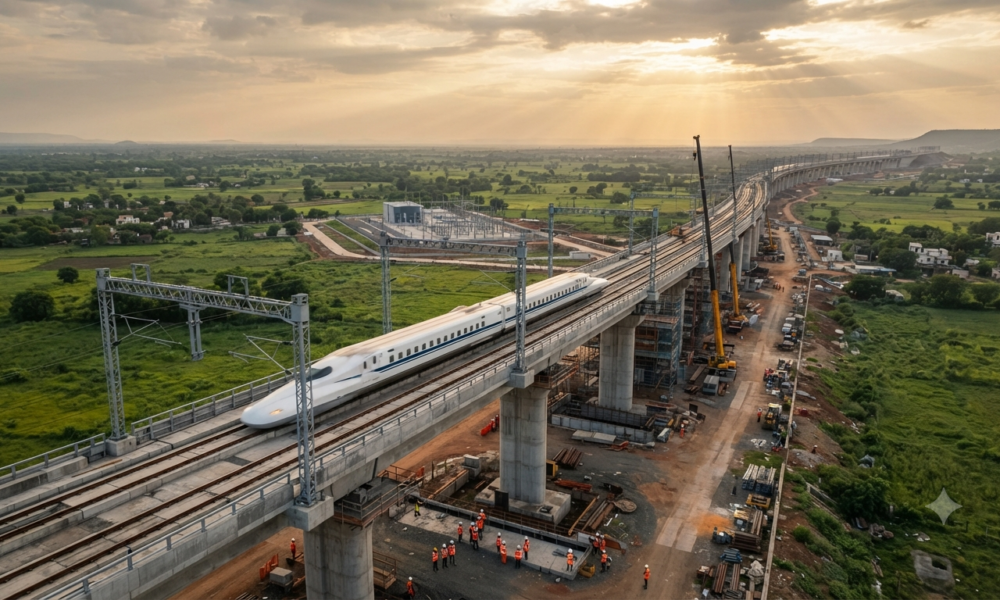
India’s ambitious high speed rail programme has reached another major milestone as work progresses on the country’s first railway electrification system designed to support trains travelling at speeds of up to 320 kmph. The electrification network is being installed along the 508 km Mumbai Ahmedabad Bullet Train corridor, marking a significant advancement in India’s transport infrastructure and engineering capabilities.
Unlike conventional railway electrification, the Bullet Train project requires a specialised 2×25 kV traction power supply system capable of delivering stable electricity to trains operating at very high speeds. The system is being developed to international standards and will ensure safe, reliable and uninterrupted operations across the corridor. The electrification infrastructure includes overhead equipment, substations, switching stations and advanced monitoring systems that can manage high speed rail operations with precision.
Civil construction on the Mumbai Ahmedabad High Speed Rail corridor has accelerated over the past year. Hundreds of kilometres of viaducts have already been completed, while bridge construction, track laying and station development continue simultaneously across Gujarat and Maharashtra. The electrification work represents the next critical phase that brings the project closer to operational readiness.
The high speed rail corridor is expected to transform passenger mobility between India’s financial capital and one of its fastest growing industrial regions. Once operational, the Bullet Train will significantly reduce travel time while offering an alternative to air travel for business and leisure passengers. The project is also expected to improve regional connectivity, stimulate investment and encourage urban development around future stations.
From an infrastructure perspective, the project is introducing several technologies that have never before been deployed in India’s railway network. Engineers are installing high precision overhead catenary systems capable of maintaining constant power supply even when trains travel at 320 kmph. Digital monitoring equipment will continuously assess the condition of electrical assets, helping reduce maintenance downtime and improve operational safety.
The project is also creating opportunities for domestic manufacturing and technology transfer. Indian engineers and contractors are working alongside Japanese experts, gaining experience in high speed rail systems that could support future Bullet Train corridors planned across the country. The development of specialised construction techniques, electrical infrastructure and signalling systems is expected to strengthen India’s engineering ecosystem over the long term.
Industry experts believe the Mumbai Ahmedabad corridor will become a benchmark for future high speed rail development. As the first corridor moves closer to completion, lessons learned from construction, electrification and operations can be applied to future projects linking other major economic centres.
Beyond faster journeys, the infrastructure investment represents a broader push towards modernising India’s transport network. High speed rail can improve regional productivity, reduce congestion on existing transport modes and encourage sustainable mobility by shifting travellers from road and short haul flights to electrified rail services.
With electrification now taking shape alongside civil works, India’s first Bullet Train corridor is steadily moving from concept to reality. The project reflects the country’s long term vision of building world class transport infrastructure capable of supporting economic growth, technological advancement and improved passenger experience for decades to come.





No Comment! Be the first one.