






India’s Priority Infrastructure Plan: Projects Shaping Transport, Energy and Urban Development
India’s infrastructure development is entering another major investment cycle, with public capital expenditure, transport connectivity, energy systems and urban development receiving continued...

India’s infrastructure development is entering another major investment cycle, with public capital expenditure, transport connectivity, energy systems and urban development receiving continued attention. The Union Budget 2026–27 has proposed public capital expenditure of ₹12.2 lakh crore, up from ₹11.2 lakh crore in the previous year’s Budget Estimate.
The allocation is intended to support long-term infrastructure creation and improve the country’s productive capacity. It covers a broad development agenda, including roads, railways, waterways, industrial corridors, urban transport and energy infrastructure.
Transport connectivity remains a priority
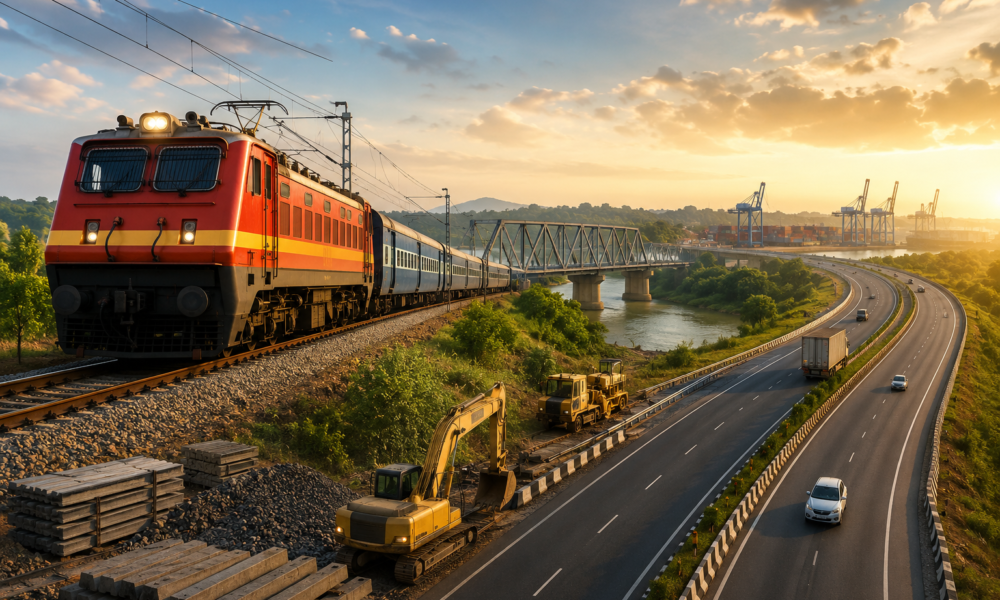
Railways continue to be a major part of India’s infrastructure programme. The Union Budget 2026–27 proposed seven high-speed rail corridors, a dedicated freight corridor and the development of 20 new national waterways.
These projects are intended to improve passenger movement, freight transportation and connections between industrial centres and markets. Dedicated freight corridors can help move goods more efficiently by separating freight operations from busy passenger routes.
National waterways can offer another transport option for suitable cargo, potentially reducing pressure on road and rail networks. Their effectiveness will depend on navigability, terminals, last-mile connections and the availability of supporting logistics facilities.
Infrastructure planning across sectors
The government’s PM GatiShakti National Master Plan aims to improve coordination between infrastructure ministries and departments. Its approach is based on integrated planning, using digital mapping and project information to identify gaps and improve connectivity.
This matters because transport infrastructure rarely operates independently. A new industrial facility may need road access, railway connectivity, electricity, water supply and links to a nearby port. Coordinating these requirements can help reduce duplication and implementation delays.
The PRAGATI platform also plays a role in reviewing major projects and resolving implementation issues. At its 53rd meeting, the Prime Minister reviewed six infrastructure projects across railway, road and power sectors, spanning nine states and involving a cumulative investment of more than ₹30,000 crore.
Energy infrastructure and storage
India’s infrastructure priorities also include strengthening electricity supply and integrating renewable energy. On November 4, 2026, Reuters reported that the Union Cabinet approved a ₹14,500 crore programme for energy storage projects.
Energy storage can help manage the variability of solar and wind generation, improve grid flexibility and support electricity supply during periods when renewable output is lower. The programme’s practical impact will depend on project design, deployment timelines and implementation details.
Transmission networks are equally important. Renewable energy projects need connections to demand centres, while industrial facilities and data centres require dependable power infrastructure.
Urban infrastructure and industrial growth
Urban development involves more than building roads and metro systems. Cities also need water supply, sewage treatment, drainage, waste management, housing and reliable public transport.
The Budget’s focus on City Economic Regions and industrial infrastructure reflects the importance of connecting urban planning with economic activity. Industrial clusters require access to logistics, utilities, workers and markets. Better coordination can support business activity and improve the efficiency of urban regions.
What will determine project delivery?
Large infrastructure allocations do not automatically translate into completed projects. Land acquisition, environmental approvals, financing, contractor capacity and coordination between central and state agencies can influence timelines.
The next stage of India’s infrastructure programme will therefore depend on execution as much as funding. Transparent project monitoring, realistic timelines, quality construction and maintenance will determine whether new assets deliver lasting benefits.
India’s infrastructure plan is ultimately about creating connected systems. Roads, railways, ports, power networks and cities need to work together to support economic growth.







No Comment! Be the first one.