








Why Maritime Security Is Emerging as India’s Next Critical Infrastructure Priority
For decades, infrastructure discussions in India have largely revolved around highways, railways, airports and power plants. Increasingly, however, another form of infrastructure is demanding...

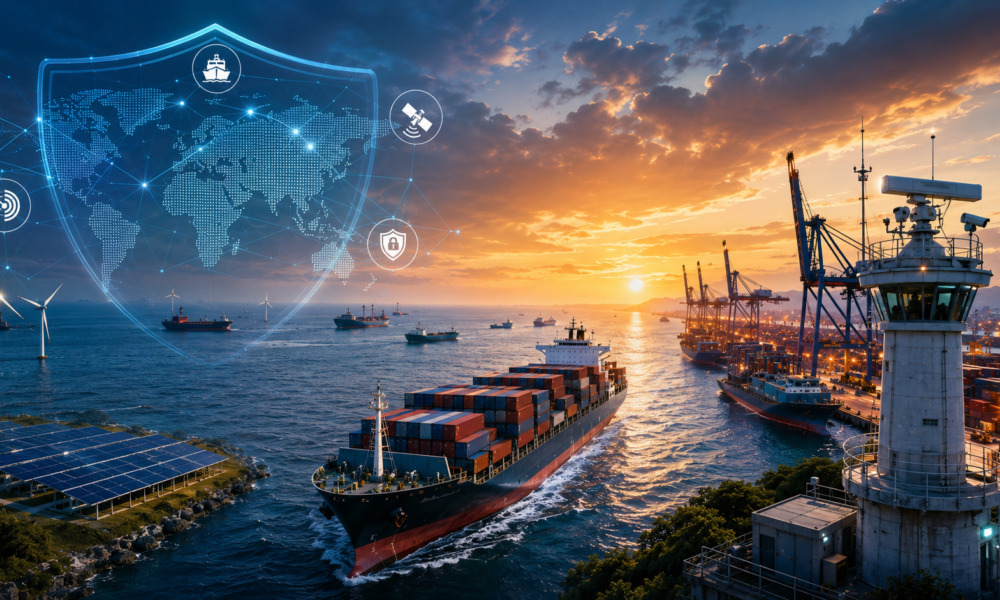
For decades, infrastructure discussions in India have largely revolved around highways, railways, airports and power plants. Increasingly, however, another form of infrastructure is demanding attention from policymakers and investors alike: maritime security infrastructure.
The launch of the ₹12,980 crore Bharat Maritime Insurance Pool this year reflects a growing recognition that shipping routes, ports and marine logistics networks are no longer merely commercial assets. They are strategic infrastructure that directly influences energy security, trade resilience and economic stability. The initiative is designed to ensure uninterrupted insurance coverage for Indian shipping and reduce dependence on foreign insurers during periods of geopolitical disruption.
The timing is significant.
Nearly 95 per cent of India’s merchandise trade by volume and around 70 per cent by value moves through maritime routes. The country also imports the majority of its crude oil requirements through sea corridors that pass through some of the world’s most geopolitically sensitive regions. Any disruption to these routes can have immediate consequences for inflation, manufacturing activity and energy supplies.
Recent tensions in West Asia and concerns around the security of global shipping corridors have once again highlighted the vulnerabilities of maritime trade. The government has repeatedly emphasised the need for secure sea lanes and the protection of Indian seafarers operating across international waters.
This changing environment is forcing a broader redefinition of infrastructure.
Ports are no longer standalone logistics facilities. They are becoming integrated economic ecosystems connected to industrial corridors, multimodal transport networks, energy terminals and digital supply chains. Maritime insurance, coastal surveillance systems, shipbuilding capacity and strategic port infrastructure are increasingly being viewed as critical components of national resilience.
The implications for investment are substantial.
India is simultaneously expanding port capacity under Sagarmala, developing transshipment hubs and improving coastal connectivity. The proposed Great Nicobar transshipment project, positioned near the Malacca Strait, illustrates how infrastructure planning is increasingly being shaped by strategic and geopolitical considerations in addition to commercial objectives.
The growth opportunity extends well beyond ports.
A stronger maritime ecosystem will require investments in shipbuilding, marine engineering, offshore energy infrastructure, coastal logistics parks, warehousing, digital navigation systems and specialised insurance services. Financial institutions are also exploring new funding mechanisms, including blue bonds, to support maritime and coastal infrastructure development.
The employment implications could be equally significant.
Building maritime resilience creates demand for engineers, logistics specialists, port operators, ship designers, cybersecurity experts and insurance professionals. It also generates opportunities for manufacturing sectors supplying equipment, technology and services to ports and shipping companies.
For India, maritime infrastructure is becoming an essential pillar of economic security.
The country aspires to become a major manufacturing and trading economy over the coming decades. Achieving that ambition will depend not only on producing goods competitively but also on ensuring that supply chains remain resilient during periods of global uncertainty.
The creation of the Bharat Maritime Insurance Pool therefore represents more than an insurance reform. It signals a broader shift in thinking.
Increasingly, infrastructure is no longer defined solely by roads, rail lines and industrial parks. In an era of geopolitical fragmentation and supply chain disruptions, secure shipping routes, resilient ports and maritime risk management systems are emerging as some of India’s most important strategic assets.
The next phase of India’s infrastructure story may well be written along its coastlines and across the sea lanes that connect the country to the global economy.









No Comment! Be the first one.