







Odisha Clears ₹2.47 Lakh Crore Projects: Data Centres, AI and Power Lead Infrastructure Push
Odisha has approved 27 major industrial projects involving ₹2,47,115.70 crore of investment across 15 districts, creating a major pipeline of projects spanning data centres, artificial intelligence,...

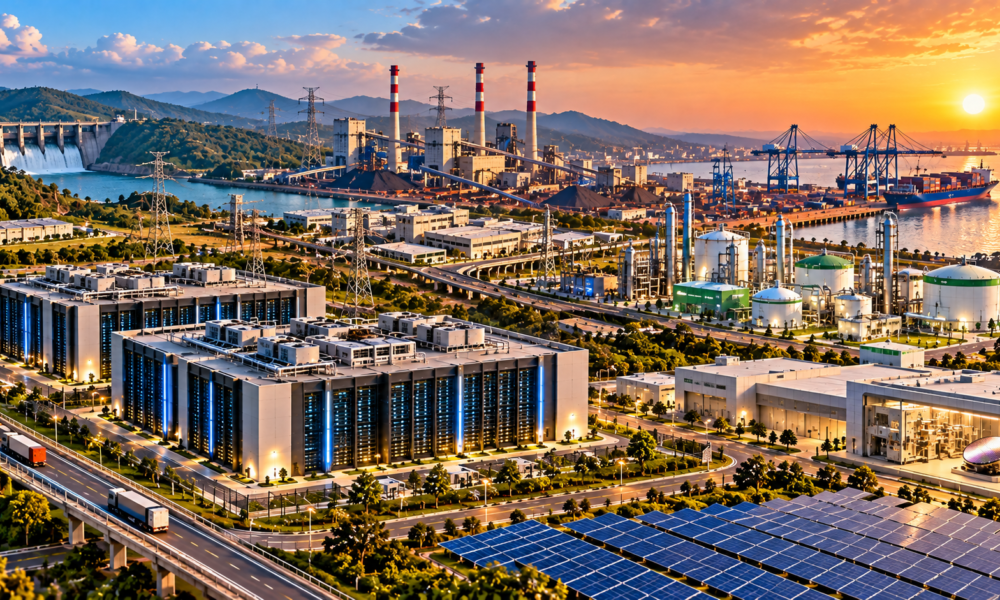
Odisha has approved 27 major industrial projects involving ₹2,47,115.70 crore of investment across 15 districts, creating a major pipeline of projects spanning data centres, artificial intelligence, power, semiconductors, green energy, steel, healthcare and advanced manufacturing.
The projects were cleared at the 46th meeting of the High-Level Clearance Authority (HLCA) on September 23, 2026. According to the state government, the projects have the potential to generate 50,162 jobs once they are implemented.
The scale of the approvals makes digital infrastructure one of the biggest components of Odisha’s latest investment push.
Data centres and AI account for major investment
Four projects in the IT, IT-enabled services and data-centre segment account for approximately ₹1,42,941 crore, more than half of the total investment approved in the latest exercise.
The largest proposal comes from High Density Datacentre Ltd, which plans to establish an integrated data-centre project in Khordha with an investment of ₹1,04,550 crore.
HCL Technologies has proposed an AI-optimised data centre in Khordha involving an investment of ₹14,257 crore, while Sentraforge AI plans an AI data centre and Global Capability Centre in Puri with an investment of ₹22,634 crore.
Another data-centre facility proposed by RKD Construction in Cuttack involves ₹1,500 crore. Together, these projects could expand Odisha’s digital infrastructure capacity significantly.
Power infrastructure gets ₹54,288 crore
The digital infrastructure expansion is accompanied by significant investment in electricity generation and storage.
Four power and renewable-energy projects involve a combined investment of around ₹54,287.70 crore.
NLC India has proposed a 3,200 MW thermal power plant in Deogarh with an investment of about ₹34,763.51 crore. Another 1,080 MW thermal power plant in Angul involves around ₹11,604.19 crore.
Two pumped-storage hydro projects, proposed in Rayagada and Koraput, together involve around ₹7,920 crore.
The combination is significant for the state’s infrastructure ecosystem because large data centres and industrial facilities require reliable, high-capacity electricity.
Semiconductor and battery infrastructure
Odisha is also using the investment pipeline to expand into newer technology industries.
SiCSem has received approval for a ₹2,078 crore facility producing silicon carbide wafers and gallium nitride in Khordha. The project has potential employment of around 1,200 people.
In Nuapada, Aare Solar plans a ₹1,050 crore advanced LFP battery-energy-storage-system assembly plant, adding energy-storage infrastructure to the state’s industrial ecosystem.
Odisha’s semiconductor ambitions also extend beyond this individual project. The state government recently said it plans to develop an 870-acre Odisha Silicon Valley near Naraj in Cuttack, bringing semiconductor, electronics and IT projects together in an integrated technology hub.
Green energy and advanced manufacturing
The latest approvals also include green-energy manufacturing and emerging fuels.
Larsen & Toubro has received approval for a ₹5,000 crore green-energy equipment manufacturing unit in Ganjam. It has also proposed an integrated advanced fabrication and manufacturing complex worth ₹2,100 crore and a ₹1,000 crore shipbuilding and ship-repair complex in the district.
A ₹3,000 crore project proposed by Jiribam Solar Power will focus on green hydrogen, green ammonia, green methanol and sustainable aviation fuel.
Steel, logistics and healthcare remain important
Traditional infrastructure sectors continue to form part of the investment pipeline.
Rungta Mines has proposed a ₹9,000 crore expansion of its integrated steel plant in Sundargarh, while Shakambhari Ispat and Power has proposed a ₹5,000 crore integrated steel, cement and captive-power project.
Tata Steel will invest ₹3,329 crore in a 7-million-tonne-per-annum iron-ore grinding unit and slurry pipeline in Jajpur, strengthening the mineral-processing and logistics chain around the region.
Healthcare infrastructure is also included, with the Adani Foundation proposing a 1,000-bed multi-super-speciality hospital in Khordha at an investment of ₹2,150 crore.
What does this mean for Odisha’s infrastructure?
The latest approvals show how Odisha’s infrastructure landscape is expanding beyond traditional industries.
The proposed data centres will require power, cooling, fibre connectivity and supporting utilities. Semiconductor and advanced-manufacturing projects will require industrial land, logistics and reliable electricity. Renewable-energy and battery projects can add new capacity to the wider energy ecosystem.
However, the ₹2.47 lakh crore figure represents approved investment proposals, not completed projects. Their eventual economic impact will depend on implementation, construction and commissioning.




No Comment! Be the first one.