








Starlink vs Jio Satellite Internet: Can Satellite Broadband Connect India’s Remote Regions?
Reliable internet access is increasingly important for businesses, public services and communities. However, extending fibre-optic cables and mobile networks to every remote location can be difficult...

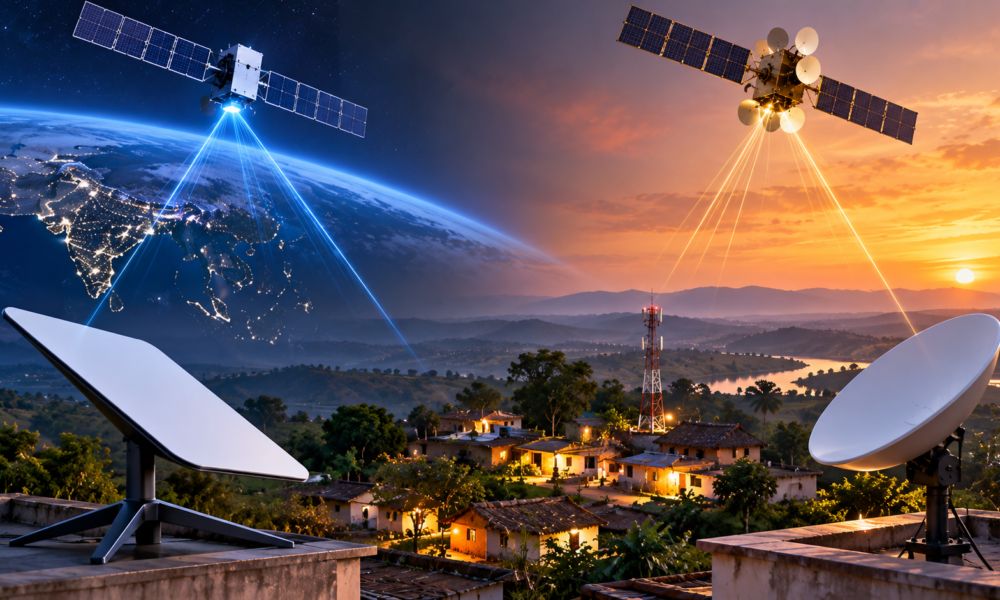
Reliable internet access is increasingly important for businesses, public services and communities. However, extending fibre-optic cables and mobile networks to every remote location can be difficult and expensive.
Satellite broadband offers another way to connect users. Companies such as Starlink are developing services that use satellites to deliver internet access through specialised ground equipment. In India, satellite connectivity is also part of a wider discussion about expanding digital access.
The opportunity is especially relevant to remote industrial sites, rural businesses, disaster-response teams and locations where conventional network infrastructure is limited.
How Does Satellite Internet Work?
Satellite internet sends data between a user’s terminal, satellites in orbit and the wider internet network. The equipment installed at the user’s location communicates with the satellite system to provide connectivity.
The service can be useful where laying fibre cables is difficult or where mobile coverage is weak. Remote businesses may use satellite connectivity to support communications, monitoring systems and essential digital services.
However, satellite broadband is not a complete replacement for fibre or mobile networks. Its suitability depends on factors such as service availability, equipment costs, capacity, weather conditions and the type of connection required.
Why Is India an Important Market?
India has a large and varied geography, including mountains, islands, forests and sparsely populated areas. Providing reliable connectivity across these locations can require different technologies.
Fibre networks can offer high capacity in areas where construction is practical. Mobile networks can provide broad coverage, while satellite services may help connect locations that are difficult to reach through terrestrial infrastructure.
For businesses operating in remote areas, the ability to connect systems and employees can improve communication and support digital operations.
What Could This Mean for Infrastructure?
Satellite broadband may help connect industrial facilities, remote infrastructure projects and temporary work sites. Construction companies, energy operators and logistics businesses often need connectivity before a permanent communications network is available.
In disaster-affected areas, satellite systems may also offer an additional communications option when local networks are disrupted. Their effectiveness depends on equipment availability, power supply and the ability to deploy terminals safely.
However, large-scale adoption requires more than launching satellites. Companies must establish ground infrastructure, provide customer support and comply with local rules.
What Should Customers Consider?
Customers should check whether a service is officially available at their location. They should also compare the total cost of equipment, installation and monthly service.
Businesses need to assess the amount of data required, expected speeds, reliability and whether the connection supports their applications. A system suitable for basic communications may not meet every industrial or enterprise requirement.
Satellite internet can also face capacity constraints. Its performance should be evaluated against the actual needs of the site rather than marketing claims alone.
Regulatory Approval Matters
Satellite communications in India operate within a regulatory framework. Companies must secure the required permissions and comply with applicable spectrum, security and service rules before offering commercial services.
Announcements about partnerships or regulatory developments should not automatically be interpreted as confirmation that a service is available nationwide.
Customers should consult the relevant provider and official authorities for the latest position.
Conclusion
Satellite broadband could become a useful part of India’s connectivity infrastructure, especially in remote areas and locations where conventional networks are difficult to deploy.
Its success will depend on service availability, cost, reliability and regulatory compliance. Rather than replacing fibre and mobile networks, satellite systems are likely to be most useful where they complement existing infrastructure.









No Comment! Be the first one.