








UP Launches Jal Saarthi App to Strengthen Monitoring of Rural Water Infrastructure
Uttar Pradesh has taken another step towards improving rural infrastructure with the launch of the Jal Saarthi mobile application, a digital platform designed to monitor the progress of drinking...

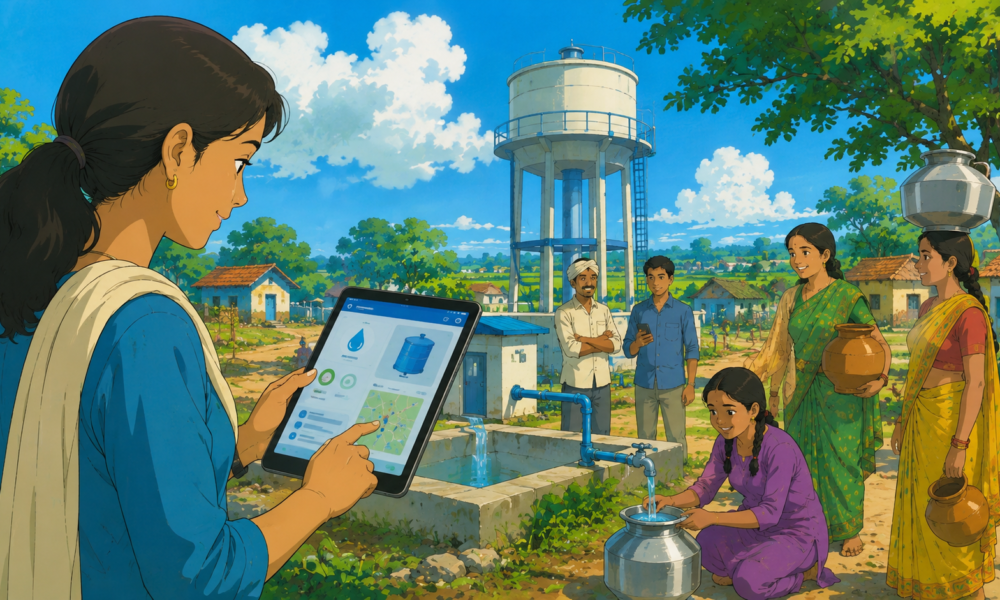
Uttar Pradesh has taken another step towards improving rural infrastructure with the launch of the Jal Saarthi mobile application, a digital platform designed to monitor the progress of drinking water projects under the Jal Jeevan Mission. The initiative aims to enhance transparency, improve project oversight and provide real time access to information on rural water supply schemes across the state.
The app has been developed by the Uttar Pradesh Water Supply and Sanitation Mission to provide citizens, field engineers and administrators with a single platform to track the implementation of water infrastructure projects. Users can access village level, district level and state level information, including the status of tap water connections, ongoing schemes and project dashboards.
Digital platforms are increasingly becoming an essential part of infrastructure management in India. While roads, bridges and pipelines remain the physical backbone of development, technology is helping governments monitor assets more efficiently, improve accountability and accelerate project delivery. The launch of Jal Saarthi reflects this shift towards data driven infrastructure governance.
One of the key advantages of the application is greater transparency. Rural residents can now check the progress of drinking water projects in their villages without relying solely on official updates. This public visibility encourages timely implementation while enabling authorities to identify delays and resolve issues more quickly. The platform also supports field teams by offering quick access to project information, reducing paperwork and improving coordination.
The initiative forms part of the broader Jal Jeevan Mission, which seeks to provide functional household tap water connections to rural homes across India. Over the past few years, large scale investment has been directed towards expanding water supply networks, constructing treatment facilities and strengthening distribution infrastructure. Digital monitoring tools such as Jal Saarthi are expected to improve the long term management of these assets while supporting efficient maintenance.
For the infrastructure sector, water supply projects represent one of the country’s largest areas of public investment. Beyond laying pipelines, successful water infrastructure depends on continuous monitoring, quality control and effective maintenance. Mobile applications and digital dashboards provide decision makers with accurate information that supports better planning and resource allocation.
The benefits extend beyond governance. Reliable rural water infrastructure improves public health, reduces the burden of collecting water, supports agriculture and contributes to overall economic development. Access to clean drinking water also creates better living conditions, making villages more resilient and attractive for future investment.
Digital infrastructure is now playing an increasingly important role alongside physical infrastructure. Technologies such as mobile applications, geographic information systems, remote monitoring and real time dashboards enable governments to oversee large infrastructure networks more effectively. These tools reduce administrative bottlenecks while helping ensure public investment delivers measurable outcomes.
Uttar Pradesh’s latest initiative also highlights the growing importance of citizen participation in infrastructure development. By allowing public access to project information, the app strengthens accountability and encourages community engagement in monitoring essential services. Such transparency can help improve trust between citizens and public institutions while supporting more efficient delivery of infrastructure programmes.
As India continues investing in water security, digital governance will become an increasingly valuable component of infrastructure planning. Platforms like Jal Saarthi demonstrate how technology can complement engineering by improving monitoring, transparency and operational efficiency.
The launch of the application reinforces a broader trend in infrastructure development where digital solutions are integrated with physical assets to create smarter public services. For rural communities, this means not only better access to drinking water but also greater visibility into how critical infrastructure projects are progressing, ensuring that development reaches the people it is intended to serve.










No Comment! Be the first one.