







Assam Pushes for Railway Expansion and Semiconductor Infrastructure to Drive Industrial Growth
Assam is stepping up its infrastructure ambitions by seeking greater central support to strengthen both its railway network and semiconductor ecosystem. During a recent meeting with Union Minister...

Assam is stepping up its infrastructure ambitions by seeking greater central support to strengthen both its railway network and semiconductor ecosystem. During a recent meeting with Union Minister for Railways, Electronics and Information Technology Ashwini Vaishnaw, Assam Chief Minister Himanta Biswa Sarma outlined a roadmap aimed at improving connectivity while positioning the state as an emerging destination for advanced manufacturing and technology investment.
The discussions reflect a broader shift in India’s infrastructure strategy, where transport networks and industrial ecosystems are increasingly being developed together. Rather than viewing roads, railways and manufacturing as separate sectors, governments are focusing on integrated development that enables industries to move goods efficiently, attract investment and generate employment.
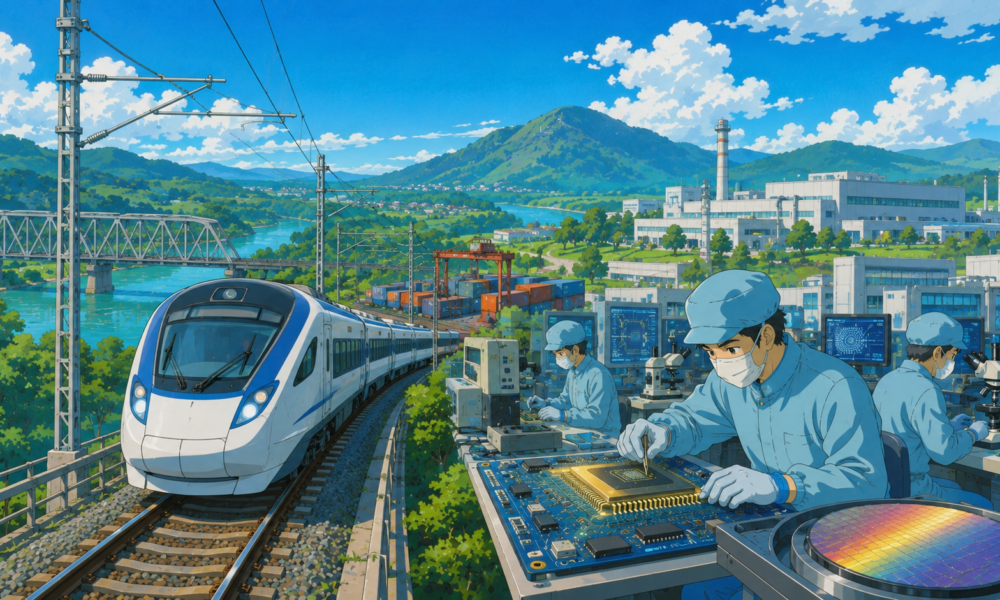
Railway infrastructure formed a key part of the discussions. Assam has witnessed significant improvements in rail connectivity over recent years, but the state continues to seek additional capacity to support rising passenger demand and freight movement. Expanding railway infrastructure is expected to improve connectivity across the North East while strengthening links with major industrial and commercial centres across the country. Better rail access will also reduce logistics costs for businesses operating in the region, making Assam a more competitive investment destination.
Alongside transport infrastructure, semiconductor manufacturing has emerged as another strategic priority. As India works towards building a domestic electronics manufacturing ecosystem, states are competing to attract investments in chip production, electronics assembly and component manufacturing. Assam is aiming to become part of this national growth story by creating the infrastructure required to support high technology industries.
Semiconductor facilities require far more than factory buildings. They depend on reliable power supply, high quality transport infrastructure, efficient logistics, digital connectivity and access to skilled talent. The discussions therefore highlight how industrial infrastructure extends well beyond manufacturing plants, requiring coordinated investment across multiple sectors.
The state’s focus also aligns with the Government of India’s efforts to strengthen domestic semiconductor production through policy support and infrastructure development. Building a competitive semiconductor ecosystem has become increasingly important as global manufacturers seek to diversify supply chains and establish new production bases. Infrastructure readiness will play a decisive role in attracting these investments.
Railway expansion will also support several traditional sectors that continue to drive Assam’s economy. Tea, petroleum products, agriculture and manufacturing all depend on efficient freight movement to domestic and export markets. Improved connectivity enables businesses to reduce transportation costs while improving delivery timelines and supply chain reliability.
Infrastructure investment is equally important for regional development. Better transport links encourage tourism, improve access to education and healthcare, and create opportunities for new commercial activity across smaller towns and districts. Enhanced railway connectivity also strengthens integration between the North Eastern states and the rest of India, supporting balanced economic growth.
For investors and infrastructure developers, Assam represents an increasingly attractive market. Public investment in transport, digital infrastructure and industrial development is creating opportunities across engineering, logistics, construction and manufacturing. As industrial demand grows, supporting infrastructure such as warehouses, logistics parks, commercial developments and urban services is also expected to expand.
The latest discussions between the state and the Centre underline an important trend shaping India’s infrastructure landscape. Future growth will depend not only on building new transport corridors but also on creating integrated ecosystems where infrastructure, technology and industry develop together.
As Assam accelerates investment in rail connectivity and advanced manufacturing infrastructure, the state is positioning itself for the next phase of economic growth. Stronger transport networks combined with technology driven industrial development have the potential to transform the region into an important contributor to India’s manufacturing and logistics ambitions.






No Comment! Be the first one.