






India’s Maritime Infrastructure Gains Momentum as Inland Waterways Expand
India’s infrastructure strategy is increasingly looking beyond roads and railways, with inland waterways emerging as a vital component of the country’s transport and logistics network....

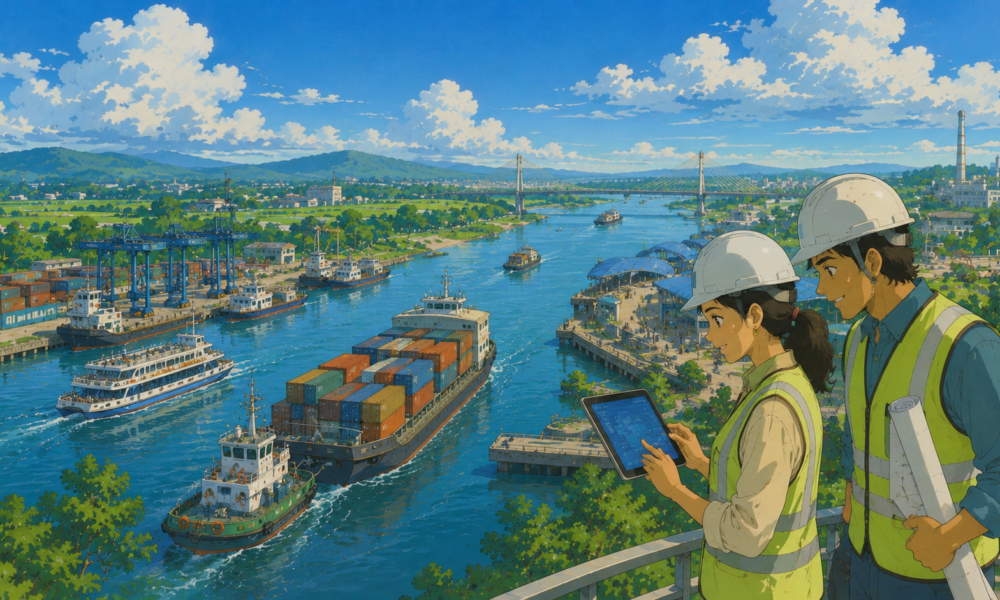
India’s infrastructure strategy is increasingly looking beyond roads and railways, with inland waterways emerging as a vital component of the country’s transport and logistics network. Backed by sustained investment and policy support, the expansion of National Waterways is strengthening freight movement, improving regional connectivity and creating more sustainable transport options for businesses and communities.
Over the past decade, India has expanded its network of National Waterways from just five to 111, covering more than 20,000 kilometres across 23 states and four Union Territories. Of these, 32 waterways are now operational, reflecting a steady shift towards multimodal transport and better integration between ports, railways and highways.
The growth of inland waterways is helping diversify India’s logistics ecosystem. Transporting cargo through rivers is often more fuel efficient than road transport, reducing logistics costs while lowering carbon emissions. As industries seek faster and more economical supply chains, waterways are becoming an increasingly attractive option for moving bulk commodities such as coal, cement, fertilisers, food grains and construction materials.
One of the flagship initiatives driving this transformation is the Jal Marg Vikas Project on National Waterway 1 between Varanasi and Haldia. The corridor has been strengthened through improved navigation channels, multimodal terminals and better cargo handling infrastructure. Cargo movement on this route has grown significantly over recent years, demonstrating the commercial potential of inland water transport when supported by modern infrastructure.
The development extends beyond freight. Passenger ferry services and Ro-Pax operations are improving mobility in riverine and coastal regions, particularly where conventional road connectivity is limited. According to official data, passenger movement through ferry and Ro-Pax services has crossed 10 crore journeys, highlighting the growing role of waterways in everyday transport.
Supporting infrastructure is also expanding rapidly. Modern terminals, floating jetties, navigation aids, cargo handling facilities and digital monitoring systems are making inland waterways more reliable and commercially viable. Community jetties developed under the Arth Ganga initiative are helping connect rural populations with local markets while supporting small businesses and livelihoods along the river corridor.
The benefits extend well beyond transport. Improved waterway connectivity encourages investment in warehousing, logistics parks, food processing units and industrial clusters located near navigable rivers. Businesses gain access to an additional transport mode that complements existing road and rail networks, reducing supply chain risks and improving operational flexibility.
For the construction and infrastructure sector, expanding inland waterways creates demand for civil engineering, dredging, terminal development, bridge construction, river information systems and cargo handling equipment. It also opens opportunities for public and private investment in integrated logistics infrastructure that supports long term economic growth.
Environmental sustainability is another important advantage. Inland water transport generally consumes less fuel per tonne of cargo than road transport, making it a cleaner alternative for long distance freight movement. As India pursues lower emissions and greener infrastructure, waterways are expected to play a larger role in achieving sustainable transport objectives.
The expansion of inland waterways reflects a broader shift in India’s infrastructure planning. Rather than relying on a single mode of transport, the country is building interconnected logistics networks that combine ports, rivers, railways, highways and industrial corridors. This integrated approach strengthens supply chains, improves regional connectivity and enhances India’s competitiveness in global trade.
As freight volumes continue to rise and logistics requirements become more complex, inland waterways are steadily moving from a niche transport option to an important pillar of national infrastructure. With continued investment in terminals, navigation systems and multimodal connectivity, India’s rivers are set to become powerful engines of economic development in the years ahead.




No Comment! Be the first one.