






India’s First Integrated Refinery-Cum-Petrochemical Complex Opens a New Chapter in Industrial Infrastructure
India has added a major milestone to its industrial infrastructure landscape with the inauguration of the country’s first integrated refinery-cum-petrochemical complex in Rajasthan. The...

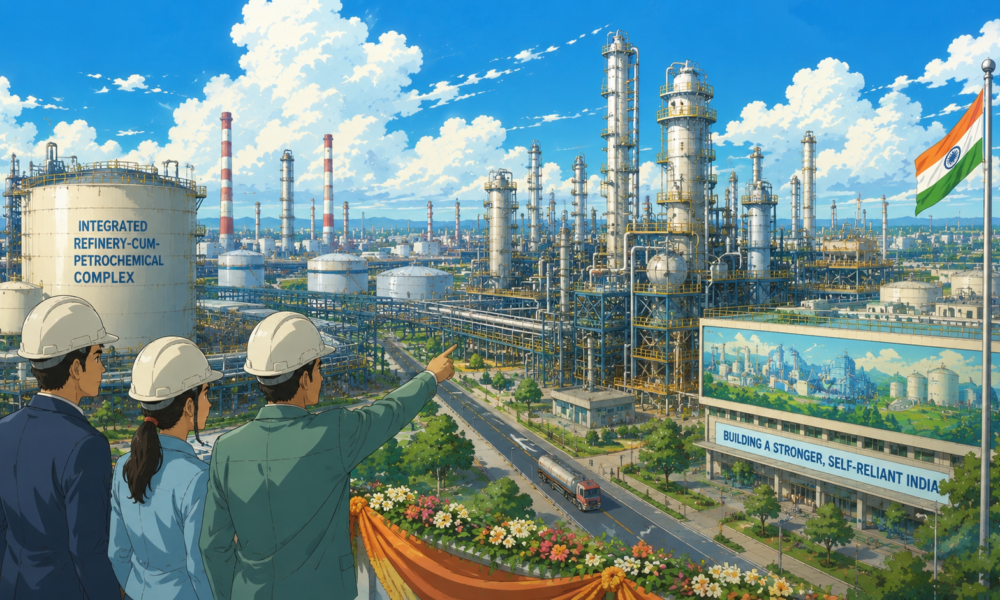
India has added a major milestone to its industrial infrastructure landscape with the inauguration of the country’s first integrated refinery-cum-petrochemical complex in Rajasthan. The project, developed by HPCL Rajasthan Refinery Limited (HRRL), has a refining capacity of nine million metric tonnes per annum and forms part of a wider package of infrastructure projects worth more than ₹1.06 lakh crore unveiled in the state.
The new complex represents much more than a conventional refinery. By combining petroleum refining with petrochemical production at a single location, the facility is expected to improve operational efficiency, create higher value products and strengthen India’s downstream manufacturing capabilities. Integrated facilities of this nature enable raw materials to be processed more effectively, supporting industries such as packaging, textiles, automotive manufacturing, pharmaceuticals and consumer goods.
The project is expected to generate significant economic activity across Rajasthan while supporting India’s long term objective of strengthening domestic manufacturing. Large industrial infrastructure developments typically create demand for engineering services, construction, logistics, warehousing and ancillary industries, resulting in substantial employment opportunities during both construction and operations.
Energy infrastructure continues to play a central role in India’s economic growth. As manufacturing expands and industrial output rises, reliable refining capacity becomes increasingly important to meet domestic fuel demand while reducing dependence on imported petroleum products. Integrated petrochemical production also supports the government’s vision of increasing value addition within the country rather than relying heavily on imported chemical feedstock.
The refinery has also been designed alongside supporting infrastructure that includes transportation links, utilities and industrial services. Such projects often become catalysts for wider regional development, attracting new investment into industrial parks, logistics hubs and commercial developments located nearby. Improved connectivity enables raw materials and finished products to move efficiently between manufacturing centres and domestic as well as international markets.
The broader infrastructure package announced alongside the refinery includes investments in metro rail, airport development, renewable energy and urban infrastructure. Together, these projects demonstrate how industrial growth increasingly depends on integrated planning where transport, energy and manufacturing infrastructure develop simultaneously. Rather than functioning as isolated assets, these investments create interconnected ecosystems that improve productivity and support long term economic expansion.
For the infrastructure sector, projects of this scale generate opportunities across multiple industries. Civil engineering firms, equipment manufacturers, technology providers, environmental consultants and project management specialists all contribute to delivering large industrial facilities. The multiplier effect extends into housing, commercial real estate and public services as economic activity expands around major infrastructure investments.
The refinery also strengthens India’s strategic energy resilience. Increasing domestic refining and petrochemical capacity enhances supply security while creating opportunities for exports of higher value products. As global demand for specialised petrochemicals continues to grow, integrated production facilities can improve India’s competitiveness within international markets.
Environmental considerations are also becoming increasingly important in industrial infrastructure. Modern refinery projects incorporate advanced technologies aimed at improving operational efficiency, reducing emissions and optimising resource utilisation. These measures support both industrial productivity and evolving sustainability objectives within the energy sector.
The inauguration of India’s first integrated refinery-cum-petrochemical complex marks an important step in the country’s industrial development journey. It highlights how infrastructure is evolving beyond transport and urban development to include advanced manufacturing facilities that strengthen economic resilience and industrial competitiveness.
As India continues investing in world class infrastructure, integrated industrial projects such as this will play an increasingly significant role in supporting manufacturing, employment, exports and regional development. The Rajasthan complex stands as an example of how large scale infrastructure investment can create lasting value across multiple sectors of the economy while laying the foundation for future industrial growth.






No Comment! Be the first one.