







VOC Port Emerges as Model for Sustainable Maritime Development
India’s ports are increasingly focusing on cleaner operations and sustainable infrastructure as maritime trade continues to expand. The shift is being driven by investments in renewable energy,...

India’s ports are increasingly focusing on cleaner operations and sustainable infrastructure as maritime trade continues to expand. The shift is being driven by investments in renewable energy, green logistics and modern cargo handling systems that aim to improve efficiency while reducing environmental impact. Against this backdrop, V O Chidambaranar Port in Tamil Nadu has emerged as a leading example of how Indian ports are combining growth with sustainability.
Union Minister of Ports, Shipping and Waterways Sarbananda Sonowal said V O Chidambaranar Port Authority has become a benchmark for sustainable maritime development through a series of initiatives designed to reduce carbon emissions and improve operational efficiency. The port has integrated renewable energy into its operations while expanding infrastructure to support future cargo growth.
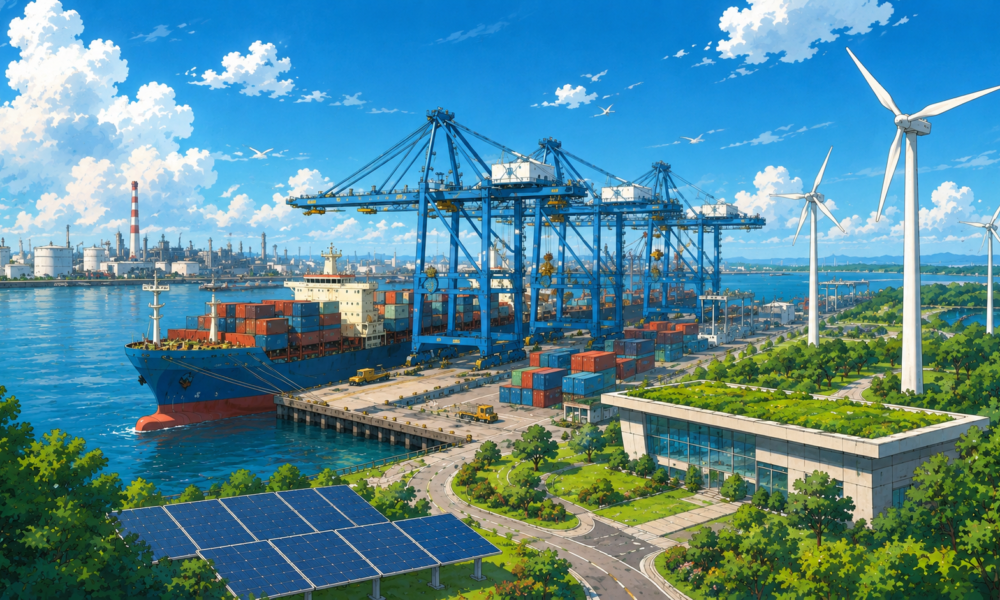
The port has invested in solar and wind energy to meet a significant share of its electricity requirements. Alongside renewable power generation, it has introduced energy efficient systems, green building practices and environmentally responsible port operations. These measures are intended to lower the port’s carbon footprint while maintaining reliable cargo services for domestic and international trade.
Modernisation efforts have also focused on improving logistics infrastructure. Upgraded cargo handling facilities, digital systems and streamlined operations are helping vessels spend less time at berth while improving the movement of goods through the port. Better operational efficiency is expected to reduce logistics costs for exporters and importers and strengthen India’s position in global supply chains.
The development of greener ports is becoming an important part of India’s wider infrastructure strategy. As cargo volumes increase, ports are expected to play a larger role in supporting manufacturing, exports and industrial growth. Sustainable infrastructure is also becoming a priority for international shipping companies that are seeking cleaner and more efficient logistics networks.
According to the Ministry of Ports, Shipping and Waterways, the government is encouraging major ports to adopt renewable energy, cleaner technologies and digital systems as part of the Maritime India Vision. These initiatives are intended to improve competitiveness while supporting India’s commitments towards environmental sustainability.
The progress at V O Chidambaranar Port reflects this broader policy direction. By combining infrastructure expansion with renewable energy and efficient operations, the port demonstrates how future maritime projects can balance economic growth with environmental responsibility. The experience gained through these initiatives is expected to support similar projects at other major ports across the country.
India has been investing heavily in transport infrastructure across roads, railways, airports and ports to improve connectivity and strengthen logistics. The government has also expanded multimodal cargo infrastructure under the PM Gati Shakti programme to improve freight movement between different transport modes. Modern ports are expected to play a central role in this integrated logistics network by supporting faster cargo movement and attracting greater private investment.
As India’s maritime sector continues to grow, sustainable ports are likely to become increasingly important for trade, investment and industrial development. The experience of V O Chidambaranar Port suggests that cleaner technologies and efficient infrastructure can work together to improve competitiveness while supporting long term environmental goals.









No Comment! Be the first one.